
Previous Sermons
-

Sunday Service: 08/09/26
Who here is great at determining what you really need? We say we really need something all the time or that we really need some sort of situation to improve. When I was in high school, I became really interested in music production and by really interested, I mean obsessed.
I can remember begging my parents to let me use their credit card to buy some music production software. I told them I really needed it to make my dreams become a reality. I was convinced that if I had that software, music production would be easy, and I’d be off to the studio with Kanye West. Finally, my parents caved. I can remember inputting my dad’s credit card number on the computer and giving them some of my precious cash. I downloaded the software, giddy with excitement and big dreams. I opened it up and behold: it was extremely clunky and the music didn’t come as easily as I thought it would. A few weeks later, I still couldn’t figure out how to use the software and as you can tell, I’m not a music producer – I’m a pastor. So, that dream of mine didn’t pan out.
I share that because I thought I knew what I really needed and when I finally got it, I found out that what I actually needed was something better. In fact, the giddy excitement I first had slowly wore off and I found myself longing for something else. I don’t think I’m alone in this. We convince ourselves that we really need something, only to get it and become discontent after awhile. So, you think you need to say these affirmations, get a raise at work, have a perfect/healthy marriage, or clean up a habit but when you finally get those things, you’re less content.
You can’t seem to fix things on your own or will yourself into perfect bliss. That’s because you need more than better circumstances or a new thing: you need life-saving surgery from Christ and baptism celebrates your new life! (Repeat)
Today, we’ll be heading to Colossians 2:11-15 to drive that point home as we prepare to baptize four people later this morning. If you’re able, will you please stand as we read God’s word together?
The Hunt That Never Satisfies(Verse 13)
In verse 13, Paul uses some strong language: “dead in your sins” and “Your sinful nature was not yet cut away.” What does he mean by that? Practically, being dead in your sin shows up as misplaced worship or giving your heart totally to someone or something. You serve a god of self-improvement, achievement, being accepted by others, or being in total control of your life. In our sinful nature, we become enslaved by those things. Those things tell us we really need something but they only end up disappointing us.
If you serve a god of self-improvement, you convince yourself that what you really need is to hit a certain weight goal, say a few positive affirmations each day, or meditate every morning. But, how do you feel when you miss a workout, miss a goal, or skip meditation? Horrible. You may double down and work harder but you’re always going to make a mistake. Self-improvement can be a good thing but it can’t be your ultimate thing.
Or if you serve a god of achievement, you may convince yourself that what you really need is to get that promotion, get all A’s in school, or hit that salary number. When you finally get that promotion or salary number, do you feel content or do you want more? You want more. How do you feel if you lose your job or get a C in school? You’re crushed. Working hard and achieving good goals can be a good thing but it can’t be your ultimate thing.
Maybe your god isn't self-improvement or achievement — maybe it's being liked, or being in total control of your life. Same pattern: it feels like security until someone criticizes you, or until life spins outside your control, and then you fall apart.
In the Old Testament, there’s a king of Israel who illustrates this so well: Solomon. He has power over an entire empire, he’s achieved so much by building the temple + expanding Israel’s Kingdom, and he has more money and pleasure than he knows what to do with. And was he content? No, Ecclesiastes is Solomon’s personal handbook on wisdom he’s acquired and he says this from the NLT: “ But as I looked at everything I had worked so hard to accomplish, it was all so meaningless—like chasing the wind. There was nothing really worthwhile anywhere.”
Solomon thought he needed one thing but he needed something better. His longing and your longing is good but it’s misplaced. And if you’re thinking to yourself: “I don’t agree with what this guy is saying.” I have a question I’d love to ask you: when’s the last time your achievements, your self-improvement, your wealth, your popularity, or whatever actually satisfied you longer than a week? (Repeat)
If you’re like me, none of those things have satisfied. Our hearts long for something or someone better and Colossians 2 shows us who that is, let’s keep moving to what we really need.
What We Really Need (Verses 12-15)
Colossians 2 tells us what we really need and it’s not optimization, self-help, achievement, or anything like that. What we need is life-saving surgery from Christ.
Since we’re dead in our sins, we can’t do this on our own. It requires Jesus. Why?
He’s the one who performs life-saving surgery at the cost of his own life. Colossians 2:14 tells us that there is a record of charges that God has against us – if we’re all honest with ourselves, we know this at a deep level. When we serve those other false gods, we’re indirectly hating the true God – telling him: “thanks for my life but I’ll live it my own way.” We skirt around the truth, we have all gotten unrighteously angry at someone, we’ve put our needs above other people’s needs, we’ve judged people before we’ve even said a word to them, we’ve lusted over others, and we’ve desired other people’s stuff or their lives. These are the records of charges or sins that God has against us. We’re the ones who have the problem, we’re the ones who cause the misery in our world.
He's the God of the universe — he has every right to hold us accountable, and yet we hate the very commands meant for our flourishing.
So, what does God do? Does he tell us: “you’re too far gone. You’ve blown it.”You better get you’re act together before I talk to you. No – in Romans 5:8, we read: “God shows his love for us in that while we were still sinners, Christ died for us." Colossians 2:14 tells us Jesus nailed those offenses to the cross. On the cross was my own record of debt — every rebellion, every sin. Jesus didn't erase it quietly. He nailed it up for everyone to see, stamped paid in full, because he paid it with his own body. For everyone in here, there is a record of debt – have you let Jesus pay for it?
In verse 15, things get even better. And the powers that held you — sin, death, fear, anxiety, false gods, everything that's ever had a claim on you — got marched through the streets in defeat, stripped of their armor, in front of the whole watching universe. What looked like Rome killing a criminal was actually God settling your debt and winning a war, at the same time, in the same act. Jesus can set you free from all those powers – have you let Jesus set you free? As the great surgeon, Jesus didn’t just settle your debt – he conquered the things that actually kept you a slave and dealt with the things that were killing you. That’s why he’s a better God than anything else – those other gods will always disappoint you and use you but Jesus will not,.
Why can we trust Jesus to pay for our sin, set us free from those things that enslave us, and give us new life? Because, Jesus didn’t stay dead. Sure, Jesus did amazing things when he walked around Galilee 2,000 years ago – he made blind people see, he healed the sick, he cast out demons, and he brought the dead back to life. But those amazing things were only signs to show his power and authority as God in the flesh. His greatest sign was not staying dead: three days later after being murdered, Jesus came back to life – demonstrating his power and victory. He’s reigning as King now and one day, he’s going to return to make all things right and to fully usher in his kingdom where every tear will be wiped by the savior, where every evil and injustice will be punished, where every physical, mental, or emotional disability will be totally restored, and where every believer of Jesus will praise God for his amazing love, power, and kindness that made all of that possible. Jesus’ kingdom is open to every single person in the world, regardless of race, social status, wealth, or age – will you join it or be his enemy? He died for you as his enemy, come to the winning side.
This present and future reality is what we celebrate when we gather as the church. And it’s what we’re doing today too…
What Today is All About (Verse 12)
Remember verse 12 from when we read at the start? “For you were buried with Christ when you were baptized.” That’s what we’re celebrating today – people who were dead but because they’ve trusted in the mighty power of God who raised Christ from the dead, they’ve been raised to new life.
Baptism is about showing the world and the church what’s been true in these people’s lives: new life is possible through faith in Christ. New life and freedom is possible because of the great love of God that has the power to heal, save, and restore broken people everywhere.
For folks who are being baptized, this is a serious and life-changing day. It’s the day where you commit in front of all these people that your total allegiance is given to King Jesus who brought you from death to life. It’s a day that should be celebrated and remembered for as long as God gives you breath. It’s a day where they acknowledge that Jesus isn’t just their savior, he’s also their Lord – with the Spirit’s help, they’ll pursue obedience as well. And it’s such an honor and joy to be here with you today.
For those of us who are followers of Jesus today, this is a day where we can do two things:
1. Roar with thunderous applause after each baptism as we celebrate with our brother and sister taking this step of faith. Clap, shout for joy, and celebrate that hell has lost another one and that Jesus Christ has freed someone from bondage and sin. This should be one of the high points of our year as a church family, let’s treat it like one! Tell the folks getting baptized that you’re proud of them, that you’ll be praying for them, and you’re always here for them.
2. Join with me in prayer that we would see more baptisms through our church. Let us not be content with seeing 4 baptisms (although this is an amazing testimony) – let us pray that more folks would come to faith in Christ and know they’re dearly loved.
If you are not a follower of Jesus today, why not change that today? You don’t have to have everything figured out, you don’t have to clean yourself up, and you don’t have be perfect. If you’re tired of those false gods disappointing you, let Christ perform his life-saving surgery. You don’t need better circumstances, better jobs, or better relationships – you need Jesus. Towards the end of our time together, I’ll pray for you specifically and invite you to talk to a few friends and myself who would be honored to pray for your specific needs as well.
So with all that said, let’s start baptizing some folks!
-

Sunday Service: 08/02/26
This transcript has been AI-generated - it’ll likely have some errors.
morning. >> Good morning. >> Uh thank you Anthony for this privilege. It's been an honor to to get this together and uh so yeah, I'm excited to come to you guys and share what God has uh through me to to give like Anthony said a little maybe a different perspective and just to hear somebody different. So yeah, so let's go ahead and turn to Psalm 139. If you could all stand for the read. Oh Lord, you have searched me and you know me. You know when I sit and when I rise. You perceive my thoughts from afar. You discern my going out and my lying down. You are familiar with all my ways. Before a word is on my tongue, you know it completely, oh Lord. You hem me in behind and before and you have laid your hand upon me. Such knowledge is too wonderful for me to too lofty for me to attain. Where can I go from your spirit? Where can I flee from your presence? If I go up to the heavens, you are there. If I make my bed in the depths, you are there. If I rise on the wings of the dawn, if I settle on the far side of the sea, even there your hand will guide me. Your right hand will hold me fast. If I say surely the darkness will hide me and the light become night around me, even the darkness will not be dark. To you the night will shine like the day. For darkness is as light to you. For you created my inmost being. You knit me together in my mother's womb. I praise you because I am fearfully and wonderfully made. Your works are wonderful. I know that full well. My name was not hidden from you. My frame was not hidden from you when I was made in the secret place. When I was woven together in the depths of the earth, your eyes saw my unformed body. All the days ordained for me were written in your book before one of them came to be. How precious me are your thoughts, oh God. How vast is the sum of them. Were I to count them, they would outnumber the grains of sand. When I wake, I am still with you. If only you would slay the wicked, oh God, away from me, you bloodthirsty men. They speak of you with evil intent. Your adversaries misuse your name. Do I not hate those who hate you, oh Lord? And abhor those who rise up against you. I have nothing but hatred for them. I count them my enemies. Search me, oh God, and know my heart. Test me and know my anxious thoughts. See if there is any offense way in me and lead me in the way everlasting. Heavenly Father, I thank you for this time you've given us to come together. I just pray that you just speak through me of what you have for us to to learn from these scriptures today. In Jesus' name I pray. Amen. You may be seated. So, as I said, my name is Brian Perry. I like long walks on the beach, sprint car racing. I enjoy to hunt and I enjoy a good sweet tea and brisket. Those are a couple of my things, just a kind of tidbits if you were to look up a profile on me. But, I've lived here in Pennsylvania for a handful years now, but originally, I was actually born in New Hampshire. That is right. I'm a New Englander. All right. [snorts] So, and my family is all from New England. My dad was born in Maine, my mom was born in Connecticut. And then my siblings, I am the oldest. And then I have a younger brother, Kyle, and sister Jenna. We were all born in Keene, New Hampshire. That's where we grew up. And, uh, we lived there for, um, I think it was about 11 years. Well, all my life till 11 years old. Um, my dad is a truck driver. And he worked for a a company called Stone Mills, which some of you might recognize. Um, but they they had a place in Chesterfield, New Hampshire. And they expanded in in add another place in New Oxford here. So, that's why you might recognize it. But, years went by and that company, Stone Mills, was bought out of a bigger company called, uh, United Natural Foods, UNFI. Denise knows it well. Uh, but yeah, so they got bought out and then UNFI had places all over the country. And they realized, they said, "Well, we don't need the Chesterfield, New Hampshire location anymore. So, we're going to close it." So, they came to the workers and said, "You have two options. Either you move to another location that we have, or you find another job." So, my parents started praying and and seeking God's wisdom on what to do. And being that, you know, partially that my dad knew some of the people that were here in New Oxford that maybe had transferred and stuff like that. And through many prayers and everything, they led uh God led my family to move here. Now, at that point, if you'd asked me then, it was the worst thing that ever happened in my life. I had a great church family. I had a great church. Um, we had friends and everything there and I vowed that someday, that when I turned 18, that I'd move back. And that was that was the last time. We've been there maybe once or twice since, but as you can see, I have not moved back. So, um, just a change in life in that way. But, as we as we lived moved here, uh, my family we decided to my siblings and I were home schooled and we got involved in a home schooling group here. And we got to meet some people and they started talking about some of the older siblings in their families had gone this place. It was a a camp ranch up towards Lake Erie called Miracle Mountain Ranch. And I was like, "What what is this place you guys talk about?" You know, and then they said, "Well, they have horses." And I'm like, "Horses? That sounds great." For me growing up, I was a John Wayne fan. That's what I I watched. I watched John Wayne, I watched Davy Crockett. I wanted to be a cowboy. That was my my dream. And uh So, I was like, "Well, that's pretty cool. They got horses and then, you know, it's a Christian place, so I'll be with Christian people and and everything." So, one thing led to another and I started looking into this program. So, what it is is they take college age students and they they have a apprenticeship program. Throughout the winter months, you learn [clears throat] different classes from different people that are there, different staff members. So, class on godly marriage, conflict resolution, and all these different courses that you learn and then they kind of turn they have retreats and stuff throughout time, but in the summertime it flips and it turns into a summer camp. So, then the apprentices kind of become labor for in the summertime and we get to put some of the stuff that we learned throughout that year to practice. So, I applied there and >> [snorts] >> they were already filled for that one year and I was like, "Okay, but what what to do now?" So, I was working and and we started looking online and we found this place in Ohio and called Faith Ranch. And so, we looked at that place and they were like, "Yeah, we would love to have Brian, you know, come here and blah blah and so it I ended up going and I lived there for about a year or so and then it became the next year for Miracle Mountain Ranch. So, I applied again and I got in. And so, I ended up going there for a year, and they have a second year program as well. So I applied for that. But I I didn't make it into that one. They said, you know, I want you to work on some stuff, go home, you know. So I was like, okay, I can do that. So I went home and I I uh got involved in my church as far as uh helping with youth group and and helping out lead the youth and do that kind of stuff. Got into a young adults group. And uh and then I got a phone call from the the owner of Miracle Mountain Ranch. She says, Brian, we're getting a second group together. Have you ever thought to moving to Texas? And I was like, Texas? Yeah. The home of the cowboy, man. I want to be a cowboy. So where do I got to go? I got to I'm better good at Texas, right? How can I pass this up? So he said, all right, well, we're going to start a second year group in Texas if you want to do it. I said, I'll pray about it. And that was And then so I did and I end up going there. We were there for a little bit and then where we were at kind of started not working out, but so we end up working moving to another camp that he knew of uh in Mississippi. So I finished out my summer. I was there 9 months in Texas and then I finished out the summer in this camp in Mississippi. And then after that, I was like, well, this part of my chapter is I think it's done, but where do I go from here? How do I, you know, horse training's not always uh there's not tons of jobs around here for it all the time, but um so I was kind of looking at that, but one of the the families that was the couples that was at Miracle Mountain Ranch my second year, they ended up leaving and they he got a job at a place in Tennessee. And then he said, I need people to come help me. We're going to start a cowboy church here. We're going to start uh doing trail rides and stuff like that. And you have a lot of experience with trail rides. Would you come work for for me? I was like, yeah, that sounds like a good idea. So went there, end up trying to uh they started a cowboy church and I was the like the youth leader there for for a little bit and it was a a small little church and it really have any kids that kind of hit or miss, but anyway, so we did that for a little while and then things kind of started to change there with the the farm that we were at and stuff and so I was like, I just don't know where to what where to go, what to do. So just praying again about what to to do. So I came home. Came home to Pennsylvania and and uh wasn't sure if I'll do horses again, wasn't sure what I was going to do, but got into the workforce and started working and and uh and honestly I didn't do horses after that. And I haven't haven't been back to doing horses very much. Um but just working and stuff like that. But then I started getting involved in another church I started going to with uh a young adults ministry and the guy was like, "Hey, you have experience like with young adults ministry, do you want to to help me start this?" And I was like, "Yeah." So I uh I helped him start it and kind of co- co-led this group and then he's like, "Hey, my wife and I feel that we're led to move somewhere else, so I'm leaving." I'm like, "All right, well what's going to happen to our group, you know?" And they're like, "Well, so" I end up taking over the young adults group and then uh one Sunday evening we were there and two young ladies came in and uh the one of them was Britney my future wife and uh the other one was Emily Stern and they said Britney said, "I just realized I needed some different friends and so I googled young adults ministries and yours one popped up." And and so we decided to come check it out and so then Caitlin and Reba and a bunch of people that you guys may know started coming to this young adults group that I was leading and we became friends and and then Britney and I became more than friends and then we got engaged and then married and and uh here I am now beautiful wife two crazy boys that you probably have run into or they've run into you, probably, at one time or another in this church. Um but yeah, so that's that's kind of a nutshell of my story of anti-save. Travel, I've done a lot of stuff. My family, we've always traveled as growing up. My dad being a truck driver, to him it was kind of easy for him to drive. And so we did. We've drove driven all over the country. My I want my mom sister lives in Oregon. We've driven from here to Oregon. >> [snorts] >> Um and so you ask, why do I tell you all this? Well, if you've ever heard the Johnny Cash song I've Been Everywhere, I kind of feel like sometimes that's my my my song, my story. As I sit there and as he goes through the states and I I'm like, yep, yep, yep, been there. But David also talks about some interesting things about traveling and going through some things. And let's go go through this. And I want to break this up >> [snorts] >> into four different sections. So the first section is we're going to do verse 1 through 6. And that's you know me. Second section is 7 through 12. You encompass me or you surround me. The third section is 13 through 18. You created me. 19 to 24. You test me. >> [snorts] >> So let's go ahead and read that first section 1 through 6, Psalm 139. O Lord, you have searched me and you know me. You know when I sit and when I rise. You perceive my thoughts from afar. You discern my going out and my laying down. You are familiar with all my ways. Before a word is on my tongue, you know completely, O Lord. You hem me in behind and before. You have laid your hand upon me. Such knowledge is too wonderful for me, too lofty for me to attain. Throughout scripture and throughout Psalms, we see a lot of poetic theology and some big theological words and teachings. But here in 139, David David is very personal. If you look here, it says, "O Lord, you have searched me, and you know me. You know where I sit and when I rise. You perceive my thoughts from afar. You discern my going in and laying down." I think we should take David's lead on how we communicate with God in our life and every day. It's just a straightforward talk. This is a Psalm. It's a praise, but also too, if you notice certain parts in here, the way he's talking, he's just like, "God, this is what's going on. This is what's you know, I understand that this is what you have for me. This is what you're seeing in me. This is what" just a a straight conversation. So, in uh in verse one, you search me and know me. He searches you. He searches everything about you. That's the first thing on your paper there. Are you ready to be searched? In the in your talkings to God, are you are you talking with him, but are you ready for the the searching and the the answers that might come back? Are you ready for God what God has for you because he already has it planned out before you even think it. And I I I think this could be taken two different ways, that concept of God knowing everything and and me before you ever think it. It's kind of hard for us nowadays, but it could either be taken as in fear. You be like, "Oh my goodness, this guy knows me. I I don't I don't want that." Or you could look at it as a privilege to say, "God knows me." And I should know him, right? I know it's crazy to think about anyone knowing everything about you or know what you're going to do, say, or even think. >> [snorts] >> Even David kind of struggles with it in verse six. He says, "I can't do that." Well, well, not not that he can't do that, but in verse six he says, "Such knowledge is too wonderful for me to too lofty for me to attain." So, he's saying, "God, you know all this stuff. You know everything. I I I'm not at that level. I can't do that. I can't know what Sometimes I don't even know what I'm going to say." Right? As we go through our lives, there's things that I'm I'm very guilty of it. I'll just say stuff. Now, I'm like, "Ah, man, I didn't That That didn't come out right." Or that that probably shouldn't have been said. But, you know what? God knew I was going to say that. A thing to think about and remember is that the writers of Psalm in early scripture knew far less of God than we do today. Yet, they loved him more. The prophets were inspired by the spirit of God. That is how we were able to write about how It's how they were able to write about things to come such as the coming of our savior, Jesus Christ. They did not have the fullness of the revelation of God as we do as the new covenant believers. This is before God sent Jesus to Earth with his ministry. So, we have the benefit now as coming through the new covenant of Jesus' um birth and resurrection. But, back then, they didn't have that. They had There was people that were brought forth and God spoke to you or gave message to you directly to to share. But, nowadays, if we we have all this that we can go through, all these scriptures, how much more we should know than what they they might have known at the time. Which brings me to the next point in your paper. God knows all about each of us, but he knows us relationally through Christ. So, you kind of look at one of the things when I was studying they they they said it's kind of like having a fiance, getting married. You know, you start dating, you know something about this person, you connect over something. Oh, I like this, I like Oh, so do I. But then, as you get closer and you grow closer, there's things that that align even more and you know about a person and then you might get engaged and you might find out more about this person. Be like, "Hey, if I'm going to be with you for the rest of my life, we should know this, you know?" And you have discussions. But then, when you get married, there's all a whole more stuff that you learn about that person. You learn more and more as your years go. And I think that was kind of a interesting tidbit to kind of think about that is is God knows everybody, knows everything. But when you accept Christ and you you build that relationship, how much more you know him in that in that time. All right, let's move on to the next part. Don't worry, I'm not going to be an hour or anything. This might This might go a little quick, so. Where can I go? Let's go on the next section, which is you encompass me or you surround me. Where can I go from your spirit? Where can I flee from your presence? If I go up to the heavens, you are there. If I make my bed in the depths, you are there. If I rise on the wings of the dawn, if I settle on the far side of the sea, even there your hands will guide me. Your right hand will hold me fast. If I say, "Surely the darkness will hide me." and the light become night around me, even the darkness will not be dark to you. The night will shine like the day, for darkness is as light to you. So, as in my story, I've said I've traveled a lot. Right? I've been to Maine, to Oregon, Canada, the Gulf of Mexico. And I'll tell you what, God was always with me. In those times, sitting in my camper, I lived in a camper in Tennessee, I'll I'll tell you that. Um sitting in in my camper in Tennessee with my little dog Ben, he was a little puppy at the time, just being like, I just don't know where I'm going. I know where I'm at this very moment, but I just don't know where I'm going to go. God already knew. David isn't saying or asking where God will be, but he is saying that no matter where David is, God will be there also. He wasn't trying to trip up God. He wasn't being like, "So, are you over here? Are you over here?" He wasn't like the Verizon guy. Can you hear me now? Good. All right, can you hear me now? Good. No, he wasn't doing any of that. He was saying, it's not that where he would be, it's wherever David would be, God would be also. Verses 13 through 18, which is you created me. For you created my inmost being, you knit me together in my mother's womb. I praise you because I am fearfully and wonderfully made. Your works are wonderful. I know that full well. My frame was not hidden from you when I was made in the secret place, when I was woven together in the depths of the earth, your eyes saw my unformed body. All the days ordained for me were written in your book before one of them came to be. How precious to me and are your thoughts, oh God? How vast is the sum of them? Were I to count them, they would outnumber the grains of sand. When I wake, I am still with you. You know, I did also have a joke about the verse about the hairs on the head, but I see Dan Diodorf is not in here, so he's outside, but He said he's listening. He said he's going to listen. He's doing POC this morning. But anyways, so God is the author of life. An author is the creator of a story. He has ownership of it. He knows the story. He knows the plot lines and the subplot lines. He knows the characters and what they their backstories are, even if he doesn't make them known on in the book or the movie. Um he knows from the beginning to the end. So, the first time I ever saw Star Wars, so another Brian talking about Star Wars from the pulpit. There you go. Uh the first time I ever saw Star Wars, I was at a friend's house at a sleepover. He's like, "Let's watch Star Wars." I was like, "What is it?" Cuz I was I was a Western guy, you know, I didn't watch the sci-fi stuff. I wasn't really into it. And he's like, "You don't know what Star Wars is?" I'm like, "No." He's like, "Well, we got to watch it." But then after we watched it, he started talking about all this other stuff that wasn't in the movie. And I'm like, "What are you talking about, dude? It was not I wasn't even in there." He's like, "Well, this is brother and this person's thing and this" And I was like, "Well, how do you know this? Were you just making it up?" He goes, "No, there's books." And here, I didn't realize that George Lucas, they actually wrote books about Star Wars, and he actually had a huge storyline, which nowadays they've kind of gone through a little bit and made other movies to kind of cover some of that stuff, but at the time, they only had a couple movies out. And it didn't make sense to me, but this my friend, he's like, "Oh, I've read these books and everything. George Lucas knew what he wanted to do from the start to the finish." Now, he did something interesting in the movie history and started kind of in the middle and worked out, you know, different ways, which I think was kind of cool, a little different. But, I just think of that as a as that is that he had a bigger picture and uh and then he revealed at certain times. I I find it interesting, too, where he says, "I know this full well. Here's another example of David talking with God like a normal conversation." So, he's going through where I count them, they would outnumber my grains of sand, when I wake, I'm still Oh, let's see, where was it? Uh Ah. I praise you because I am fearfully and wonderfully made. Your works are wonderful. I know that full well. So, here's just another I I think it's kind of interesting. So, he's like, "Hey, I know this, and I just I just wanted to let you know that I know this and and but I think he also cuz he sees it in his own life, the things that are happening. So, we're going to go to 19 through 24, which is you test me. Now, this one gets a little little interesting a little bit, and I was like, okay, when I was preparing, I was like, I don't know how this kind of fits in, but God guided me in a certain way that we're going to go through it, and I I think I I got something. Uh but anyways, 19, if only you would slay the wicked, oh God, away from me, you bloodthirsty men. They speak of you with evil intent. Your adversaries misuse your name. Do I not hate those who hate you, oh Lord, and that abhor those who rise up against you? I have nothing but hatred for them. I count them my enemies. Search me, oh God, and know my heart. Test me and know my anxious thoughts. See if there is any offense way in me and lead me in the way everlasting. This definitely is a prayer that kind of boomerangs around, right? David is saying these things that he has seen and he hates and he doesn't like. He hates what the people around him are doing against God. He hates what they are saying against God. Doesn't that sound familiar for today? There's things that we see that are happening that we just don't don't agree with. We don't like and in some type cases it's it's hard not to hate what's going on. He's saying just get rid of the people, get rid of the hatred in their life and that in their hearts. And it will be it'll be easier if we just do that, right? He's saying to God just just wipe them out. But then he says, but hold on. Make sure my heart is right. You can't be judgemental against somebody if your heart's not coming from the right place. But if you notice he ends the way he started. He knows that God continues to search him and to test him and knows his thoughts and to lead him in the way of the everlasting. So he's saying what he started off with go back to verse one. Oh Lord, you have searched me and you know me. And at the end he's saying search me, oh God, and know my heart. Test me and know my anxious thoughts. See if there is any offensive way and true lead me in the way everlasting. So in the beginning he says that God searched him and knows him. But he's making that his prayer at the end that even though he's struggling through these things and he's saying, "Hey, I'm not a big fan. I'm not I'm not I'm struggling with this." He says, "Hold on. Check my heart and then know me so I can know you." As we close, I want to go back to what we we talked about a little bit back. I said that God knows all about each of us. While I'm doing that, while I'm speaking of this, go ahead and turn to John chapter 10. I said that God knows all about each of us, but he knows us relationally through Christ. What does that mean? What does that mean to be known through Christ? In John chapter 10, it says, "I tell you the truth, the man who does not enter the sheep pen by the gate, but climbs in by some other way, is a thief and a robber. The man who enters by the gate is the shepherd of his sheep. The watchman opens the gate for him, and the sheep listen to his voice. He calls his own sheep by name and leads them out. When he has brought out all his own, he goes on ahead of them, and his sheep follow him because they know him his voice. But they will never follow a stranger. In fact, they will run away from him because they do not recognize a stranger's voice." Jesus used the figure this figure of speech, but they did not understand what he was telling them. So, therefore, Jesus said again, "I tell you the truth, I am the gate for the sheep. All whoever came before me were thieves and robbers, but the sheep did not listen to them. I am the Whoever enters through me will be saved. He will come in and go out and find pasture. The thief comes only to steal and the kill and destroy. I've come that they may have life and they have it to the full. I am the good shepherd. The good shepherd lays down his life for the sheep. Then go down to verse 14. I am the good shepherd. I know my sheep and my sheep know me. Just as the Father knows me and I know the Father. And I lay down my life for the sheep. God sent his only son Jesus to Earth to become a man, to be crucified in place for our sins. If we acknowledge and change our hearts and our minds to follow what God already planned for our life and follow his voice, we will spend eternity with him someday. And David too. So that brings me to the last point in your paper there as we close. Are you going to with the thief or the shepherd? The shepherd already knows you. Are you going to get to know the shepherd and follow him? Or you going to follow the thief? Which is the world around us that's being destroyed and and the struggles that are going on. Who are you going to follow? That's it for I have today. I had told you it was going to not going to be an hour. It was going to be short. But let's go ahead and close in prayer. And then Anthony will come up. Heavenly Father, I thank for today. Thank you for this opportunity to come and and read your scripture, Lord. And I just pray you just be with us as we go throughout our week, our life, that you already have the script in then the things in our lives planned out and you know our hearts, our mind, what we think, what we say, what we do. But Lord, I pray that you just guide us to know you as you know us. That we fully know your word and that we are able to share it with others and share the the word to our friends and family. And I just pray that you just help us as we go through our week and guide us and direct us. In Jesus' name I pray. Amen. Nice work, man. You guys give Brian a hand. >> You know, it is scary. Uh maybe this may surprise you in the fact that my vocation involves coming up and talking in front of people every single week. It's scary, guys. Opening up God's word and seeking the spirit and seeing what
-

Sunday Service: 07/26/26
This transcript has been AI-generated and likely has some errors.
So. Well, today we're going to be hanging out in Psalm 138. Uh so, if you want to pull out your Bibles and get ready, I'm going to give you a little bit of history here uh on Psalm 138. So, it's basically it's a hymn of individual praise and thanksgiving, you know, historically attributed to King David. Declaration of gratitude for God's personal deliverance, protection, and faithfulness. So, if you remember, it's believed that uh David authored seven about 73 Psalms in total of all the Psalms. Psalm 138 uh marks the beginning of the final little cluster of uh Davidic Psalms. That was like 138 to 145 before the Book of Psalms concludes with some other corporate praises. Uh and it, you know, 138 stands in heavy contrast to 137, you know, where the uh exiled Israelites were crying by the rivers of Babylon but refused to sing the Lord's song and praise, you know, in a foreign land. Uh but Psalm 138 acts as a staunch courageous reminder that we as God's people uh can and should boldly sing praises, you know, no matter how hostile the surrounding surrounding culture might be. So, if you're able to stand, uh we're going to read through Psalm 138. It's uh eight short verses, but uh uh, packs a lot of punch, so. Let's read Psalm 138 of David. I will praise you, oh Lord, with all my heart before the gods I will sing your praise. I will bow down toward your holy temple and will praise your name for your love and your faithfulness, for you have exalted above all things your name and your word. When I called, you answered me. You made me bold and stouthearted. May all the kings of the earth praise you, oh Lord, when they hear the words of your mouth. May they sing of the ways of the Lord, for the glory of the Lord is great. Though the Lord is on high, he looks upon the lowly, but the proud he knows from afar. Though I walk in the midst of trouble, you preserve my life. You stretch out your hand against the anger of my foes. With your right hand you save me. You, Lord, will fulfill his purpose for me. Your love, oh Lord, endures forever. Do not abandon the works of your hands. This is the word of the Lord. You can be seated. So, today we're looking, uh, 138 here. And the title of the message is God has a purpose. What is yours? So, a little more context here. Most biblical scholars believe David composed, uh, this Psalm in direct response to God establishing, you know, the Davidic covenant, which was, uh, displayed in 2 Samuel 7:1-17. Now, I'm sure you're all sitting there thinking, what is the Davidic covenant, right? I'm I know there's people in the room who know what it is, but in the pa- in that passage in 2 Samuel, King David expresses his desire to build a permanent temple for God. Noting that he lives in a cedar palace while the ark of God still resides in a tent. Well, now I don't know if you remember, but Nathan the prophet who kind of hung out with David, you know, he supported originally the idea of building a temple. However, the Lord uh speaks to Nathan that night and directing him to tell David that God does not dwell in a house, but has moved with the Israelites in a tent. So, God reminds David that he raised him from a shepherd to be a ruler, gave him victory over his enemies, and promises to make David's name great. Furthermore, God promises to establish a house, meaning a dynasty, you know, for David stating that David's descendant will build a house for God's name, and that his kingdom and throne will be established forever. So, God pledges to maintain his love for David's line even when punishing them, ensuring the kingdom endures. So, Nathan then reports this message to David, and overwhelmed that God promised to establish his royal lineage forever, David responded with intense personal devotion, which is basically Psalm 138. So, our first point we're going to talk about is an attitude of gratitude. All right? So, David had an attitude of gratitude. One One the reasons I chose, you know, this particular Psalm is because it complement Psalm 56 that I preached on a few weeks ago. You know, in that Psalm, basically we learned that David started praising God's promises when he was still trapped by his enemies. Remember that? David praised God before the breakthrough. However, we also made it a point to call out that for us, we normally wait, you know, until the problem's totally solved before we say thank you, right? Well, in Psalm 138, most of David's current problems are totally solved. King Saul is out of the way and David has been appointed king. So, what is David's reaction? Verses 1 to 2 say, "I will praise you, oh Lord, with all my heart before the gods. I will sing your praise. I will bow down toward your holy temple and will praise your name for your love and faithfulness, for you have exalted above all things your name and your word." Now, something worth noting here is that uh David opens by stating that he will sing praises before the gods. And just to clarify, in the In the ancient Near East, neighboring, as you know, neighboring pagan nations worship gods like Baal. But by declaring this, David was asserting that God's supreme authority uh it was over the pagan rulers and the idols of the nations he was able to defeat. Uh so, he wasn't uh he wasn't singing praises to the gods of the other nations. He was singing praises before the gods and basically uh because of God's uh accomplishment. So, what are some other points that David that support David's attitude of gratitude in this song? Well, we're going to look at a couple of them. First of all, gratitude is a choice, not a feeling. You know, David begins with the words, "I will praise." You know, David does not wait until his emotions align or his circumstances clear up. You know, true biblical gratitude is an intentional discipline of the mind that chooses to focus on who God is, regardless of your current emotional state. The next one is that gratitude requires a whole heart. And again, [clears throat] in verse one, David specifies he will praise God with his whole heart. So, half-hearted gratitude is often conditional, you know, lasting only as long as things go well. So, Jane and I were discussing the subject of gratitude uh when we were when I was talking about this, you know, putting the sermon together, and she recalled a quote that she once heard by Joyce Meyer. Joyce Meyer said that gratitude is the shortest-living emotion. Well, Jane and I challenged that thought somewhat, and after some research, discovered that gratitude is indeed more than a fleeting emotion. You know, whole-hearted gratitude implies that David has searched his life and gathered up every last bit of his attention to focus entirely on God's goodness, leaving no room for grumbling or idolatry. So, the next point is that gratitude is fueled by spiritual strength, not circumstantial simplicity. big words there. So, when in verse three, when David cried out, you know, God did not immediately vaporize his enemies. Instead, the Psalm says, "God boldly emboldened me with strength in my soul." So, David's thankfulness stems from internal strengthening. He is grateful because God changed him from the inside out, giving him the stamina to face the battle. That's a huge point. The next one, gratitude is kept alive by remembering God's track record. And that uses verses two and seven. David anchors his praise in God's Uh-oh, we're going to geek out here. In honor of Anthony, we're going to do some Hebrew. All right? So, David anchors his praise in God's hesed and emet. So, hesed means unfailing love, and emet means faithfulness. So, David anchors his praise in God's unfailing love and faithfulness. An attitude of gratitude cannot survive in a vacuum. You know, it requires a memory. And David accurately recalls how God delivered him in the past, allowing him to state with absolute certainty in verse seven, "Though I walk in the midst of trouble, you preserve my life." So, the next point is that gratitude rests in the certainty of the finish line. Verse eight. >> [clears throat] >> The ultimate support for David's gratitude is his theological certainty about the future. It says, "The Lord will fulfill his purpose for me." David is thankful not because he is in control of his destiny, but because he knows the master potter refuses to abandon the work of his hands. Gratitude flourishes when you realize your future is securely held in some by somebody else. So, showing God an attitude of gratitude doesn't require big fancy actions on our behalf. You know, based on King David's example in Psalm 138, comes down to a few small intentional shifts in how we live our daily lives. So, let's look at a few practical ways to show God you are thankful. First one is, say thank you first thing in the morning. Pretty practical, right? Here's how it works. You know, don't wait for something good to happen to be grateful. Start your day by thanking God for who he is before you even look at your phone. So, an example is, when your alarm goes off, say, "Thank you, God, for another day of life, and thank you that your love for me never changes." Number two, practice wholehearted talking. How it works. David said he would praise God with his whole heart. Well, this means giving God your full attention instead of just going through the motions. For example, take 2 minutes in any given day to sit in a quiet room with no distractions. Good luck, parents with young children, right? This kind of reminded me of the movie War Room. Does anybody remember seeing that movie with the little old lady who had the uh the prayer closet? Was that what it was? She'd go in there and go to battle through prayer. So, tell God exactly what you are thankful for. You know, naming specific small details like a good meal, a warm bed, or a helpful friend. Number three, talk about his goodness to others. How it works. You know, David wanted the kings of the earth to hear about God. When we tell other people how God has helped us, it shows God we aren't taking his blessings for granted. So, for example, the next time someone asks you, "How are you doing?" instead of just saying, "Fine." How many times do you get that? Right? When you ask somebody how they're doing, "Fine." Shanti, how are you doing today? Yeah. Yeah, right? And hey, I mean, we reciprocate the same way how many times, right? Depending on who is asking, depends how much time we want to give them, right? So, but um you know, share you know, instead of saying you know, a one-word answer, share a small win. You know, you could say, "Things have been stressful, but I'm thankful God gave me strength to get through this week." You know, that might change the attitude of the person that you're talking to because it could give off a signal to them that says, "Huh, he used God he used God in a sentence to me, you know, uh it's very good chance that he's somebody that I could talk to or she's somebody that I could talk to if I really need to uh to vent some stuff or need some help." So, number four is stay thankful when things get tough. You know, we talked about this in my last message a little bit, how it works. You know, it's easy to be thankful when life is perfect, right? Showing gratitude during a storm, though, proves you trust God's bigger plan. So, an example, when a problem pops up today, pause before you react and say, "God, this situation is frustrating, but thank you that you're right here with me in the midst of it. So, number five then, trust him to finish his project. This is how it works. The The ultimate way to show gratitude is to stop worrying. Mhm. When you trust that God will fulfill his purpose for you in Psalm 138:8, your peace becomes an act of worship. So, here's an example. When you feel overwhelmed about the future, open your hands, take a deep breath, and say, "Thank you, Jesus, that my future is in your hands, and you are not done with me yet." So, we're going to stay in verse eight here for a little while because verse eight brings us to our next topic. And that is God's purpose and our purpose. So, God's purpose for us is pretty simple. You know, Psalm 138:8 states that God's purpose for us is to completely fulfill and perfect perfect his specific plan for our lives. So, let's just read it again. It says, "The Lord will fulfill his purpose for me. Your steadfast love, oh Lord, endures forever. Do not forsake the works of your hand." So, our purpose in response is pretty much equally as simple. You know, it's to actively trust his faithfulness, surrender control, mhm, and offer a wholehearted praise. Now, it would be nice to say that that's the end of this topic, um and move on, but we're going to drill into this this a little bit further because as simple as it is, we're not simple people. We like to complicate things, right? Now, I think I know some simple people, but that's a different point. So let's look at God's purpose for us. So God's active purposes a believer's in a believer's life. So the first one is divine completion. So here we go little more Hebrew for you. The Hebrew root root word for a fulfill is Gamar. And it means to bring to an end. Complete or perfect. So God does not leave his projects half finished. Do you believe that? He promises to bring his plans for you to full fruition. And then the next one is personal vision. You know his purpose is uniquely tailored to you. I mean God's purpose for me is completely different than God's purpose for Jeff or to Steve or anybody else in this room. You know his purpose for each one of us is is uniquely tailored to to us. Sorry. The NASB New American Standard Bible translated as the Lord will accomplish what concerns me. Proving that no detail of your life is too small for his attention. And then eternal preservation. His purpose is secured by his steadfast love. Another Hebrew here chesed. Steadfast love meaning his commitment to developing you is motivated by unbreakable covenant love. Not temporary performance. So you know his love for you is and his purpose for you you know it's not just a fleeting thing. You know it's it's everlasting. It's eternal. So So then our purpose in response is number one, uh you know, when we understand that God's committed to completing his work in us, you know, our res- our responsive uh purpose shifts from striving to trusting. Yeah, and that's where faith comes in. So, surrender control. Who likes to do that? I don't know. I don't see any hands. Okay. Yeah. Surrender control. Realize that you do not have to force open doors, carry pressure of working out your own destiny. All right? Your role is to cooperate [clears throat] with his molding hands. Does that make [clears throat] sense? Yeah. Okay. Offer confident prayers. You know, follow the model at the end of verse 8 by praying, "Do not forsake the work of your hands." This is an act of worship mixed with faith, asking God to keep changing you while acknowledging that you belong to him. And this was divine intervention. I promise you this was not collaborated. But, one of the songs Kayla uses in worship is Canvas and Clay. Anybody familiar with that song? We sang it this morning. So, some of the lyrics say, you remember, "You're an artist and a potter. I'm the canvas and the clay. You make all things work together for my future and for my good. You make all things work together for your glory and for your name." Right? So, offer confident prayers. And then live in wholehearted praise. You know, in the broader context of uh Psalm 138:1-3, David responds to God's faithfulness with bold public gratitude. You are ultimate purpose is to reflect his glory through a lifestyle of Thanksgiving. So, there's a story from a renowned Bible teacher that deals directly with the raw kind of practical reality of Psalm 138 verse 8. Does anybody recognize the name uh Charles Spurgeon? Yeah. If Anthony was here, he'd be geeking out again like, "Oh, oh yeah. You know, he's He's one of my favorites." He has about 20 of them, right? But uh anyway, I'm poor guy. I'm picking on him this morning and he's not here to defend himself. But Spurgeon was a renowned 19th century British Baptist preacher known as the prince of preachers. So, Charles used this Psalm, you know, at a time when he felt completely unqualified, broken, and fearful that he ruined or couldn't handle God's plan for him. So, this is the the story of Charles Spurgeon's battle with what he said was unfit panic. Uh Charles Spurgeon is, you know, is highly uh celebrated today, but as a young man, he was plagued by intense feelings of inadequacy and depression. Anybody relate? When he was just a teenager, he was thrust into preaching to thousands of people in London as a teenager. He felt like a total fraud, assuming he was too young, too uneducated, and too broken to fulfill the massive calling God had placed on him. He genuinely believed genuinely believed he would crash and burn and ruin the ministry. But in his famous sermon on Psalm 138:8, Spurgeon shared how this exact verse rescued him from mental paralysis. He realized that the verse did not say, "Charles will perfect that's what that which concerns Charles." It said, "The Lord will perfect that which concerneth me." So, Spurgeon wrote a personal reflection that you know, perfectly captures the relief the relief of his promise and I quote, "God knows the force of your evil nature, the force of that obstinate self-love, the force of that imperious pride, the force of that dogged will. He knows all this. Nor can anything take him by surprise and therefore, since he has begun to save you, rest assured that he will accomplish his design." So, what's the takeaway there? Spurgeon realized God knew exactly how flawed he was before he called him. You know, his mess couldn't surprise God or derail the plan. So, to recognize and live out God's purpose, you must shift from trying to predict the distant future to walking faithfully in the present. God rarely reveals the complete plan. Instead, he provides a lamp for your next immediate step. So, going to move on to the next point. Be safe. Be saved. Uh, that might sound a little scary to some, right? But, I'm going to work through some things that Anthony's kind of been uh, ref- reflecting on, you know, in some of his messages. But, I want to ask, you know, uh how does Psalm 130 relate to Jesus as our personal savior? You know, Psalm 138 offers a powerful prophetic blueprint of Jesus Christ as our personal savior. You know, while King David wrote it from his own experience, the New Testament reveals that Jesus is the ultimate fulfillment of the themes we find in this Psalm. So, we're going to look at some of these. So, the first one is Jesus is God's word exalted. So, the living word in verse two declares, "You have exalted above all things your name and your word." Well, the fulfillment of this was John 1:1 that reveals that Jesus is the ultimate word made flesh. When we look at Jesus, we see God's promises perfectly fulfilled, making Jesus the tangible embodiment of God's exalted word. So, number two, Jesus personifies uh-huh, hesed and emet, remember? Covenant love and truth. So, the divine attributes. David's David praises God for his hesed, his unfailing covenant love, and emet, you know, his faithfulness and truth. And the fulfillment in John 1:14 states that Jesus came to us full of grace, hesed, and truth, emet. Jesus is not a messenger of God's love, you know, as a personal savior, he is that love and truth, you know, walking among us. So, number three, Jesus became lowly to save the lowly. Again, the divine paradox, verse six says, "Though the Lord is exalted, he looks kindly on the lowly." And the fulfillment is that Jesus perfectly molded this or modeled this. You know, he left his exalted heavenly throne, humbled himself to become human, and spent his earthly ministry with the broken, the outcasts, you know, and the poor. And that was recorded in Philippians 2:5-8. So, he is a personal savior who relates to our weaknesses. So, Jesus delivers us through the midst of trouble. You know, the promise of revival, verse seven says, "Though I walk in the midst of trouble, you preserve my life." And the fulfillment, you know, as our savior, Jesus does not promise an easy life. But, he promises his personal presence in the trouble. You know, through his death and resurrection, he conquered the ultimate trouble, sin and death, ensuring our final preservation and eternal life. So, the last one there, >> [clears throat] >> Jesus fulfills God's purpose for you. Again, the finished work. The psalm ends with absolute confidence. The Lord will fulfill his purpose for me. Do not abandon the works of your hands. And the fulfillment, Jesus is the ultimate guarantee of this promise. You know, on the cross, he cried out, "It is finished." You know, in John 19:30, it was recorded. And then Philippians 1:6 echoes Psalm 138 directly, promising that he who began a good work in you will bring it to completion at the day of Jesus Christ. So then, how does Psalm 130 relate, you know, to us or individuals asking Jesus to be their personal savior? You know, for someone taking the deeply personal step of asking Jesus to be their savior, or often called, you know, some people say the sinner's prayer, or entering into a saving relationship with God, you know, again, Psalm 138 acts as a perfect spiritual map. It mirrors the exact heart posture, confession, and immediate reality of a person accepting salvation. So, let's look at a couple of these points. So, the posture of total humility. So, the psalm says, "Though [clears throat] the Lord is exalted, he looks kindly on the lowly." Remember verse six. Well, the relationship is that asking Jesus to be your savior requires admitting your own spiritual bankruptcy and need for help. God resists pride, but pours out saving grace the moment a person humbles themselves and acknowledges Jesus' lordship. Now, granted, these are steps, you know, uh for people that are asking Jesus to be their savior. But then, if you've already done that, then these are just simple reminders, you know of what you signed up for here. So the second one, giving up other gods. The Psalm I says you know I will praise uh I will sing your praise before the gods remember in verse one. Well salvation is an act of repentance. You know when an individual turns to Jesus they are declaring before the gods you know the fist that and in this case uh before the gods are the false idols of their past like uh self-reliance or money or pleasure or approval. You know So we're declaring that Jesus alone is now our ultimate authority and savior. So calling out and receiving an immediate answer. Well the Psalm says when I called you answered me. You greatly emboldened me in verse three. One response Romans 10:13 promises that everyone who calls on the name of the Lord will be saved. So Psalm 138 captures that exact moment of salvation. The instant an individual cries out to Jesus in faith. He hears, answers, forgives, and infuses their soul with new spiritual life and strength. So moving from judgment to protection. You know verse seven says you stretch out your hand against the anger of my foes. Your right hand saves me. Our ultimate spiritual enemies you know our sin, death, and separation from God. You know, when a person asks Jesus to save them, he figuratively stretches out his hand to take the judgment they deserve, pulling them safely out of danger, and placing them into an eternal security. So, then the last point, eternal security and the finished work. You know, the Psalm says in verse 8 again, "The Lord will fulfill his promise for me. Your love, Lord, endures forever. Do not abandon the works of your hands." Well, the relationship, you know, is that a new believer can have absolute confidence that salvation is not a temporary trial period. You know, by asking Jesus into their life, you know, they become the work of his hands. Jesus promises to personally guard, mold, and complete that person's spiritual journey all the way into eternity. So, there's a uh Wait, we are going to get out of here early today. Um you know, I just want to speak a little uh candidly to you. So, uh Kayla, you know, if you and the team want to come back up. Uh I just want to say a couple words. So, you know, um and this this part of this message anyone in um but there's, you know, a certain reality that exists when anyone stands up here and and shares a message. You never know as you stand up here and scan the crowd whether you're talking to believers or not. I like to think that I do know uh based on most of you that I know in this room, but I don't know all of you deeply and personally. So, I really don't know. You know, and you really just don't know uh you know, what stage people are at in their lives. You know, of course the word is the word and it pertains to everyone, but in my opinion you know, it requires a commitment uh for there to be a true connection. You know, a few weeks ago I was at a funeral for a cousin of mine uh that passed away. Uh once again, it proves you know, the harsh reality that life is short. And in some cases, I know as you know, from my family perspective growing up uh in some cases, it's way too short. You know, so if you're not a follower of Jesus and if you've not invited Jesus to be your personal savior, let today be the day. And if not you, if somebody you know, you know can you share this with them? You know, tomorrow is not a guarantee. You know, at the funeral I was asked to share some stories and memories of my time with my cousin. And one of the themes that I continued to come back to was the grace that he showed me during you know, an influential time in my life. I mean, he basically had started a landscape business and so when I turned 14, I worked with him that summer. So, from 14 to 18, you know, I spent my summers working with him. And of course, we were relatives so we spent other time together. But you know, he wasn't afraid to call me out you know, when something you know, I said something stupid or did something stupid. You know, and he kept me accountable and you know, I but he always gave me grace, you know. He never slammed the door in my face and that was one of the things I remembered. And you know, so I just want to say that I'm sure that if we all took a look back on our lives, whether young or old, you can probably remember somebody that offered grace to you at some point in your life. But really, there's only one person's grace that we should be worried about, and that's Jesus. You know, salvation is free. Jesus already paid the price. It's yours for the asking. You know, but you do have to ask. So, there might be somebody in the room today or somebody that you know that thinks that after all the bad stuff that they've done in their life, there's no way that God could love them. Or that you've turned your back on God for so long and he would never want you back. Or that maybe you've put so much distance between you and God, you know, that there's no way that he could ever find you. Can I just tell you that those are all lies? And that all you have to do is turn to God and cry out, and he will meet you where you are right now. No questions asked. Arms wide open. So, there's a contemporary Christian band called Cain, and they have a song out called Anymore, two words, anymore. And the lyrics to the chorus go like this, I couldn't love you anymore than I do right now. There's nowhere I wouldn't go to get to you, my child. Take a look at the cross, then you'll know it for sure. I couldn't love you. I couldn't love you anymore. So, if you haven't already or if you're not sure, don't let time run out on your chance to ask Jesus to be your savior and become his follower. During the last song, members of the prayer team will be available in the back of the room. Go and pray with them. Or maybe you've been saved and you're feeling in a rut. Uh have you been water baptized? You want a spiritual jump start? I would encourage doing that. So, I know some of you may have heard this story, but Jane and I were both baptized in the Lutheran church as infants. Um we were born a month and a day apart. Our parents were the best of friends. We went to the same church. Um so we were you know, baptized together on the same day in the same church. Well, it was not a church yet. It was the gymnasium at the time. But we were also then confirmed in the Lutheran church, which basically meant that we affirmed our baptisms and took responsibility for our faith at that point. You know, and that was like eighth or ninth grade. You know, but flash forward 40 years later and we found ourselves in a season you know, of life where relationship with Jesus became a whole lot more personal. And so we felt it only right that we rededicate our lives to him. So, as adults we were water baptized again, together, on the same day, in the same pool, and a lot of you were there actually to witness that. So I would just say that um you know, whether you were baptized as an infant or even confirmed or whatever, I don't I'm not saying that those acts of worship are not valid. You know, but uh maybe you could feel a deeper spiritual purpose or connection you know, if you rededicated your life to Jesus through water baptism. You know, fortunately we are doing a water baptism in a couple weeks. So, I don't know you know, what the up front prepa- preparations are uh that need to be done if you're interested in doing that. But I would reach out to Pastor Anthony. So, again, be safe and be saved. So, can we stand? I wanted to just uh pray for us. The Lord, thank you so much for bringing us all together today. We want to go out with hearts full of gratitude, thanking you for your blessings, your goodness, and the ways you are working in our lives. We hold on to your promise that you will finish the good work you started in us. Your love never quits, and we are so grateful that you never give up on us. We want to thank you especially for Jesus, our personal savior. Thank you, Jesus, for saving us, for giving our mistakes, and inviting us into real, daily relationship with you. Our lives are completely safe in your hands. And as we jump back into our normal routines, help us to actively engage with the Holy Spirit this week. Tune our hearts to listen to your promptings, and give us the courage to follow your guidance in our daily choices. Help us to live out our faith and share your love and hope with people around us. Please watch over everyone here. Keep our families safe, and help us stay close to you. In Jesus' name we pray. Amen. >> I love you, Lord. Oh, your mercy never fails me all my days. I've held >> [singing] >> in your >> [music] >> from the moment that I wake up.
-

Sunday Service: 07/19/26
Growing up, I didn’t really know anything about Pennsylvania Dutch culture or sayings. My mom’s parents were immigrants from Lithuania after World War 2 and my dad’s parents were ancestors of Germans who immigrated and settled in Western Maryland. Shortly after Katlyn and I started dating, I noticed there were some things different between her family and mine. But one of those things is that my mother-in-law would say the phrase: “It’s all.” I noticed she would say this when a jar of something was empty. But, it was strange to me: It’s all…what? Empty? Gone? Disgusting? What?
To them, it was a normal saying. But to me, it was like a foreign language. And it can be that way for us with the Bible – we read something and to the early authors, it was a normal saying. But to us, 2,000 – 3,000 years removed from the context and situation, we find ourselves perplexed and unsure. That can mean that verses that meant a great deal to the early church seem confusing to us.
And since they seem confusing to us, we may not spend the time meditating on words that are meant to give us great hope and boldness in the face of challenges or when the world feels like it’s falling apart. Today, we’ll be looking at arguably the most important Psalm – at least in terms of how often the New Testament authors cite this one. It’s quoted or alluded to by Paul, Peter, Matthew, Mark, Luke, and the author of Hebrews multiple times. That Psalm is Psalm 110 and it’s a Psalm that will give us a deep and powerful hope. That hope is our main point for today which is: Jesus is the priestly king who has conquered and will conquer sin and death.
Will you please stand with me, if you’re able, as we read Psalm 110?
Who is this King and what does he do?
This is a psalm of King David of Israel and verse 1 opens with an interesting statement: Yahweh (LORD) says to my lord. King David is recognizing that whoever Yahweh is speaking to is of even greater authority and power than David himself. We often have many ideas about who kings are and what they do but to grasp this Psalm, we need to understand who kings were in the Old Testament.
Originally, Israel was to have no king or ruler. Instead, God was to be their king – the one who they give their allegiance to, the one who gives them victory on the battlefield, and who cares for them. But in 1 Samuel 8, the people of Israel desired to have a King like the nations around them. Despite Samuel’s warnings, the people doubled down and desired to have a king so God gave them a king: Saul.
King Saul and the kings after him were responsible for a few things:
· Leading the armies of Israel into war against their enemies to secure the promised land
· Model covenant faithfulness to the God of Israel, Yahweh, by leading people to obey the Law
· Shepherding the hearts of the people of Israel and caring for the most vulnerable.
How did Israel’s kings do with these responsibilities? Not great. In 1 Samuel 15, King Saul disobeyed God’s explicit commands to totally destroy Israel’s enemies but instead he spared the best plunder. King David’s son, Solomon was the wisest man in the world but he disobeyed God’s covenant by marrying multiple foreign women who led his heart away from Yahweh. In Ezekiel 34, Ezekiel tells the leaders of Israel: “shepherds who have been feeding yourselves... the weak you have not strengthened, the sick you have not healed, the injured you have not bound up, the strayed you have not brought back, the lost you have not sought.” Ezekiel 34 goes on to indict those leaders and God himself says he is against them.
So we can see that all the Kings of Israel miserably failed. On his own, King David didn’t see the future failures of his son, Solomon. So David, writing by the Spirit, already knew no king – not Saul before him nor the sons who would come after him could carry the weight of the true king that Psalm 110 describes. So, who is the true king?
If you’ve ever been let down by someone you trust: a parent, a friend, a spouse, you know how it feels to be Israel.
But, Matthew 22:41-46 gets us closer to who the true king is, let me read that now. Jesus is helping the religious leaders to see that this messianic king would be someone greater than David – all the human kings were too weak. Ezekiel 34 also picks up on this theme, God's response is direct: because Israel's shepherds failed, he says, 'I will search for the lost, I will bind up the injured, and I will tend the flock myself.'
Looking at the full biblical narrative, we see Jesus as the King that Psalm 110 and Ezekiel 34 points to. In Acts 2, Peter's Pentecost sermon argues the resurrection installed Jesus on this throne (Acts 2:34–36). Paul tells us what that throne is doing right now: 'he must reign until he has put all his enemies under his feet' — a reign still actively at work, with one enemy, death itself, still left to fall. Through this, Jesus’ kingdom is expanding out of Zion into the entire world through his people who offer themselves to their new king.
This is why Psalm 110 calls Jesus the true king: not one more failed ruler like Saul or Solomon, but the priestly king who has conquered and will conquer sin and death.
So if Jesus is the King but how do people get into his Kingdom? Do they just move someplace? That answer can be found in Psalm 110:4.
Who is the priest and what does he do?
In verse 4 of our Psalm, King David speaks that this person won’t just be a King – they’ll also be a priest – a priest who is in the order of Melchizedek. Now, Melchizedek is a curious character. In Genesis 14, Abram goes to battle against a couple of Kings who have kidnapped his nephew, Lot. God leads Abram’s household to victory and after the battle, Melchizedek comes to visit Abram. Genesis 14 says Melchizedek was a priest of the most high God and his name means King of Righteousness. He’s the King of Salem which also means king of peace. So, Melchizedek is a ruler or a king but he’s also a priest.
So, what do priests do?
In Israel, priests served vitally important functions – you could only be a priest in the tribe of Levi: they were to offer sacrifices and mediate atonement for the sins of the people, they were to teach the law, take care of the sanctuary, and bless the people of Israel. But like the kings of Israels, the priests also failed.
In 1 Samuel 2, Eli is a priest who has two sons: Hophni and Phinehas were priests too. And you know what they would do? They would take the best cuts of meat from the sacrificial animals by force. They didn’t care about God. The prophet Malachi also rebukes priests who give the worst animals for sacrifice, not the best. And once again, David speaking by the Spirit, looks forward to the day when God’s hand-picked King will also be a priest in the order of Melchizedek because he will not fail, he will be righteous. He will bring peace between God and man. Going a step further, the Psalm says: “The LORD has sworn and will not change his mind” – meaning whoever this priest is, he is going to finish the job. He’s going to win.
Who then is this high priest? Well, according to Hebrews, the high priest is Jesus Christ himself. The author of Hebrews calls Jesus the high priest multiple times in the book. There are two areas I want us to draw out about Jesus as the high priest:
1. Hebrews 2 and 4 tells us that he is a high priest who ascended into heaven and since he is human, he is merciful and empathetic towards our weaknesses.
2. Hebrews 5 tells us the he is a high priest who was the sacrifice for the sins of his people. It goes deeper still: He was appointed priest by God's own oath — not because he sought the honor. And because he learned obedience through what he suffered, he's able to be the source of salvation for everyone who follows him.
Jesus Christ isn’t a far off distant being who doesn’t care about you. He’s not a god on top of the mountain. He’s the God of the mountain, who descended, and who did what we cannot do. This is why Psalm 110 calls him priest: not one more failed mediator like Hophni or Phinehas, but the priestly king who has conquered and will conquer sin and death.
If you’ve been paying attention, you’ll notice that I’m using the term “Priestly King” a lot today. Why is that necessary?
Why does the King need to be a priest too?
In Israel's law, you could be born a king, or you could be born a priest — but never both. If you came from Judah's family line, like David, you could rule, but you could never enter the priesthood — the priesthood belonged only to Levi's family line. It was that strict. So when Psalm 110 says one person will be both — a king from Judah's own line — it's not a small detail. It's saying: this person breaks a rule that had never been broken before, because he's not getting his priesthood the ordinary way, by birth. He's getting it the way Melchizedek did, before Levi's family line even existed — by God's own oath.
So, we now have these two incredible perspectives of Jesus: he’s the King in the Kingdom of God. As the King, he leads his people with care. The Kingdom of God is taking ground – just think how Jesus started with a few followers after his ascension to where we are today. But, Jesus is also the priest in the Kingdom of God. And he’s a perfect priest. I often say this when we celebrate communion but the Levitical priests would make sacrifice after sacrifice to atone for the sins of the people. But, Jesus is the perfect sacrifice – once and for all.
And since he’s at the right hand of the Father as King, he’s also at the right hand to continuously intercede (Hebrews 7:25) or to plead on your behalf as a priest - forever. He’s not going anywhere, he’s not giving up. He’s not getting tired of applying his blood to cover his people’s sin.
So the next time you sin, you don’t have to run from God. Jesus is ensuring that you receive forgiveness because he’s the priest but also as King, he’s given you the Spirit to form you to look more like Christ. You don’t need to hide from God, you need to go run to him because it’s only through him that you find the help you need.
So, we see that Jesus is the priestly king – he’s dealt with sin on the cross, he’s demonstrated his victory over Satan (Hebrews 2:15), and he’s defeated death but we still die. I know of many situations here today where we may rejoice in the victory of Christ but there are struggles with our kids, failures we feel as spouses, or illnesses that we’ve asked God to heal and yet, it seems like healing isn’t on the table for us. The Bible describes Jesus’ reign as our priestly king as a “Already / Not Yet reign.” Some theologians compare this idea to World War 2. When the Allies invaded France with the D-Day on June 6, 1944 – the decisive battle was already won and Germany knew it. But, Victory in Europe day didn’t come until May 1945. So between those two dates, people still died, homes were still destroyed, and pain was still felt.
So in a sense, we know Jesus has won but he’s also still winning which means there are hard things that happen. 1 Corinthians 15:25-26 says: “ For he must reign until he has put all his enemies under his feet. 26 The last enemy to be destroyed is death.” Although we know that when we die, we shall rise with Christ – it’s still a reality in our world. Hard things happen to us. And because of that, we’re going to ask one final question that Psalm 110:5-7 wants us to see…
Whose side are you on?
I want to re-read verses 5-7 so we can sit with this hard text. PAUSE Do you realize how terrible that day will be? Most pastors, including myself, likely don’t talk about judgment enough and I think that may be a tragedy.
These verses should make us uncomfortable. “He will judge the nations, heaping up the dead, and crushing the rulers of the whole earth.” ESV: “The Lord is at your right hand; he will shatter kings on the day of his wrath; He will execute judgment among the nations, filling them with corpses;he will shatter chiefs over the wide earth.
On the day of his wrath, the enemies of Jesus do not stand a chance. The LORD will not change his mind like verse 4 says. As we sit in these harder verses, you may think: “This seems a bit harsh. Why would Jesus do this?” My friends, Psalm 110 is highlighting a day where the enemies of God refuse to bow down and serve him as Lord. His enemies aren’t saying: “Please, Lord, have mercy.” No, they’re actively going to war against Jesus. Revelation 19 gives us this full picture that the army of Satan doesn’t go: “Oh, we’re wrong. Forgive us, Jesus.” No, they go into battle hoping to defeat Jesus and do they? No.
Jesus completely and utterly defeats them. How do we know this? Verse 7 (Read it) – remember how I shared that my mother-in-law would say “It’s all” and I would have no idea. We likely have no idea what verse 7 means because it’s out of our context. In the old testament, drinking from a stream or a brook and lifting your head up high was to signify military victory. That means this priestly king will defeat his enemies.
If death itself couldn’t defeat Jesus, the rest of his enemies have no chance. So, the question I want you to ask yourself is this: whose side are you on today? And truly, whose side are you on? Search your heart.
Is Jesus your priestly king? Or are you his enemy? Do you do the right things like come to church but don’t really care about Jesus any other time of the week? Then, he’s not your King. And to my struggling friends in the room, the ones who struggle to open their bibles or pray but you still love Jesus. you don't need to manufacture more devotion to earn his favor — he's already interceding for you, right now, as your priest. Keep pursuing him because he never stopped pursuing you. Psalm 110:3 gives us an idea of what the king’s army looks like: they’re people who are dressed in holy splendor. They’re people who are distinct, holy, and have a heart that is given to their King. Why have they given their heart to the King?
Because the King has given them himself. While we were enemies of God, in sin, Christ Jesus died for us. We all face multiple problems in our lives – sicknesses, finance stressors, job dissatisfaction, and troubled relationship. But across the globe, every single human being shares the same problem: because of sin, we all die. Full-stop. And sin impacts us now – it slowly destroys us, damages our relationships, and decimates our communities. We can try harder, try to be good people, and try to love everyone through gritted teeth but we will fail.
Psalm 110 shows us that: Jesus is the priestly king who has conquered and will conquer sin and death. So, are you on his team or are you his enemy? The cross and the resurrection were the decisive battles that Jesus won and someday soon, he’ll return. Will you be arrayed in holy splendor or will you be crushed and judged?
If you’re unsure where you’re at today, today’s the day to decide. Please come talk to me after service if that’s you. There are also people in the back who would love to pray with you whether that’s you coming to faith in Christ today or you need prayer over a specific situation. PAUSE And if you are a follower of Jesus, today’s a day to rejoice in that – Jesus’ victory is guaranteed. No matter how dark things may appear, Jesus has already won the decisive battle, and the final victory is coming. Let us pray.
-

Sunday Service: 07/12/26
Have you ever envied someone else’s life? A few years ago, a friend bought a house and was excited to show me. I asked for some pictures, and he sent me the Zillow listing — sale price included. When I saw how much he spent on that house, I wish I could say: God, thank you that you are taking care of my friend so well and you’ve blessed him with this house. No, instead, my initial reaction was: yeah, if we didn't tithe or give, we could have bought a house like that too. In my flesh, I was envious even though I know it’s wrong.
Am I alone in that? Sometimes, it can seem like that people who aren’t following the Lord are doing better than the ones who are. And today, Psalm 73 reveals this tension for us. In this Psalm, Asaph asks hard questions in this Psalm like: Why does it seem like people who don’t follow God have it so much easier than me? Is God really good? Or am I just following him in vain?
Have you ever wondered those questions? Have you ever looked at someone who wasn’t living for God at all and thought: honestly, their life looks easier than mine? If that’s you, you’re in good company because Psalm 73 helps us answer those questions and see what path leads to sinking sand and what path leads to a rock-solid hope.
If you’re able, would you please stand with me as we read Psalm 73?
Why does it seem like good things happen to bad people?(Verses 1-14)
Do you sense the irony at the beginning of this Psalm? How does Asaph start it? He gives the Sunday School answer to the questions we asked already today: God is good to Israel, to those who are pure in heart (ie. whose love and allegiance is to the Lord). And then he immediately confesses that he has had a hard time believing in the goodness of God. Why?
His personal experience. In the next 11 verse, he goes on to share how he sees the wicked (ungodly) prospering and living great lives even though they reject God. Asaph sees things that make him wonder: is following God worth it? He sees that the wicked have: incredible wealth and resources which causes them to feel superior to everyone and accountable to no one – not even God. They also have comfortable lives where they don’t have hardships or pain like the rest of us.
While observing all this, Asaph is struggling – he sees that people who aren’t following God are doing just fine without him. They have wealth, social status, freedom, and more. Even though Asaph affirms God’s goodness in verse 1, he shares how he has felt jealous of the world and as we’ll see, this leads to a crisis of faith for him where he truly wonders: is following God worth it?
I’m a total nerd and like to read about the economic collapse of 2008 – I particularly am fascinated by one investment bank in particular: Lehman Brothers and their CEO, Dick Fuld. Between 1999 and 2007, Dick Fuld made approximately ~$484 million while his bank saw huge profits from investments in sub-prime mortgages. He was living the good life with homes in Florida, Connecticut, and Idaho.
And if we’re honest with ourselves, we can become envious of people like Dick Fuld. Why? Following Jesus is hard. C.S. Lewis wisely stated: (PIC) “I didn’t go to religion to make me happy. I always knew a bottle of Port would do that. If you want a religion to make you feel really comfortable, I certainly don’t recommend Christianity.”
We can all be tempted by the ways of the world. We may think things like:
· It must be nice to just cut someone out of my life who’s annoying rather than reconciling with them.
· It must be nice to not worry about things like sexual immorality, lust, or drunkenness.
· It must be nice to not have to offer forgiveness to someone who hurt us.
Here’s what I appreciate about Asaph – he’s talking to God about these problems and being honest. He’s asking God: “From my perspective, it seems like they’re all doing pretty good.” And that’s what we can do too: we can speak to God about our disillusionment when it comes because disillusionment will come. Even Jesus modeled this kind of honesty — the night before his betrayal, he asked the Father, 'is there any other way?' Overwhelmed with grief, he still brought it to God rather than burying it. And so, there are always going to people who are not Christians who have a better life than you – that’s a fact. But, you don’t need to harbor this secret envy against them – talk to God about that envy. Express what you see to God and soon enough, you’ll join Asaph on climbing your way out of the insanity that envy can be.
So after listing out the ways the ungodly are living and how good things seem to be for them, Asaph reaches a crossroads. His envy has led him to a place where he reflects on his own decisions and where he needs to make another important decision: how he chooses to respond. Let’s see.
How will you respond when you envy those who don’t know God? (Verse 13-17)
Verses 13 and 14 are heavy – Asaph states that following God, making sacrifices for him, and more were all for nothing. He’s asking God: “after everything I’ve done, this is what I get?” I get a hard life with struggle after struggle where you rebuke me. Does it get any more real and honest than this?
Asaph is almost believing that he has wasted his life by following God. But, it’s also here where Asaph catches himself. He realizes this is serious business and his decisions and how he talks about his doubts will impact others in his faith community. He also realizes he’s getting too far up in his head and is all alone in this, he needs to see if there can be a different perspective on this issue. So, what does he do?
There’s an important word in verse 17 – “until” I went into the sanctuary of God then I discerned their end. Asaph re-joined his people in worshipping God and it was that act that helped him to discern the end or the result of the ungodly life choices. For us as followers of Jesus, Asaph’s sanctuary is only a shadow of the true Sanctuary that is to come through the person of Christ.
This is a critical moment for Asaph and it’s a critical moment for us. You may be in a crisis of faith right now or you will be in the future. The questions that Asaph was asking of God were good and they were honest. But, Asaph was also looking for answers too. We can end up in a dangerous place when we continue to ask God questions but don’t bother asking others for answers, reading his word for answers, or seeking him in prayer for answers. This is one reason why a local church is essential for believers – we’re supposed to ask the hard questions, listen to each other, and also help each other gain a different perspective. When we gather, we’re to look up to God through worshipping him in song, scripture, sermon, prayer, and the fellowship that we have. Do not forsake meeting together, encourage each other. Asaph knew that and that’s why he entered the sanctuary and it totally changed his perspective. Our perspective and grasp on things is not always accurate.
It reminds me of Kevin McCallister in Home Alone. Because he’s mad at his family, he wishes that he has no family. The next morning, his family forgot to wake him up to leave on family vacation and he’s home alone. Kevin thinks his wish has been granted and he’s so excited. But after awhile, his perspective begins to change. He realizes he misses his family and he’s grateful for them. It took Kevin losing his family to gain the proper perspective.
In contrast, Asaph didn’t have to hit rock bottom or allow his doubts to overwhelm him to force a perspective change. Instead, he took action by entering the sanctuary and everything changed for him.
When Asaph entered the sanctuary with God’s people, what was he reminded of? That’s where the Psalm takes us to next.
Where do the paths lead? (Verse 18-28)
Asaph was reminded of two things: the sinking sand of the wicked and rock solid hope of God’s generous love.
The Sinking Sand of the Wicked
First, Asaph realizes the apparent strength of the ungodly is weaker than he realized. He says that God has set them in slippery places; he makes them fall to ruin. In the Sermon on the Mount, Jesus offers a similar warning: he says that people build their lives on all sorts of things like money, power, success, etc and they think they’re building their lives on a rock. But, Jesus reveals it’s all sinking sand.
Remember how I’m a total nerd and we talked about Dick Fuld, the CEO of Lehman Brothers? Well, in 2008, something big happened on Wall Street – the housing market crashed. And with it, Lehman Brothers lost billions of dollars and ended up closing its doors. Dick Fuld, the once mighty man of Wall Street, lost his reputation, a significant part of his wealth, and his company. His fortunes and company’s performance was all sinking sand.
Asaph realized that looks can be deceiving. God’s justice and judgment is true – for the powerful and prideful who reject God, God will reject them. Sure, the ungodly may be looking like life is going great for them but by choosing to reject God, they are going to face a sudden and terrifying wake up call.
After reflecting on the wicked, Asaph humbly repents in verses 21-22. He uses strong language in Hebrew – he calls himself stupid because he was so bitter towards God and in pain over his doubts. Now that he has a new perspective, he realizes the sinking sand of the wicked and pain that will come to them. So, he moves from repentance into gratitude of the wealth he has in God.
The Wealth of God
Asaph then goes on to list multiple ways that God has been rich and kind towards him in all his days: God has continually guided us and will continually be with us through the highs and the lows of our lives. God is continually guiding us to glory – that should remind us of Romans 8:28 (God works all things together for good…). God’s ways and commands may be difficult at times but he’s never asking us to do them alone – he’s leading us on like a parent teaching their small child how to walk.
That’s the wealth of God – his continued presence, guidance, and love throughout our life. In processing that, Asaph asks the question: who have I in heaven but you? And earth has nothing I desire beside you. Put differently, Asaph realizes that the ungodly value and treasure things that can disappear in an instant. He realizes the benefits of those things are just an illusion for now. He goes on to share that his heart and his strength may fail but God is the strength of his heart and his portion forever. He is still going to have troubles, questions, and doubts in his life but God will faithfully sustain him because he has promised to.
Towards the end of this Psalm, Asaph remembers that following God is where he should take refuge. God should be his safe place – he is building his house on the rock so that when the storms of life come, God will bring him through. Throughout this Psalm, Asaph was tempted to make those lesser things his refuge but he now sees the errors of his ways.
For us today, how can we make God our refuge? How do we put into practice all that we just heard?
Jesus as the True Sanctuary (Verse 17)
And can you remember the sanctuary that Asaph walked into in verse 17? The place where his perspective finally changed? For Asaph, he walked into the Sanctuary – the Temple, remember?. But that was only a shadow of what was to come. In John 2:19, Jesus tells the religious leaders that if they destroy the temple, Jesus himself will rebuild it in three days. He was telling them that he himself is the new temple and that even though he will die, he will rise back to life in three days.
So just like Asaph entered the Sanctuary and received new perspective, we are invited to enter into Jesus Christ through faith in him. Because In Christ, godliness proves to be great gain; but apart from him, godlessness is great pain. That’s how we can summarize Psalm 73 today. What do I mean?
Godlessness is great pain. Psalm 73 helps us to see that the illusions of worldly wealth, power, and success will disappear in an instant. God is not impressed by position titles, 401Ks, or a fancy house. God is impressed by faith. Throughout the Old Testament, Israel loses the Sanctuary that was so essential for Asaph’s faith crisis. Why did they lose it? They turned away from God as their refuge – they placed trust in military alliances with other nations, they placed trust in gods that couldn’t save them, and they placed trust in the riches of the Temple. And God brought judgment on Israel by allowing them to be conquered and carried off into exile in Babylon. Their godlessness led to great pain.
In the same way, friends, our temptations to godlessness will lead to great pain – now and in the life to come. Instead, we must see that In Christ, godliness proves to be great gain. When you think of Jesus’ life, picture him walking through this faith crisis in Psalm 73. As Satan is tempting Jesus with promises of power and provision, Jesus had to overcome huge temptation. Those temptations promised Jesus an easy life with power but Jesus made God, his father, his refuge and he chose godliness.
That choice led him to the cross where out of love for people like you and me, he took the brunt of God’s judgment of our sin into himself. He was victorious over the powers of sin, Satan, and death by giving up his life out of love. And Jesus died but he rose again to new life so that we could live with resurrection hope – hope that our losses in life can be transformed for our good.
But, also resurrection hope that godliness, obeying God, and serving him actually leads to new life too. It leads to great gain – it leads to Jesus. It leads to life that’s built on a solid rock – that Jesus Christ lived, died, and rose from the grave. It means we can trust in God as our refuge because if he overcame death, he will help us through whatever it is we’re facing.
When we fall into envy, like I did when I saw the price of my friend's house., Jesus is wanting me to stop looking at them and start looking at him. Don't make a nice home or big salary your refuge — make Christ your refuge. So here's a simple practice: this week, when you catch that envious thought, say it out loud to God — 'God, I'm sorry for feeling envious about ___, forgive me. Jesus, be my refuge and sanctuary.' Because in Christ, godliness proves to be great gain; but apart from him, godlessness is great pain.
-

Sunday Service: 07/05/ 2026
Today, I want to talk about a word that if I asked each of you to define, we’d likely get some different answers. It’s a common Christian and non-Christian word but there are often similarities to how these two groups describe the word. That word is blessing.
If you go to Chick-Fil-a and order a 8 ct nugget but they give you a 12 ct nugget instead, you are #blessed. If everything is going well in your life, you are #blessed. If you have the perfect home or just got a good raise at work, you are #blessed. But is blessing just about having good outcomes in your life or is there something deeper? Because what happens when bad or tough things come, has God stopped blessing you? Is it possible to be blessed when things are falling apart?
There is a danger for us, especially in the West. We love comfort – we’ll say we’re blessed when all our bills are paid but could you say the same if you lost your job and had no idea how to pay rent or your mortgage? There is a danger that for a lot of you, God’s blessing is directly tied to how comfortable or how good life feels right now. But, is it possible for us to disconnect God’s blessings from his purposes?
Psalm 67 lays out a clear point for us and it’s the point we’ll be making today: your blessings have a purpose: God’s name magnified in your neighborhood and among the nations. We’ll be tracing through to see what God gives us (his blessings), who God is because of that, and what these blessings are for. As we go through, we’re going to discover that God’s blessings aren’t meant to stop with us – they’re meant to spread.
If you’re able, would you please stand with me as we read God’s word?
What God Gives Us (Blessing, Grace, Presence, & Provision)
In this Psalm, we see three ways that God blesses us: with his grace, with his presence, and with his provision. Here’s how that works:
1. His grace: “May God be gracious to us.” This is asking God to bless them by showing them unmerited kindness or favor. The Psalmist knows they don’t deserve God’s kindness but because of who God is, they want him to show his favor.
2. His presence: “Make his face shine on us.” This is asking God bless by turning his face towards his people – asking God to be attentive to their needs, to hear their prayers, and continue to be present with them. He’s asking God, “please don’t leave us. Stay.”
3. His provision: “The land yields its harvest.” So, they’re asking God to bless them by continuing to meet their material or physical needs. He’s making sure they have enough to eat and survive.
In this Psalm, these are three examples that God blesses his people but it’s easy for us to just look at blessings as God’s provision. What does Jesus says in the Sermon on the Mount: “See how your father cares for the lilies and the birds, aren’t you more valuable than them?” But, there are times when we forget about the other two ways God can bless us with his grace and his presence.
God blesses us with grace through the fact that while we were yet sinners, Christ Jesus died for us – the just (Jesus) for the unjust). How many of us, in our natural ability, would forgive a person who consistently sinned against or intentionally hurt us? That’s God’s grace. But, God also blesses us with his presence: Jesus humbly descended from the throne, took on flesh, and dwelt among us. After he ascended, he sent the Holy Spirit who lives in every believer. And because the Spirit is in us, God’s attentive love is always with us – he sees you, he sees me, and he hears us when we cry. God’s attentive love is also displayed through his church who cares for the hurting and the poor. Those are ways we can be blessed.
PIC When I was in Peru, I met a family who was facing a lot of challenges. They had no formal income – the mom had a small market stand along the street and the husband was a farmer with a teen son. One day, the husband was riding his bike and was hit by a car breaking his leg right at harvest time with his crops. There was no way he’d be able to harvest but when we visited, he kept talking about how blessed they were. This is a family whose income was just severely impacted, who lived in a cinderblock home with a dirt floor and no AC, and no social benefits. He said they were blessed because God’s blessings were shown through the local church there. The church paid for his doctor visits, the church helped harvest his crops, the church prayed for his healing, and the church reminded him that God was with him in this struggle.
God’s blessings aren’t just limited to a comfortable life. They also include his grace, his presence, and his provision like in that Peruvian family’s life.
In seasons where provision is tight or things are hard, you can still say you’re blessed because God’s presence never leaves you and his grace is what brings you into his presence through what Jesus has done.
But, all of this begs a question: If someone consistently gives you favor that you don’t deserve, stayed close to you no matter what, and faithfully cared for your needs, you will ask – who does this sort of thing? Psalm 67 gives us two qualities of God that should lead us to joy.
Why God?
The Psalmist is expressing that the nations will be glad and sing for joy when they hear of the God of the bible. Why in the world would they do that?
Psalm 67 tells us in verse 4, that connector word: May the nations be glad and sing for joy, FOR…you rule the people with equity and guide the nations of the earth. And it’s those things that cause them to be glad and sing for joy! Why is that good news?
It’s good news because it shows us that:
1. God is just – we live in a world that often is unjust. From our perspective, it seems like bad people get away with their wrongs and the weakest of our society are manipulated or forgotten. But, not in God’s eyes – he is just meaning he does what is right. He is the father of the fatherless, he defends the weak and oppressed, and he sees the evil deeds done in our world and will bring justice to those who cause harm. And one day fully, God’s justice will be shown as Jesus himself will wipe away every tear from every eye.
2. God is powerful: that’s why he guides the nations of the earth. All rulers of the earth may feel like they’re truly in control and can effect great change but it is God who is truly on the throne. He is powerfully working all things together for good. In the Old Testament, God worked in the hearts of multiple kings of Babylon to free Israel from exile. God worked in the Babylonian Kings who then gave Israel all the supplies and funds that they needed to rebuild Jerusalem and the Temple. This is the same God who parted the Red Sea for Israel in the Exodus. God is powerful and he is a firm rock to put your hope in.
So because of who God is, the nations are glad and sing for joy! God isn’t in the business of redeeming people who grit their teeth and regret the fact that God called them. Instead, God is in the serious business of joy – he wants passionate worshippers who know he is better than the other things we’re tempted to put our hope in.
The nations are worshippers of God because of who he is and what he gives us. But, Psalm 67 creates a cycle where we worship and rejoice but we also take action: there’s a power phrase in this psalm that gets to the reason why we’re blessed – “so that.” It’s asking us: what’s the purpose of God’s blessings?
What It’s For
Ultimately, this is what Psalm 67 is about – helping us to see that God has a purpose behind his blessings (his grace, his presence, and his provision) because of who he is. So, what is that purpose?
Verse 2 and verse 7 tell us in this Psalm – so that God’s ways would be made known on the earth, his saving way or salvation among all nations. Verse 7 tells us so that all the ends of the earth will fear him or hold him in reverence. So, blessing isn’t meant for us – blessing is meant for the sake of others, in our neighborhoods and the nations.
PIC Christopher Ash, in his commentary on this says: “Psalm 67 celebrates the attractive power of grace.”
Why does God care about the neighborhoods and nations? Because of the fall, we all offer some sort of disordered worship. Because we have disordered worship, we find ourselves enslaved to serving false gods. For example, if you idolize having enough money – what’s your response when someone has a higher salary or hourly rate than you? Is it joy and contentment with what you have or is it rage at that person for getting paid more than you? Don’t you get jealous and wish you were paid more instead? You’re stewing by now and you’re falling into sin because you’re desiring what someone else has and also angry at them. You make poor decisions like obsessing over your finances, only to find out there’s another person who has a nicer home than you. That false god has enslaved you and led you into sin. Pick your own false god and this path repeats itself.
But, it’s only Jesus who can truly save you from your sin and your idolatry. By trusting in Jesus, you can find the forgiveness you need and fight sin by trusting that God will always provide for you – it doesn’t matter if someone gets paid more than you. It’s only through Jesus that this can take place, it’s only through him that anyone can be made right with God. But, God is under no condition to do any of this. Out of deep love, he chooses to free us from the bondage of sin and offer us new life found in him. So, have you repented from your sin and trusted him yet? If you haven’t, today’s the day.
And when you come to faith in Christ, you join with all the believers to worship him and to be glad at what he has saved you from! You shout with joy because your old ways are no longer your new ways. You become a worshipper in every area of your life. And true worship is contagious – meaning it spreads to others, to your neighborhoods and to the nations.
That’s the heart of this Psalm: if you’re a follower of Jesus, you’re not meant to keep this gift to yourself. Here’s the thing: your neighbors and people in the nations will not hear about Jesus if you do not talk to them about Jesus. Psalm 67 repeats the idea of: May the peoples praise you, this is the Father’s heart. He doesn’t want his blessings to just be on Israel or just this church, he wants his blessing spread all across the globe.
If you have the gift of faith, that gift isn’t just to be a steady anchor for you when life gets messy and hard – it’s meant to also meant to be shared with others so they come to a deeper faith. If you have been blessed with an abundance of time, money, or other resources, it’s not meant to only be used by you – it’s meant to be multiplied and invested into the Kingdom.
Psalm 67 wants us to see that God blesses us with his grace, with his presence, and with his provision so that we will be empowered to work towards the spread of his Gospel message. One of the reasons that God has chosen to save and redeem you so that you will be an instrument in his hand to reach those who are far from him – it doesn’t mean being a missionary in Papua New Guinea, it means being faithful and intentional right where you are. This is how God is fulfilling his promise that he made to Abraham all the way back in Genesis 12 – he blessed Abraham so that all the nations would be blessed through him
Revelation 7:9-10 gives us this incredible promise and future reality:
After this I looked, and there before me was a great multitude that no one could count, from every nation, tribe, people and language, standing before the throne and before the Lamb. They were wearing white robes and were holding palm branches in their hands. 10 And they cried out in a loud voice:
“Salvation belongs to our God,
who sits on the throne,
and to the Lamb.”And how do those people get to the lamb? They get to the lamb through hearing the message of Jesus from one of his followers, you and me. And can you imagine that day? People from all across the world – different languages, different cultures, and different ethnicities but all united in worshipping the King of Kings. That’s where the biblical story is heading and Psalm 67 wants us to jump into that story today.
So, I want to ask two hard questions: when’s the last time you talked to someone about Jesus? When’s the last time you prayed for someone to come to faith in Christ? If you’re feeling the weight of that, I’m with you – so, let’s commit to take action together.
As we eagerly look forward to the day when Jesus returns and Revelation 7 becomes our reality, I want to give you two practices I’d recommend. These two practices will help Psalm 67 become true in your neighborhood and the nations.
1. I want you to pray for a specific person or household in your neighborhood or workplace. And I want you to pray that God would provide you with opportunities to show them the love of Christ through your actions but also share the love of Christ through your words. I want you to pray that they would come to faith in Jesus.
2. I want you to pray for an unreached people group. In case you don’t know, unreached people groups are folks around the world who have never heard about Jesus. They are far from God, searching for meaning, for freedom, and for hope. There’s a fantastic tool called: “joshuaproject.net” that shows you stats of how many people in the world haven’t heard about Jesus (3.58 billion) and they give you a daily prayer prompt for a people group who are unreached. I want you to pray that God would raise up missionaries in this church and the global church to reach every inch of this world with the hope of Christ. I want you to pray that God would be working in the hearts of those unreached people to hear and receive the Gospel well when it comes. Today, we’ll be doing that for the Dome people in India. 204,000 people, 0 following Jesus. Poor.
Next year, it’s my hope and prayer that we will have more strategic ways for us, as a church, to engage in local and global missions so stay tuned. But, prayer must always be our first step in these pursuits so commit to pray for a neighbor and an unreached people group.
As we prepare to close, remember that your blessings have a purpose: God’s name magnified in your neighborhood and among the nations. Will there be days where you fail in this pursuit and live a life where your blessings are disconnected from God’s purposes? You bet. Ultimately, Jesus did what Israel and ourselves could not do: he lived in complete obedience to God’s Law. He was blessed by God and he submitted himself to the Father’s will which was to rescue and redeem people from their slavery to sin which leads to death and life spent apart from him. Jesus accomplished his mission and he has given us the mission of spreading his name everywhere we go. But because of the cross, there is forgiveness when we mess up or forget this.
But slowly, with the Spirit’s help and your intention, God’s name will be magnified in your neighborhood and among the nations. Maybe next time someone asks you if you're blessed, your answer won't begin with your paycheck or your health or your house. Maybe you'll say, 'Yes. God's been gracious to me. His presence is with me. He's provided what I need. And now I want someone else to know Him too.'
As we prepare to sing one final song together, I’m going to introduce a new song by Keith and Kristyn Getty entitled: “May the Peoples Praise You” – it’s inspired by this very Psalm and it’s full of the joy that this Psalm encapsulates. And we must never cease singing this song until all the peoples praise God for who he is. Amen? Let us pray. If you need prayer, go see the people in the back.
-

Sunday Service: 06/28/26
In the Office, Michael Scott is your loveable clueless boss. And one of my favorite quotes from him is: “Sometimes, I’ll start a sentence and I don’t even know where it’s going. I just hope I find it along the way.” Now, we’re meant to laugh at Michael’s cluelessness with this quote but I have a question: do you and I do the same thing? Perhaps not verbally but what about in our mind?
Do you ever sit and listen to that little voice in your head and wonder: “How in the world did I start thinking about this?” Going further, how often is that little voice in your head actually helpful? If you’re like me, that little voice in your head can be overly critical of yourself and others. That little voice can quickly spiral to crushing lows of anxiety and depression. That little voice can slowly crush out hope, if you let it.
Paul David Tripp often quips that the most influential person in your life is you because no one else talks to you as much as you talk to you. So, the question is: what are you saying to yourself? That’s what the Psalmist in Psalm 42 is addressing. And today, we’ll be seeing why you should stop listening to yourself and start preaching to yourself.
Here’s the thing: there are some of you who may be in a spiritual depression, challenging season, or life just feels really hard. If that’s not you, can I let you in on a secret? You will - and Psalm 42 prepares you for when that day comes. This Psalm is critical for us so that we know how, by the Spirit’s help, to choose hope even when things feel totally hopeless and so that we know the feelings we have can be valid but we also have the choice to respond to them as well. When you preach to yourself instead of just listening to yourself, your eyes lift — and you remember that God's faithfulness and goodness are still there, even in the darkest season.
Will you stand with me, if you’re able, as we read Psalm 42-43? They’re separated in our bibles but as you’ll likely be able to tell, they go together and would be sung together.
Feeling Distant from God
Do you feel the weight of this Psalm? This wasn’t written by David, Asaph, or Moses – it was written by the sons of Korah who were responsible for leading God’s people in song. So, this Psalm was meant to be sung by the people of Israel which is good news for those of us who have struggled with depression, anxiety, and more.
In Hebrew poetry, which the Psalms are, words don’t rhyme. Instead, the Psalmist repeats questions or phrases to convey the deep anguish or strong feelings he’s experiencing. Psalm 42-43 is no different, the repeated question is: why, my soul, are you downcast? Why so disturbed within me?
We’re going to look at the rest of the Psalm to better understand why he was feeling this way and I bet you have also felt this way at some point in your life. The Psalmist takes us through two journeys of his heart, both leading to a deeper anguish:
1. Looking for Him But Not Finding Him
The Psalmist compares himself to a deer that is panting for water, the deer is thirsty and knows what it needs but it can’t drink. Joel 1:20 uses this imagery as he’s describing how Israel is so parched and destroyed by sin that the deer are looking for water but there is none to be found. Do you ever feel that way – knowing you need God but feeling like you can’t find him? So in the same way, the Psalmist is realizing the thing he needs most is God but he can’t find him.
This leads him to verse 3 where he can’t eat because he’s so distraught. His daily sustenance is no longer food, it’s his tears – that’s why he says his tears have been his food. I’m reminded of C.S. Lewis’s words after Aslan was murdered by the White Witch as he shares how Lucy and Susan felt: “If you've been up all night and cried till you have no more tears left in you—you will know that there comes in the end a sort of quietness. You feel as if nothing was ever going to happen again.” Why is the Psalmist so distraught?
He tells us in verse 4: he knows what it’s like to need God and to have him by your side. He used to be the one who would lead people in worship at the Temple in Jerusalem – he would shout with joy and praise! But, something happened and he’s no longer in Jerusalem – verse 6 tells us that he is far away north in the heights of Mount Hermon which is well over 100 miles away from Jerusalem. Some scholars believe this Psalmist has actually been imprisoned or exiled which is why he’s far away from Jerusalem as well as enduring the taunts and mockery of folks asking: where is your God now?
And remember, Israel believed, at this time, the Temple was the unique and central place where God had chosen to dwell with his people. To be away from the Temple, it felt like you were away from God’s presence. So, this Psalmist feels cut off from the place where God dwelled and he naturally feels like he has no hope to ever lead worship again.
So, that’s why he is so downcast, that’s why he weeps, and that’s why he is pouring out his soul. This is one of my favorite Psalms because it shows us that wrestling with God is okay. It shows us that having questions or real struggles in our walk with Christ isn’t evidence that we don’t have enough faith or out of God’s will. These two Psalms show us how to respond when those things happen. I worry that sometimes we feel like our prayers have to be super pious or we can’t talk to God about these hard things, the Psalmist gets super real here and I don’t see any indicator that God rebuked him for his honesty.
So my friends, have you felt this way before? You’ve had times where you’ve searched for God, cried out to him, and it feels like he’s not listening? Psalms 42 and 43 show us that this is part of the human experience and it’s extremely healthy to process this pain. As we read this together, I hope you were encouraged that these Psalms don’t hold anything back. In your own prayer life, you don’t have to hold anything back. God can handle your honesty, your doubts, or your hurts but you need to express them to him as well.
Things continue to grow worse from the Psalmist’s perspective. Since he can’t find God, he ends up:
2. Feeling Abandoned and Rejected by God
Because of all that has happened, the Psalmist ends up feeling abandoned or forsaken by God. In verse 7, he shares how God’s waves and breakers have swept over him meaning the troubles facing him have totally overwhelmed him. In verse 9, he reaches his lowest moment – he asks: “God, why have you forgotten me?” How many of us have wondered that very same thing?
Because he feels forgotten, he describes just how bad he feels: he describes his bones being in agony. This has moved from his mind into his body– this Psalmist feels abandoned and that has impacted his body, his mind, his heart, and his soul. Psalm 43 tells us that he feels rejected by God – perhaps he felt that God had equipped and called him for a specific purpose but now that’s been taken from him. The Psalmist is likely wondering: God, why did you reject me? What did I do to deserve that?
In these Psalms, things have slid from bad to worse. This is why the Psalmist asks the question: why are you downcast, o my soul? And my friends: I’m willing to bet that you have felt that too. Why am I so upset? Why do I feel like God doesn’t love me or care about me? Why is this happening to me?
As it was read, did you notice how there was something else going on? There was this internal battle going on in the Psalmist’s words – there was all the terrible stuff we just went through but there was also hope through gritted teeth. Here’s what I mean.
The Self Talking to You
As the Psalmist is reflecting on everything, do you feel the overwhelm and hopelessness? These Psalms are fascinating because we don’t see all of his circumstances but we see the war in his heart. Left unchecked, this is a very dangerous war.
Like all of us, this Psalmist has a voice in his head. In this Psalm, we’re getting an insight into the Psalmist’s unfiltered thoughts. Some of his thoughts are indeed true. He really is suffering. He really is far from Jerusalem. He really is being mocked. The problem isn't that his circumstances are false—the problem is that his pain is becoming the lens through which he interprets everything. Left unchecked, those thoughts begin to spread and dominate his perspective.
Specifically, the Psalmist’s thoughts are telling him: he has been abandoned by God, he’s been forgotten, and that God has allowed him to be totally overwhelmed. He is feeling crippling anxiety that overwhelms him. And if we’re honest with ourselves: this is where our thoughts can go too – how often does a thought pop into our mind about something hard or tough in our lives? Then, next thing you know, it’s all you can think about. You begin to spiral and it robs you of your present moment and it consumes your mind.
For me, I can often feel shame and guilt over my past mistakes before coming to faith in Christ. I think of the many mistakes that I made. And once those thoughts start coming, it’s like a fire hose. More thoughts start to come that I can’t control: thoughts that I’m not loved by God, that I can’t be a pastor because of my past, and that I don’t deserve to have such a loving wife and three great kids. It leads me to a dark place where I retreat inwardly away from God, away from my family, and away from my friends.
In those moments, the Psalmist and I have a similarity: we are just listening to ourselves and letting that voice in our head talk to us and define our situations. These negative and destructive thoughts totally overwhelm us but Psalm 42:5 is a turning point. He refuses to let his emotions have the final word – it’s a turning point that he returns to three times where he effectively says: “Enough is enough, I’m fighting back!” That’s when he stops listening to himself and starts preaching to himself by asking: Why, my soul, are you downcast? Why so disturbed within me? He’s wondering: how in the world did I get to be feeling this way?
It’s at this critical moment that the Psalmist decides to fight back. The rest of verse 5 gives us the weapon he uses to fight back.
Choosing to Hope (Preaching to Yourself)
He repeats this phrase twice in Psalm 42 and once in Psalm 43. The fact that it’s repeated three times in 16 verses tells us something critical. He says “Put your hope in God, for I will yet praise him, my savior and my God.” This is said for the first time in Psalm 42:5 and what’s incredible is what happens next: the Psalmist acknowledges that he is still downcast but he will remember God – even though he feels distant from him. His circumstances have not changed but when he says he “remembers God”, that means he is consciously reminding himself of God’s faithfulness, kindness, and love that has been shown to him all his life. The Psalmist is fighting back by intentionally deciding to trust in God in the present moment by reminding himself how God has been trustworthy in the past.
As he does this, he finds his strength and voice again – you can see this in Psalm 42:8. He recalls God’s love, his presence, and how he is involved in his life. He says by day, God directs his love and by night, God's song — his very presence — is with him. Remember how he started? He said his tears have been his food day and night but who else was there? God. Every tear he cried wasn’t prayed with an absent God but rather in the presence of God who was with him all along.
In Psalm 42:9, he calls God “His rock” which is a far cry from where he started. The destructive thoughts come up again and he believes he’s been forgotten by God and the pain of it is unimaginable. But, does he allow this to overwhelm him?
No, he asks the question posed earlier: Why, my soul, are you downcast? Why so disturbed within me? Put your hope in God! Psalm 43 follows a similar theme where he calls God “his stronghold”. A destructive thought comes up again but he decides to fight back by asking God to send his faithful care and his light so that he can draw near to him once again. Psalm 43 draws to a close with the Psalmist calling God his joy and his delight. This is what preaching to yourself can do – it doesn’t change your circumstances but it does change your perspective.
So, what should you do when it’s Monday morning and those negative thoughts start coming? I want to give you an example and then a practice with this.
Before I give you a practical example, I want to say something important. Some of you may be in a season where the weight you're carrying goes beyond a Monday morning battle with negative thoughts — and what you genuinely need is a trained counselor or therapist. If that's you, preaching to yourself is not a replacement for that, and pursuing help is not a failure of faith. The Psalmist cried out for help too. Please don't hear this next section as 'just try harder.' What I'm offering is a daily practice — not a cure for everything.
And as we move into the practical part of this sermon, I want to read an excerpt from the brilliant Dr. Martin Lloyd Jones who wrote a full book on Psalm 42:
Have you realized that most of your unhappiness in life is due to the fact that you are listening to yourself instead of talking to yourself? Take those thoughts that come to you the moment you wake up in the morning. You have not originated them, but there they are, talking to you. They bring back the problem of yesterday. Somebody’s talking. Who’s talking? Your self is talking to you. Now this man’s treatment in Psalm 42 was this: instead of allowing this self to talk to him, he starts talking to himself, “Why are you cast down, O my soul?” he asks. His soul had been depressing him, crushing him. So he stands up and says: “Self, listen for a moment, I will speak to you.
So, as destructive thoughts flood your mind, how do you actually preach to yourself? This is one of the reasons why I believe knowing Scripture by heart and memory can be so helpful. Some of you may be thinking: “Anthony, memorizing Scripture is so hard.” But yet, you know the rosters of all your sports teams and the life story of a celebrity. If you can do that, you can memorize Scripture.
In my case, I often think of the glorious eighth chapter of Romans to combat negative and destructive thoughts. Like I shared earlier, when the weight of my past mistakes and regrets feels too heavy to bear, those thoughts of: thoughts that I’m not loved by God, that I can’t be a pastor because of my past, and that I don’t deserve to have such a loving wife and three great kids.
What do I preach to myself? I remind myself that there is therefore now no condemnation for those who are in Christ Jesus. I remind myself that I have failed to live up to God’s standards but Jesus did that on my behalf. That old self is dead, I live life by the Spirit and he is making me new. I wish I did things differently but God works all things together for good for those he loves who are called according to his purposes. I am God’s child, I’m not forsaken by him because of my past – he knows my past and he’s written my future. God isn’t against me, he is for me and if he is for me, who can be against me? My past, my regrets, my mistakes then and now cannot ever separate me from the love of Christ that is found in Christ Jesus.
Do I always do that every time I have a destructive thought come into my mind? I wish I could say yes but like you, I’m still learning and growing. But when the Spirit reminds me to, I begin to find my courage and strength again. I remember my true name and true identity.
And that’s what I want you to do this week: take some time this week to write a messy prayer. Here’s what I mean by that:
· Write down the pains, hurts, and sorrows in your life currently.
· Share how you’re honestly feeling with God as a result of those – do you feel forgotten? Abandoned?
· Choose to put your hope in God by preaching to yourself.
· Remind yourself of God’s past faithfulness, kindness, and love. Preach to yourself verses from Scripture – this is fighting lies with truth.
And when those destructive thoughts come again, refer to the prayer that you wrote. Preach to yourself truth so you can overcome the lies.
I know that may feel overly simplistic but I want to remind you why all of us here should put our hope in God. Psalm 42 and Psalm 43’s toughest moments were lived out by Jesus Christ himself. Heading to the cross, Jesus wept as he asked his Father: “is there any other way?” He was heading into the beast of sin and death where he would feel the weight of anguish and pain like the Psalmist felt, like we’ve all felt. The Psalmist felt the deep waters sweeping over him but Jesus Christ felt the deep destruction of sin on the cross. He absorbed the full weight of sin and died. Jesus felt the full weight of this – even quoting Psalm 22 to communicate his deep anguish, asking God: “Why did you forsake me?” Though Jesus entered into death itself, the Father vindicates Jesus through the resurrection and establishes him as his chosen king. Jesus displayed his authority and power over sin and death. Those things have no power over him and if you follow him as your Lord and Savior, they no longer have power over you.
On the day that Jesus died, it would have been understandable to give up hope. It would have been understandable to think Jesus was a fraud or there was no way he was coming back. But, he did. The cross didn’t have the final word, the resurrection did. And that’s why we can put our hope in God – our perspective on things aren’t always accurate, we need the daily reminder that because of the resurrection, we can have hope that sorrows, pain, and hurts can be transformed for our good. They aren’t evidence of God’s absence, they’re evidence of the sin in our world They’re evidence that this world and all of need a great savior. And by God’s grace, that savior is Jesus Christ and it is in him that we put our hope in. So, my friends – this is your reminder to stop listening to yourself and start preaching to yourself a Gospel of hope, mercy, forgiveness, of a God who cares, and of a God who reigns.
I’m going to invite you to stand for one final worship song and I’ll pray for us.
-

Sunday Service: 06/21/26
This transcript is AI-generated, there are likely some errors.
bring up the darkness line presentation that'd be awesome. So, we're Well, a couple things. First of all, I guess uh uh the word must got out. I was preaching this morning and you know, I got to appreciate you guys coming anyway. Thank you. And uh you know, so if you want me to do a quick sales pitch on ecological fibers. So, the Bible that I have in my hand here, the cover material on this Bible is manufactured by our facility in China and it's manufactured in China as well brought over here which is most Bibles and journals and things are nowadays because all the fancy stuff they do on them that we can't do over here. Uh so, yeah, that's my pitch. If you're buying Bibles and journals, thank you. Because if you have this type of material on your Bible, came from us most likely. So. Okay. So, we're going to continue our series. We're going to keep things going as Anthony has already laid out for us this summer. And we're spending the summer in the Psalms. So, uh if you want to stand with me, we're going to actually spend time today in Psalm 56. So, if you have your Bible and you want to flip it open to that or your Bible app on your phone or if you need a Bible, there's Bibles on a table in the back there. And uh we're going to read uh Psalm 56. So, basically just a little um preamble here. There are 150 Psalms you know, in the book of Psalms and it's believed that David authored about 73 of those Psalms in total. And then eight of those 73 Psalms were written while David was living as a fugitive. And these eight particular Psalms, sometimes also referred to as as poems, continue to give the abundant testimony to the vicious realities of a fallen world. You know, and still, when God is on our side, we can find refuge in the midst of any storm. So, let's read Psalm 56. Be merciful to me, oh God, for men hotly pursue me. All day long they press their attack. My slanders pursue me all day long. Many are attacking me in their pride. When I am afraid, I will trust in you. In God, whose word I praise, in God I trust, I will not be afraid. What can mortal man do to me? All day long they twist my words. They are always plotting to harm me. They conspire, they lurk, they watch my steps eager to take my life. On no account let them escape. In your anger, oh God, bring down the nations. Record my lament. List my tears on your scroll. Are they not in your record? Then my enemies will turn back when I call for help. By this I will know that God is for me. In God, whose word I praise, in the Lord, whose word I praise, in God I trust, I will not be afraid. What can man do to me? I am under vows to you, oh God. I will present my thank offerings to you. For you have delivered me from death and my feet from stumbling, that I may walk before God in the light of life. You can be seated. So, yep, I'm going to have to go back one. The title of this sermon this morning is called Faith in the midst of fear. And uh I'm going to put my hat on here for a minute. So, uh uh I have a I had a chuckle the other evening. We had a uh men's group event at uh Dave's place and uh you know, as we were all coming together and everything, I was wearing my my navy hat and Ed pulled up and he uh was came up and he's puffing his chest out. He's like, "Oh, I see we're going to have a problem tonight." I was like, "What do you mean?" And I looked and well, he had his Air Force hat on, right? I'm like, "Oh, okay. Here we go." Right? So, in context now, in true Air Force fashion, Ed, I think, had the most comfortable chair there, okay? And I'm pretty sure when he was getting it out of his car, I saw a pillow and a blanky fall out. That, you know, just in case he needed a nap, you know, while we were we're we were doing all this, but anyway, it was all good. We we did not we did not have any uh any problems. So, um but I did want to share a story with you. And uh there she is. This is the mighty Mount Whitney, LCC 20, the amphibious command ship. And you know, as most of you know or probably figured it out by now, I spent about uh you know, I served in the Navy for about 6 years. And while I was on active duty, uh I was assigned to the staff of the commander of the Second Fleet. And the Mount Whitney was the flagship for the Second Fleet. So, I was stationed on board the Mount Whitney. And uh as you can see in this picture, she was a beautiful ship, very clean, pretty much spotless, you know, because the admiral of the Second Fleet, you know, this was uh uh his home while we were uh not in port, and so um you know, we hosted you know, a nice uh flat deck there on the top, and it's about a quarter mile around there, actually. Uh you know, believe it or not. And um on the back, between the superstructure and the antenna they'd put up big canopy, and we'd host dignitaries and parties and things like that. So, uh yeah, it was um uh It it The picture pretty much shows, you know, her how she was when I was on board. I saw some recent pictures, and there's been some pretty dramatic changes in uh in some of the antennas and stuff like that. But, uh so the Second Fleet basically covers uh North the North Atlantic Ocean uh and the Arctic region, you know, territory extends basically from the US East Coast to the western shores of Europe. Right? So, uh for me, being on the Second Second Fleet really had its perks. Uh for instance, the admiral of the Second Fleet and another admiral uh they owned property in St. Thomas. So, um needless to say, we spent most of our winter months cruising around in the Caribbean. Tough duty, I know. But, uh and so, another thing with being on the staff, when we were in port away from our home port, Norfolk, uh my job was covered by a duty watch station, so I didn't have to work. So, anytime we'd pull in the port, I was free to go and roam. Now, didn't always do that. I was a nice guy. Even back then, I would help and uh you know, cover other people's watches, so they could go and and enjoy a little bit of time while we were in port, as well. But, um in the late summer and fall, you know, we'd typically do like a 3-month cruise to the North Atlantic and Europe, you know, where our territory and our uh where we covered. And so, the first year um that we made that cruise, that I was, you know, on board when we made that cruise, when we were coming home across the North Atlantic, uh we really hit some nasty storms, uh some very very rough seas. And uh you know, it was pretty scary for me. I'm not going to lie. I mean, uh you know, I wasn't sitting at a desk like Ed probably was in the in the Air Force. Yeah, I was No, I'm just kidding. Worry, I told him I was going to pick on you a little bit, right? So, uh you know, then it happened. Uh here we are, we're cruising, and if you I know this little pointer doesn't work, unfortunately, on the little screen there, Plumber. But anyway, if you can see on the side of the boat where like that little sponson comes down, like that addition on the just below the main deck where the little uh lifeboats and stuff were back there, well, where that uh where that sponson, that's called a sponson, came and was welded to the hull of the ship, uh about halfway down there, uh we had a fracture in the seam of the hull, and it ripped uh a big seam a big a tear in the hull where it was connected. And of course, you know, we started taking on water, and of all places, the water was coming in, you know, the staff's birthing compartment. Of all places, right? Couldn't get more luckier than that. But uh yeah, I mean, uh it was a it was >> [laughter] >> uh I'm not going to say, you know, I was thinking the worst, obviously. You know, I'm thinking like full Titanic here, like we're going down kind of kind of thing. And although this was in 1985 when this happened in the movie Titanic didn't actually come out till 1997. Uh yeah, I was I must have had uh thoughts ahead. But anyway, you know, how much worse could it get, right? You got a rip in the hole, it's you know, filling out part of the the staff birthing compartment. And you know, what if this you know, my mind is like, what if this becomes like a major issue? You know, how much you know, could the boat actually flood? You know, is it going to be enough to take the ship down? I mean, it was you know, you're you you know, it's not like that happened and the and the weather went away. I mean, you're still in it. And it was nasty. And so, uh I started uh doing some pretty major praying. And you know, the those weather conditions lasted for about 24 hours. And then at that point we were pretty much in the clear because, you know, the waves were now hitting lower than uh the tear in the ship. And uh you know, and the seas were calming down pretty considerably. So, you know, it normally took about 7 days for us to get from uh Plymouth, England uh back to Norfolk, Virginia. And we were probably about two to two or three days out from Norfolk yet when all this when all this happened. And so, that for me was probably the scariest moment I faced while I was in the Navy. And uh I definitely found myself calling out to God. And then so, today we're going to learn about one of the times in this life that that David was crying out to God. All right? So, um take my hat back off here. That's my Navy story for you. But fun stuff on that boat. Um and she had to go into dry dock when we got back to to Norfolk, obviously. But, we're going to I want to give a little bit of more context to uh the the Psalms here uh before we get into some of the major points. Um, as I mentioned earlier, you know, eight Psalms were written by David while he was a fugitive, while he basically was running from King Saul. And 1 Samuel 21:10-25 basically describes the story that David is referring to in Psalm 56. You know, so David is fleeing from King Saul and in a desperate moment decides to head to Gath. Anybody know who lived in Gath? Or who came from Gath? Yeah, of course. Gath was a hometown of Goliath, right? So, he's not a stranger there and David quickly finds himself held captive by the Philistines. So, fearing King Achish of Gath, I made up that pronunciation of that name, but uh and knowing his danger there, David tries faking insanity to escape. So, David alters his behavior uh to appear insane and he starts, you know, scratching on the doors and drooling in his beard and ultimately his plan works. Uh and the king was like, "Get this guy out of here, you know?" And he was able to escape to the cave of Adullam. So, in Psalm 56 then, David prays for rescue from the constant threat of his enemies. Despite this, he resolves to respond with trust in the Lord. David asked rhetorically, you know, what possible dangers could earthly men be compared to the power of God in verses 1 to 4. David's enemies act with hate and malice. You know, he says, "My enemies make trouble for me all day long. They are always thinking of ways to hurt me." He says, "You know how troubled I am. You have a record of my tears. Be merciful to me, oh God, because I am under attack." David is in a bad way. Yet, he continues to have hope. So, we're going to break down some of the realities that David shares in the text in Psalm 56 and see how they might be relative to us right now. So, point number one, you don't have to fake being fearless. All right? So, some of these points I broke down into three little sections and the first section I'm just calling it the real-life view. All right? The real-life view of this is that David was genuinely terrified. And he didn't pretend otherwise. Made it very clear. But for us, following Jesus doesn't mean you never get anxious about bills, financial stress, health crisis, and health test results, and your and even your future. And the list goes on and on, right? Now, you know that I've talked a lot about in the past uh the role of the Holy Spirit in our lives as believers and how we're to engage the Holy Spirit. So, I've also interjected a little section in here uh about the Holy Spirit's take on uh you don't have to fake being fearless. And in for this point, we're just going to call it turning fear into trust. You know, you cannot just force yourself to stop being anxious through willpower. You know, the Holy Spirit acts as a supernatural disruptor to fear. So, when panic sets in, the spirit reminds us that um God's character is going to give you a sudden, unexplainable sense of peace that doesn't sense um that you know, it doesn't make sense to you it it given your circumstances. Okay? That and that and that basically that statement comes from Philippians 4:7, which is one of my favorite verses in the Bible. And it says my favorite uh it says, "And the peace of God, which transcends all understanding, will guard your hearts and minds in Christ Jesus." So, then there's a daily practice portion of this for us. For, you don't have to fake being fearless. You know, followers of Jesus are not expected to be emotionless. You know, the goal isn't to never feel fear. It's about what you do next. So, when anxiety hits, make a conscious pivot to the trust, mirroring what David's words were in verse three, "When I am afraid, I will trust." So, treat it like an alarm clock, you know, um that tells you, "Okay, it's time to hand this over to God." And you just take a breath and say, "God, I'm scared, but I'm trusting you in this anyway." You know, some seasons make it really hard to trust God. Not because you don't believe, but because what we're walking, you know, or what you or what we're walking through just feels too heavy. Well, what's been hardest for you lately? You need to take that to God today. He's not pushing you away. He's inviting you closer. Okay? So, point number two. God sees your worst nights. Not necessarily your worst nights is in the worst thing you're doing. Your worst nights is what's troubling you the most. So, a real-life view of this is that David took deep comfort in knowing that God counted his tosses in bed and cashes his tears in a bottle, right? Some versions say, uh, instead of catching tears in a bottle, "List my tears on your scroll." Or, "Put my tears in your wine's wine skin." You know, in our busy, hyper-connected world, it's incredibly easy to feel completely anonymous and invisible and lonely. So, what's the Holy Spirit's take on this? We'll call it noticing God's intimate care. You know, when you feel lonely or invisible, the Holy Spirit acts as your comforter and your counselor. Romans 8:16 says, "The Spirit directly reassures our deep inner self that we belong to God." When you're crying or hurting so badly that you don't have the words to pray, the Holy Spirit actually steps in and groans to God on your behalf, as mentioned in Romans 8:26. So, what's our daily practice here? You know, this theme reminds Christians that their personal pain is never invisible or wasted. This means that you are never crying alone in your car or tossing and turning at 3:00 in the morning unnoticed. God doesn't look at your pain from a distance. He pays attention to every single detail of your heartaches. And your struggles genuinely matter to him. Jesus took this even further in 10 uh verse 30 stating, "Even the very hairs of your head are all numbered." Reinforcing that we as believers serve an intensely attentive father. Now, for me, it takes him a lot less longer to count the hairs on a head. But, I decided to put that in there anyway. That's okay. All right. Point number three. Flying right through this. We're going to be out We're going to be out We're going to breakfast today, Dave, not lunch. So, it says, "Thank him before the breakthrough." Thank him before the breakthrough. So, the real life view here is that David started praising God's promises while he was still trapped by his enemies. Usually, we wait until the problem is totally solved before we say, "Thank you." right? Don't we? So, the Holy Spirit praising before the breakthrough Praising God in a mess is hard. But, the Holy Spirit gives you the strength and perspective to do it. The Holy Spirit shifts your shifts your focus off your immediate problems and shines a spotlight on Jesus. He brings specific scriptures to mind or worship songs to mind. You know, giving you the supernatural power to say, "Thank you." even when your circumstances haven't changed yet. So, what's our daily practice in thanking him before the break through breakthrough? Well, trying to thank God for who he is uh right in the middle of a mess. Call it a pre-victory praise. Singing a worship song or listing things you're grateful for when life feels chaotic. You know, completely changes your perspective. It reminds you that your problems are small compared to how big God is. One great illustration of this is found in Acts 16 where Paul and Silas, after being beaten and facing certain death, prayed and sang hymns to God while chained in a dark prison cell long before the earthquake happened that released them. So, I took some time and found a story that best illustrates these three points. Um, you know, I'm trying to find them a real-life example for us to to follow. And one of the most famous real-life examples of Psalm 56 comes from Corrie ten Boom. So, most of you probably are familiar with the name, maybe not who she was or what she did. Um, so, basically Corrie ten Boom was a Dutch Christian who helped many Jewish people escape the Nazi Holocaust during World War II. She was eventually caught and sent to Ravensbruck, a notorious women's concentration camp. You know, her experiences in the camp perfectly illustrate then, you know, all three of these points that we've talked about in Psalm 56. So, the first point, actively choosing trust from Psalm 56 verse 3 says, "When Corrie and her sister Betsy were first forced into the barracks at Ravensbruck, they found a room completely swarming with fleas. Corrie was instantly terrified and overwhelmed by the horrific degrading conditions. In that moment of panic, her sister Betsy reminded her of the Bible's instruction to give thanks in all circumstances. Corrie didn't feel brave or fearless, but she made a conscious choice of trust uh, you know, to trust God blindly. She forced herself to pray and literally say, "Thank you, God, even for the fleas." So, in point two, God's intimate care from Psalm 56:8, living in a death camp, it was incredibly easy to feel completely invisible and abandoned by God. Millions of people were treated like numbers, stripped of their identity, and killed. However, Corrie often spoke about a small physical reminder of God's microscopic care for her. She had smuggled in a tiny bottle of liquid vitamins to give to her sick sister. Miraculously, no matter how many drops she squeezed out of it to help the freezing women around her, the bottle never ran dry. Every single day, that tiny bottle reminded Corrie of David's words in Psalm 56:8, that God keeps track of our wanderings and catches our tears in a bottle. God was intensely aware of her specific daily suffering in that crowded barracks. And to point three, praising before the breakthrough in Psalm 56:10, you know, months before they were ever released or saved, and while women were dying all around them, Corrie and Betsy did something radical. Every single night, they held the secret Bible studies in the back of the dark filthy barracks. They would quietly sing worship songs and praise God's promises in the middle of the Nazi concentration camp. They didn't wait until the war was over to praise God. They used praise as a frontier weapon, a front line weapon to keep despair from crushing their souls. So the beautiful twist in the story was only much later did Corrie find out why the camp guards never came into their barracks to stop their worship services and Bible studies. Can you guess why? Because of the fleas. The guards were so terrified of catching fleas that they completely avoided the room, giving the women total freedom to pray. So that very thing that caused Corrie fear was what God used to protect them. So, what did we learn today? Uh let's see what the next slide is. Yeah, what did we learn today? Uh we learned about anxiety management, we'll say. The Psalm offers a practical instruction for shifting from panic to praise during high stress situations. David wrote this while trapped by his enemies. And he was totally stressed out. You know, people were constantly breathing down his neck and trying to mess with him. So even though he was terrified, he kept telling himself, "Nope, I'm choosing to trust God anyway." Isolation and empathy. The Psalms reminds you that God sees your hidden emotional battles. Even when you feel completely alone or misunderstood by everyone else. David points out that God actually cares about our smallest hurts. Like he's literally collecting our tears in a bottle. And then the last point we'll just call it digital hostility to bring it up to modern day. Now one quote I read said the feeling of being watched and twisted mirrors the modern exhaustion of online criticism, workplace politics, or social social scrutiny. By the end, David realizes that if God has his back, regular people can't do anything to him. Which changes his whole mood from panic to thankful. So, I found something I thought might be helpful for you to help remember Psalm 56 in this message as you go through your week. It's actually you know, practical enough that you could make it part of your of a weekly routine. It's called the tear jar challenge. And it's on your note paper as well, so you can take it home and and and use it. But here's basically how it works. First, you find a small container. Use a small glass jar, a box, or if you're a techy, you can make a little digital note file, right? Number two, you write down your burdens. Every time you feel anxious, slated, uh slated or overwhelmed, write one sentence summary of that pain on a slip of paper. Number three, surrender it. Drop it in the Drop the paper into the jar as a physical symbol of handing it over to God. Explicitly telling yourself, "God keeps track of this, so I can let it go." And then And four, review and praise At the end of the week, read the slips, thank God for carrying those specific burdens, and then shred the paper. So, hopefully I will be helpful to you if you want to try to uh let go of some of your anxiety. Uh and uh and share it with God, which we are called to do. So, that's it for me. Short and sweet. I am going to uh pray for you. So, um worship team can I guess come back up. And so, I'm going to pray and then hand this back over to uh Pastor Anthony. Let's pray. Heavenly Father, honestly, some days feel heavy and it feels like everything is is stacking up against us. When anxiety sneaks in and tries to take us over, please help us pause and shift our focus back to you. Thank you for being a God who actually cares about the details in our lives. It is wild to think that you see every single one of our hidden struggles, and that you even keep keep track of our tears. Whenever we start to panic, remind us that we can choose trust over fear. If you are for us, we don't need to stress about what anyone else thinks or does. Wash away our anxiety today and replace it with your peace. Thank you for having our backs, always. -
Sunday Service: 06/14/26
Does it ever feel like the world is falling apart to you? For our two young people who are going off to college in the fall, they’re entering a world that seems worse off than it was when you were their age. Today, there’s still conflict going on in Iran (despite assurances that it wouldn’t be long), Ebola has returned in the Democratic Republic of Congo/Uganda, and gas prices continue to climb higher and higher.
Those are real challenges but as a chronic overthinker like myself, I always like to ask: why are those things happening? What is the source of the world’s problems? Why does it seem to be falling apart? Today, we’ll be reading from Psalm 2 which will show us that the World Rages Yet Jesus Reigns. We’ll be walking through this Psalm to see why the world rages, how God responds, and who his king is. This is part of our Summer in the Psalms series where we are learning to pray and sing for all of life’s seasons.
So if you’re able, will you stand with me as we read Psalm 2 this morning?
The World Rages
At the start of Psalm 2, you get a list of nations, kings, and rulers. It may be easy to write this Psalm off and think yourself: well, that doesn’t include me – I don’t rule. But, Psalm 2 does include you – it indicts anyone who wields power and influence. Because although political leaders boast in their military capabilities, GDPs, or voter base. You and I boast in our abilities/work ethic, good moral deeds/behavior, and our salaries. So, you have power and influence in your workplace, families, neighborhoods, and many other places. So, what does Psalm 2 indict us of?
Psalm 2:3 tells us: “let us break off our chains and throw off our shackles.” What do they mean? They want to throw off the supposed chains and shackles that God and his king have placed on them. In other words, the guilty folks in Psalm 2:3 are saying: I am my own and I get to decide how to live my life. Now, does that sound familiar? It should because it’s what we often tell ourselves.
The beginning of Psalm 2 is inviting us to ask a profound question: why do we resist being ruled by God? Instead of being ruled by God, we allow ourselves to be ruled by something else. I think most people are okay with the concept of God but just a God who doesn’t require anything of you, who doesn’t disagree with everything you believe, and who doesn’t say anything mean. But, we don’t get to decide that and the way we are wired is we are all ruled by something. The question is: what are we ruled by?
If you throw off God’s supposed chains like folks want to do in Psalm 2, guess what? You just place new chains on. Why? We aren’t truly free. We’re all slaves to something and if Jesus isn’t in your life, you’re a slave to sin. And my friends, sin is destructive and doesn’t stay contained – it spreads and multiplies. In the past, I’ve compared sin to black mold in a basement– it may be hidden deep in your heart but it grows, it spreads, and it’s deadly. But like black mold, we may convince ourselves it’s not a huge deal and not deal with it but unchecked, it spreads. Just like times where you’ve told one lie only to have to tell another lie to compensate for it. Or adultery often doesn’t just happen randomly – it begins with mini betrayals of your spouse with pornography consumption, in appropriate texts, phone usage secrecy, only to erupt. Sin is ruthless and it’s this ruthlessness that is destroying our world and we’ve caused it. Trafficking and slave labor. But why does sin do that?
Here’s the thing: you and I are made to worship or to give our hearts to something. The question is: what is it that you worship? What do you spend your money on, think about constantly, or spend obsessive time on? In your hearts of hearts, what is that thing or person that you say: “When I finally have this, I’ll be happy” or “Once this happens, I’ll be happy.” Then, do you end up being happy?
In the Sermon on the Mount, Jesus’ most famous teaching, he knows the power of worship and our hearts. That’s why he said: “For where your treasure is, there your heart will also be.” So, what is your treasure? Or to ask the question that Psalm 2 is asking: what is the thing ruling you.? What is it that you’re looking towards to give you freedom, meaning, and wholeness?
The Need to Fit In / Gain Approval
For some of you, you’ll do whatever it takes for others to see you as funny, cool, or intelligent. You’ll live for the approval of others but you will die and flounder when they criticize you. When this starts to happen, you start to make choices and decisions that are genuinely bad for you – all for the sake of other’s approval. You head down a path where you lose the fundamental reality of who you are in your quest for others to like you.
Your Relationships
For some of you, your spouse, your kids, or your friends are the center of your universe. When they do something you approve of, you’re riding high with them. But when they hurt you or disappoint you, you’re crushed and in despair. Relationships are a good thing but they can never be the main thing, my friends. When they become the main thing, you become unable to speak the truth in love to them because you’re worried it’ll destroy the relationship. You become unable to make decisions that are for their ultimate good because you’re worried they’ll get mad at you.
Control or Safety
For some of you, you need to be in control. If work is going great, your grades are solid, your kids are doing great, and everyone is healthy, you’re praising God. You conspire and plan to ensure that life remains stable. Life hardly remains stable, friends. Because here’s what happens: you face a crisis at work or you get let go. Or you fail an exam or someone gets sick. Next, your entire life feels like it’s falling apart and you work extremely hard to get it back on track – compromising other areas of your life in the process.
So that’s how the world rages and conspires. Do you see the futility behind it all? If we throw off God’s chains, we end up taking up new ones and being ruled by something else. So, how does God respond to us doing that then?
How The King Responds (4-6)
As the empires rise, kings and presidents boast in military ability, and as human beings put their hopes and ambitions into folks like Elon Musk or ChatGPT (which is an amazing tool but not a savior or friend), what’s God’s response? Is he shaking in his boots? No, he laughs.
First, that should strike us because God is capable of great joy and humor. But, it also tells us that God is not threatened by the world’s vain efforts to reject his rule. Like I’ve said already, we end up allowing ourself to be ruled by something else. We believe those other things will give us true meaning, satisfaction, and purpose apart from our creator. We put so much trust and faith in all sorts of things and God laughs because he knows better.
It’s like when a parent is playing at the playground with their kids. A kid gets to the monkey bars and most definitely cannot handle the monkey bars but they reject their parent’s help, trusting instead in their own ability to figure it out on their own. What does the parent do? They laugh to themselves and think: well, good luck, kid. Because, the parent knows how this is going to end: total failure.
God is saying: think you can rule better than I can? Ha! Good luck to you. But, he’s not just going to passively let you fail.
He laughs, yes, but he also takes action. God does something that we all may get a little uncomfortable with: God rebukes them in his anger and terrifies them in his wrath. For those feeling uneasy, it’s good to remember that wrath is actually a good thing. It’s a byproduct of God’s love – what do I mean? As a parent, I love my children so much. As a result of my love, I’ll become righteously angry or full of wrath at something that will harm them – it’s natural. It’s the same way for God’s Wrath – he loves his creation and because of that, he hates seeing his creatures be ruled by something that is going to betray them. He hates seeing us choose sin over him because it destroys us and destroys others. God hates sin because of its effect on all that he loves which is why he’s moved to wrath. God’s wrath is directed towards those things that rule our hearts.
So, what’s the outcome of God’s wrath in Psalm 2? He doesn’t just stay angry. Out of love and mercy, He anoints or appoint a special king (Hebrew Word is Messiah) to rule instead – he’s going to be a true ruler. But, who is this ruler?
The Son Reigns (7 – 9)
This ruler is God’s special ruler: he’s hand-picked by the creator of the universe himself. This isn’t a person who was elected in. They were specially picked by God, the true ruler of Israel.
In Israel’s time, this verse was meant as a fulfillment to the House of David that 2 Samuel 7:16 speaks about where God promises: “Your house and your kingdom will endure forever before me; your throne will be established forever.’” But if you know the Old Testament well, you know David’s house became a train wreck: his son, Solomon, became King but was a womanizer. After Solomon, Rehoboam became king and the kingdom of Israel was split in two due to rebellion. And eventually, the Kingdom of Israel was seemingly destroyed by the Babylonians and then the Romans. But, Psalm 2 tells us that God’s appointed King would inherit the nations and rule the ends of the earth. None of Israel’s Kings in the Old Testament did that nor has any king in the world done that. But Psalm 2 points to a time of a truer king, one who would not falter and fall into sin like the Kings of old.
In the New Testament, we see just who that King is: Jesus Christ. In two specific moments tied into Psalm 2, God the Father demonstrates that Jesus is the King that was promised:
1. In Jesus’ baptism, God the Father, speaks from Heaven saying: This is my beloved Son, in whom I am well pleased!
2. In Jesus’ transfiguration, God the Father speaks from Heaven saying: This is my son, whom I love, listen to him!
This is the Father’s way of saying: Jesus is the king, he’s the one I sent – the one I promised David and Israel hundreds of years ago. If you want to know what God is like, you don’t need to guess: you just look at Jesus.
And lastly throughout Jesus’s last few days, he becomes a true king: he is given a crown to wear – not a crown of gold and jewels but a crown of thorns. He is given a royal robe to wear – not out of heartfelt worship from his subjects but out of hatred. And he is raised up on a throne but it’s not a chair, it’s a cross.
Jesus is established as the King of Psalm 2. If you’re here today, this is one thing I don’t want you to miss: Jesus was dead and he came back to life. If you’re going to wrestle with anything from today, that’s what I want you to wrestle with. Because if it is true, that means we have to view what he taught and what the Scriptures (that he respected and read) say. If he didn’t come back to life, we’re all free to go home.
In Acts 13, the Apostle Paul is preaching and he says the resurrection of Jesus is the fulfillment of Psalm 2. When Jesus came back to life, he became the true King that was promised and he is redeeming people from every nation. He is sending his people out to every nation to redeem them for his own. And he’s doing that today.
Sailors test an anchor before a voyage — not in calm water but in rough seas. An anchor that holds in a storm is one you trust your life to. The resurrection is the anchor that has already been tested in the worst storm imaginable — death itself — and it held. The King you're being invited to follow has already faced the worst and won. Like Mr. Beaver says in The Lion, The Witch, & The Wardrobe, “Safe? ‘Course he’s isn’t safe but he’s good. He’s the King, I tell you.”
This then means Jesus is inviting us to a decision that every single person needs to make. Psalm 2 ends with inviting you into a serious reflection and that’s what I’d invite every single of you into as well. I’m going to re-read Psalm 2:10-12 so we can reflect on this together.
When the Psalm says “Kiss his son”, that really means to give allegiance or respect/honor to the son. In other words, that means accepting the Son’s kingship or accepting him as your ruler. We’ve already discussed that we all are guilty of allowing ourselves to be ruled by something else and we hate being told what to do. This leads into sin and running away from God which means we cause our own downfall and destruction. That’s how Psalm 2 ends with a warning.
I know it can be tempting to rationalize this away but you can’t. Paul writing in 1 Corinthians 15 names over 500 people who saw Jesus alive after his death — and he wrote that while many of them were still alive to be questioned. So if Jesus did really come back to life this becomes your reality. This is a warning for those who would hear this message today and not change anything because Jesus isn’t just gentle and lowly, he’s also strong and powerful.
Why is Jesus worth following? Why should you give your allegiance to him? Those other things that you’re letting rule your life will fail you. They will betray you and let you down. They are not as strong as you think they are. But, Jesus Christ is God in the Flesh, he cannot fail you. Dr. Timothy Keller often quipped that: “The Gospel means that you are more flawed and sinful than you ever dared to imagine but, at the same time in Christ Jesus, you are more loved and known than you ever dared to hope.”
When you choose to follow Jesus, what does Psalm 2 say you will find? Blessing. Joy. Flourishing. There is no refuge or rest apart from God – you will continue to allow other things to rule your life and it’ll only lead to your destruction. But, you can find the refuge and rest that you desire by coming to faith in Christ and paying homage to him regardless of your life season.
I want you to imagine this whole congregation as a symphony orchestra. We each play an instrument. Now, if we value freedom above all and don’t listen to experts on how to play the instruments, we can play on our own but it’ll sound terrible. In our pride, we double down and try harder but we still sound awful. But, what if we start to learn how to play? What if we allow ourselves to be ruled by an expert conductor or instructor? Slowly, we begin to play and we sound not too bad. Over time, we start to sound pretty good. But, we only get to sounding like a real symphony orchestra when we allow ourselves to be ruled by that instructor. You can ignore that instructor but you’re going to flounder and never become the musician that you could have been.
In the same way, you can write off Jesus or say that you don’t need him but you’re going to miss out on the life that God has in store for you. You’re going to flounder and struggle with no confidence in this life. Your hopes are going to be dashed Into pieces of pottery because they’re not as strong as you thought they were.
So as interesting as all this is, what does that mean you should do today, in light of what we all just heard? Two practices, one for the Christian, one for the non-Christian.
If you’re a Christian today, this week, I’d invite you to reflect on the questions that are on your notes. They’ll help you see what’s been ruling you lately.
If you’re not a Christian, I’d invite you to become one today and become a part of this church or another gospel centered church. Tomorrow isn’t promised and the path apart from Jesus just means you destroy yourself. God’s heart isn’t for you to go down that path, God’s heart is for you to find refuge and blessing but it’s only found with Jesus as your king. So if that’s you, there will be folks at the back during our final song who would love to pray with you and lead you to Christ or you can come talk to me after service as well.
With Jesus as your King, you will find a sure and steady anchor amidst the storms of life. With Jesus as your King, you will find forgiveness for the sins and stumbles of your life. With Jesus as your King, you will live with resurrection hope because you know God can take the worst things in your life and bring good from them just like he did in Jesus’ death. With Jesus as your King, you can trust that every wrong and every injustice will one day be made right because Jesus is a good king.
As I said at the beginning, the nations rage yet Jesus reigns. So, is he reigning in your life today?
I’m going to invite you to stand for one final worship song and I’ll pray for us.
-

Sunday Service: 06/07/26
Who famously said: “My precious?” That’s Smeagol or Gollum from Lord of the Rings. If you’re unfamiliar with the story, Gollum is a creature who was formerly a like a human being whose name was Smeagol. Smeagol was a sweet guy who enjoyed fishing but then something happened that transformed from Smeagol into Gollum. He discovered a magical ring that became, you guessed it, his precious. This ring is evil and it has a powerful hold over Gollum – he hurts others to keep the ring, he isolates himself to keep the ring, and he loses the fundamental reality of who he is to keep the ring. Smeagol never thought he’d do those things but he did. Why?
He delighted in that ring and it dictated his life. And it got me thinking, you and I can do the same thing. We can end up delighting in the wrong things. And when we delight in the wrong things, we begin to make compromises that we never would have made in the past.
When I first came to faith in Christ, I was working at a digital marketing agency. We helped all sorts of companies advertise and market their products but with my newfound faith, I faced a dilemma. I loved working at that company; it was my delight. But we started working with companies that as a Christian, I had issues with because their values severely conflicted with my new world-view. At first, I thought to myself: what’s the big deal? I kept dutifully working and training others to improve the way we sell those services for our clients. But the more I thought about it and dwelled in the Word, it just didn’t sit right with me so I resigned. And it wasn’t easy – I missed the cool company I worked for, the free snacks and coffee they offered, and unlimited PTO. But as a new believer, I believe it was the right choice because I was beginning to delight myself in the Word and not just in my career.
So, what if we delight in the right thing? Where does that take us? It takes us to blessing and flourishing for the good of others but it takes honesty and vulnerability which is a huge theme in all the Psalms. And this summer, we’ll be spending our preaching time in the books of the Psalms. The Psalms are the kind of books that every human being needs to read: they’re full of joy, doubts, anger, and hope just like our real lives. If you have the pre-conceived notion that the bible is stuffy, super pious, or out of touch, you’ve never read the Psalms.
But, the Psalms are also more than a collection of books. They’re prayers and songs written for God’s people. Wait, Anthony, aren’t we supposed to pray from the heart? Yes, you are – but sometimes, you don’t know how to pray and just telling you to shoot from the hip - leads to paralysis or shallow prayers. And if I can tell you a secret, Jesus himself prayed the Psalms so if they’re good enough for Jesus, they are good enough for me! God wants real prayers and the Psalms help us in that area. So it’s my hope that as we spend time in the Psalms, we will learn to pray and sing for all of life’s seasons.
So, to start our series, we’re starting with Psalm 1 which is intentionally placed at the start to guide us through the 150 Psalms spread out across 5 books. By the end of today, we’ll see that your delight dictates your life. If you’re able, will you please stand with me as we read Psalm 1?
What do you delight in? Path #1
This Psalm highlights that there are really two paths that human beings can go down: the righteous path and the wicked path. As messy humans, we likely walk these paths multiple times each day but let’s talk about the wicked path first.
First, the wicked just sounds harsh and is somewhat of a loaded term. When the bible uses the term ‘wicked’, don’t think of criminals or that sort of thing. Instead, think of ‘ungodly’ which ultimately means people who have given their allegiance to the ways of the world instead of God. The scary thing about Psalm 1 is not that there are wicked people somewhere else — it’s that all of us naturally drift toward this path apart from God’s grace.
In verse 1, there’s this interesting progression that takes place: “walk -> stand -> sit.” It’s a downward spiral that gradually goes from bad to worse.
At first, you’re walking in step with the wicked/ungodly which means you’re absorbing their thinking and advice more than you’re absorbing God’s thinking and advice. Soon enough, you’ll be standing in the way that sinners take which means you behave similarly to the world. And after you behave enough like the world, you’ll sit in the company of mockers where cynicism and apathy towards God and all that’s good, true, and beautiful in the world is mocked.
And what do you get for walking in this way? You get to become like chaff. What is chaff? Well, if you’re not a farmer, you may not know what chaff is. Chaff is usually the outer shell from grain that falls off during processing. It has no roots and is easily blown away. It’s unable to endure the harsh realities of the world.
Now, this sort of thinking can take you down to a path of “okay, I don’t want that. I’m going to keep away from anyone who may be ungodly so they don’t pollute me.” That’s not what you should get from this Psalm. Jesus spent the vast majority of his time with the ungodly, right? Instead, you should see how this downward spiral towards ungodliness begins: it starts with your mind which then transforms your behavior and who you belong to.
I want you to just ask the question: what am I being discipled by? What am I absorbing? Your phone, your politics, your entertainment, and your work are all shaping you. So, are you being intentional with what you’re letting in or just letting whatever comes your way come your way?
If you’ve ever heard of people who have committed fraud at their workplace, they’ll often admit it started out small – maybe lying on their timesheet, requesting more on reimbursement then is needed. But they start to get bolder: they steal $200 here and then that $200 became $1,000. And so it can be with what we consume, it starts off small but grows and grows – until the thing that we know isn’t good for us actually becomes something we delight in.
So it’s my goal for this to be a wake-up call for you: what are you absorbing? Have you given it thought? Do you have enough godly wisdom to discern what’s helpful and from the Lord vs. what sounds nice but actually isn’t godly? If you took a look at your screen time, watch history, or music listened to from the past week, what could be summarized about you? Do you look different from the world or do you look like the ungodly that Psalm 1 warns us about? All those other things will fail you too – a YouTube influencer or a politician or your boss at work can’t care for you the way Jesus does. So, what does your time suggest about you? Which path are you walking right now?
That question may sting a little bit and that’s okay, it’s supposed to. And if you’re feeling convicted – great but hear me too: there’s good news coming for you too.
There is life found but it’s not found on the path of the wicked, it’s found on the path to the good life or the blessed life which is the complete opposite of the ungodly life. Here’s how.
What do you delight in? Path #2
Contrasted to the ungodly, what does blessed truly mean? In the context of Psalm 1, blessed has to do more-so with a deep inner wellbeing or higher quality of life because you are directly oriented to God. Your life compass is pointing at him. It doesn’t mean you’re going to live a pain-free existence, it just means that you’re connected and intimately know the one who is guiding you through this life.
Psalm 1 tells us that we delight in the Law of the Lord. When you hear Law, just think of the whole biblical teaching. You delight in what God’s word says and you aim to obey it! When you’re faithful in reading the Scriptures, something amazing happens: God meets you in his word. Sometimes we want this visceral experience where we hear God’s voice, that happens. But the Bible is one of the primary ways God speaks to us. It reminds me of a Marty (CHH rapper) verse where he says: “Don’t tell me God is silent when you’re bible is closed.”
As you spend time in the Word, your thoughts begin to shape and look like God’s thoughts. Remember that walk -> stand -> sit downward spiral I mentioned that the ungodly do? And in a similar way, instead, you’re on an upward spiral where you walk with the Lord and allow him and his word to shape your thoughts. You stand in his presence which slowly transforms you. You sit and receive the offer of love, redemption, and forgiveness that Christ bought for you on the cross.
And what do you get as a blessed person? You’re compared to a tree planted by streams of water – you’re strong, reliable, and life-giving to others.
You’re strong because the thing that you’re building your life on isn’t weak or fragile like your career, approval rating, or bank account. What did Jesus say at the end of the sermon on the mount? Will you build your house on sand or a solid rock? That solid rock is God’s Word and life in the Kingdom.
You’re reliable because God’s commands and vision for life isn’t a buzzkill, it leads to the good life. That’s what being blessed means. Your yes means yes and your no means no.
You’re life-giving to others because God’s word reminds you that we live in a world full of imperfect people. But you are to follow Christ’s example and love them and sacrifice for them. Trees provide life to others and relief with their shade, you can do the same if God is your delight.
I know the Bible can be so weird sometimes and hard to read. But, I believe, we live in a time where the bible is so accessible to us and widely available. Y’all know that the Bible used to be just kept at the church or place of worship? Some folks knew entire books in their heads. And yet for us, biblical literacy appears to be down. If that’s you, my friends, there are such good resources available like The Bible Project, the Bible App, or the Streetlights Audio Bible if you like hip-hop. If you’re not a reader, you can listen to the bible. If you don’t have time, listen to it in your car on the way to work. If you’re confused, see if The Bible Project has a video or blog post covering that topic.
And I know some of you may be thinking: “Anthony, I do read the Word but it just feels like it’s taking forever to change.” I hear you. Take heart, my friend – Psalm 1 says you’re going to be like a tree planted by streams of water and it will yield its fruit in season.
There are two common trees in Israel: the Mediterranean Cyprus and Olive Tree. Do you know how long that growth takes? The Cyprus matures in about 30 years and the Olive Tree takes 15 years. That’s a long time! For many years, it’s unlikely that you will notice much growth in those trees but sure enough, they are growing as long as they have a continuous water source. And as they mature, they become more resilient through droughts and wildlife.
This is why Jesus calls himself the Living Water – Jesus, the very Word himself, says he’s what you need to grow and to be blessed. He’s who you need to delight in so that you will grow into a person that others will say: “That is a blessed person.”
In the same way, friends, you’re like those trees. Choose to drink the living water and trust that in God’s season, you and others will benefit from the fruit that God has grown. Because when we live by God’s instructions, it does lead to the good life. That’s why we can delight in it.
Why is this so hard though? We’re constantly in a war for our worship (and yes, you are too). For the ungodly, they worship (by their actions, behaviors, and beliefs) all sorts of false gods like their careers, their perfect relationships, their money, or their social status. This means putting all your hope, trust, and faith in those things – that they will satisfy you and give you everything you need to fulfill purpose. But those things are really bad gods – they’re going to disappoint you.
Towards the end of Lord of the Rings, Gollum is betrayed by the ring and it leads to his own death. His delight led to his death. And if your delight isn’t God, that’s what it leads to as well.
That’s why my invitation to you today is to: delight in the word of God. Growth will take time but in its proper season, you will see the fruit and it will be very good.
Application & Inspiration
So, as interesting as all this is, what should you do differently today? I would invite you to do a simple practice this week:
Before you go to bed, take 2 minutes to read Psalm 1 and ask yourself: which path did I walk on today? There are going to be days where you probably don’t feel like doing this but that’s why Jesus tells us to take up our cross and follow him.
Some of you are discouraged because you don’t see fruit yet or you don’t see as much fruit as you’d like. But, my friends, there could be roots or growth you’re not even aware of yet…let me share with you a story about one of my favorite writers: C.S. Lewis.
It took a is LONG time for C.S. Lewis to come to faith in Christ. For years, he was a staunch atheist while a professor at Oxford University. Eventually, he struck up a friendship with another professor who was a Catholic named J.R.R. Tolkien. They would often talk about faith and J.R.R. slowly, but surely (or more likely, God) answered objection after objection that C.S. Lewis had. C.S. Lewis delighted in truth, ideas, and story which led him to appreciate Tolkien so much. Their friendship caused these roots to grow. And a few years after their friendship, C.S. Lewis became a theist which just meant he believed in God but not the God of the Bible. And then eventually, after that, he converted to Christianity and believed in Jesus Christ, the son of God.
As he prolifically wrote, you’d get the assumption that his transformation was instantaneous but that’s not the case. And it was the same way for him when he came to faith as well, it was a day-by-day change. That’s why he wrote this in Mere Christianity: “Relying on God has to begin all over again every day as if nothing had yet been done.” I know this is hard but through the daily choices and interactions C.S. Lewis had, he eventually became a tree planted by streams of water. All of us in here are still enjoying the good fruit from his life – whether through Narnia, his Christian books, or when you enjoy a quote I share from him.
As we close, I want to remind you that the world is going to try to convince you to delight in things that aren’t God. IT’s going to try to have you delight in good things and bad things but those things will disappoint you. Left unchecked, they will control your life. That’s why my main point for today is: your delight dictates your life.
When somebody is a dictator, that means they have total control over you. The Ring had total control over Smeagol. What has total control over you? Is it the world or is it God? Which will you choose?
My invitation is for you to delight in God. Here’s why: Psalm 1 points us to Jesus. He has proven that his path leads to life. Jesus resisted walking the path of the wicked even when Satan promised him the world. Jesus’ delight was to obey his Father’s will no matter what happened. What was his Father’s will? His will was to redeem – set free – his people from their sin. All the times where we’ve missed the mark of God’s standards, all the times where we hurt others in our sin, and all the times where we betray God – Jesus absorbs the penalty on the cross for that. What does Psalm 1? It says the Wicked will not stand in Judgement. And yet, Jesus stood in that judgement instead of us. And to show that death and sin have no hold on him, Jesus arose on the third day. When you place your faith in Jesus, death and sin no longer have a hold on you anymore either but it’s a steady, long journey (you’re a tree, remember?) You become united with Christ and that is very good news.
So this week, take the 2 minutes to read Psalm 1 before you go to bed. Ask yourself: which path did I walk today? If you walked the blessed path, thank God for his grace and his Spirit that empowered you to do so. If you walked the ungodly path, ask God for forgiveness and trust in his mercy that was lovingly displayed on the Cross.
I’m going to pray then we’ll transition to our time of communion.
-
 • 5/31/26
Sunday Service: 05/31/26
When’s the last time any of you have ever played with Legos? Just over a year ago, I was in Honduras with Compassion. I was helping to lead people from Community Christian Church in Illinois visit Living Love church in Honduras where they’ve sponsored a few hundred kids there. The area was extremely poor, and most families lived in tin shacks about the size of our tech booth in the back. So, Community planned a VBS day for the kids of the church. There were around 150 kids that day and only 10 volunteers from Community so myself and two of my co-workers also stepped into help and I was paired up with a group of 8-year-old boys.
At one point, those boys were given Legos but they had never seen Legos before – if you’re a family in poverty, toys aren’t really a thing. Some of the boys got it fairly quick but there were two boys I remember: Bryan and Kevin who didn’t. They seemed like they didn’t really know what to do with the Legos and they needed help. Thankfully, I had been assigned to their table and could help. So, Bryan, Kevin, and I spent the next hour building Legos together and conversing as best we could. Looking back at that trip, this was the high point for me because it was a God-ordained moment as I prayed that God would give me intentional time with just one kid that day. And it was a moment where a child needed help with a simple thing and I could share in that time with them I was reminded of Wess Stafford’s quote that “every child you encounter is a divine appointment” as I played with Legos in Honduras.
But this story got me thinking about how children are so different than adults. Bryan felt no shame in receiving help from me. He didn’t question me when I showed him how they work. But as adults, what’s a common thing we say? “I don’t need any help, I’m good” when in fact, you are far from good. Or, the old adage of “you should pull yourself up by your bootstraps.” As adults, we are terrified of looking silly, weak, or unsure. Bryan and Kevin, in Honduras, were totally fine with it.
Why am I telling you this story? Well, as we just read, we read about how Jesus welcomes the little children and then how he commands his followers (adults) that they need to be like children if they want to live life in the Kingdom of God. What does that mean?
Today, we’ll see that: Jesus isn’t waiting for you to get stronger. He’s meeting you in your weakness (REPEAT)
What do I mean by Jesus isn’t waiting for you to get stronger?
Jesus Isn’t Waiting for You to Get Stronger
What happened at the start of the story? Jesus’ friends were arguing about who were the greatest. Elsewhere, John and James boldly ask Jesus to sit beside him on his throne. They were fixated on seeing who was the most gifted or who was Jesus’ favorite. Later in the story, they start sending children away who have come to see Jesus. Why would they send children away?
In this culture, children aren’t important, useful, or strong – especially small kids. Small kids need a lot of attention, food, and energy to keep alive and healthy. The disciples wanted their teacher, Jesus, to focus on people who are more important in their eyes – in our bibles, you know what story comes after this? The Rich Young Ruler – to the disciples, the rich young ruler is who Jesus should be interacting with. He has power, wealth, and status unlike children. And yet, children are who Jesus wants to spend his time with.
Naturally, Jesus’ disciples didn’t get this though. And for some of us, it’s the same way. From a young age, we’ve been taught to be strong and we’ve been taught that relying on others can be a sign of weakness. As adults, we dislike admitting that we can’t do things on our own so instead, we try to do it on our own anyways and fail miserably. Unfortunately, we can carry that into our relationship with Jesus. Rather than admitting our weaknesses and freely receiving the gift of Christ’s love, we try to contribute to it. That takes us to two places:
1. When we mess up and sin or fail to live up to our behavioral expectations, we worry that God is mad at us and will never forgive us.
2. We do the right things and proudly judge others who do not, adopting the elder brother mentality in the story of the prodigal son who only obeyed because he wanted his dad’s stuff not because he loved his dad.
Both of these places destroy your soul. But, Ephesians 2:8 is clear: we are saved (ie. made right with God) by grace (undeserved mercy and given blessing) through faith (trust)in Jesus Christ not by works so that no one will boast. That means God forgives you even when you mess up. And since you have nothing to do with it, you can’t judge others because you’re not better than them.
Jesus won’t work in your life if you feel like you need to clean yourself up before you come to him. Jesus won’t work in your life if you feel like his love for you varies day by day or depends entirely on your obedience. And Jesus won’t work in your life if you can’t humble yourself and admit there are parts of you that you just cannot fix on your own. Where does Jesus work then? He works and demonstrates his power through our weakness like Paul says in 2 Corinthians.
When we bought our pop-up camper, there were a few projects I wanted to get done: things like, repack the corner caps, replace some vinyl stripping, and replace the tires and re-pack the bearings on the trailer. I’m not the handiest guy in the world but thankfully, my dad is. He eagerly stepped in to help and over a few days and a few trips to Lower’s, we had Yuma in great shape.
So, my friends, Jesus isn’t waiting for you to get stronger. He eagerly wants you to come into his arms right now. That’s what makes his interactions with the kids so spectacular right now – they can’t give towards Jesus ministry, they can’t preach a sermon yet, and they can’t leave everything to follow him. That’s why I say kids aren’t the future of the church, they are the church right now. They have a purpose right now, not in the future.
And it’s the same for you, my dear friends. If you’re a person who has been feeling like you need to get better before you come to Jesus, stop believing that lie. Remember Jesus’ words: “It’s not the healthy who need a doctor, it’s the sick.” Take time to pray today to go through the tax collector’s prayer: “Have mercy on me, O God, a sinner.” That is a prayer that God always answers and a prayer that he loves to answer.
When you do humble yourself, you are obeying Jesus’ command that we should be like the little children. And when we come to Jesus with empty hands, deep need, and an admittance that we can’t do this on our own – what does he do?
He’s Meeting You in Your Weakness
He meets you in your weakness. As I’ve said, children are needy and that’s okay. They can’t fend for themselves. If I told Jude at this age, “Son, you’re up for making dinner tonight” – it would be a disaster. He can’t do that yet because he is a child but things change a bit if he says: “Daddy, I can’t do that. Can you help me?” Guess what? I’d love to help him rather than watch as disaster unfolds when a 3-year-old gets access to knives, stovetops, and more all alone.
So it is with our relationship with Jesus. When we take that step of faith to admit we are weak and that we are helpless to perfect obey God’s commands, Jesus steps up ready to help us. How? Scripture tells us that while we were still sinners, Christ Jesus died for us. That sounds like when we were weak and when we didn’t want God, that’s precisely the moment when Christ dies for us – when we least deserve it. And Dane Ortlund, in Gentle and Lowly wrote: “It is the most counterintuitive aspect of Christianity, that we are declared right with God not once we begin to get our act together but once we collapse into honest acknowledgment that we never will.”
That’s why Jesus places the children on his lap and blesses them. They are weak and needy but they are full of child-like trust. They take Jesus at his word and believe that he loves them even if they are weak. They take Jesus as his word and believe they matter even if they don’t have anything to give. In the Kingdom, power isn’t found in strength – it’s found in weakness.
So, adults, take an example from the children. You’re weak and needy. Quit denying it and instead embrace it. It’s there where Jesus can truly transform you. [Pause]. Some of you have failed in the same area again this week and you're wondering if Jesus is tired of you. He's not. How can you be sure? Hebrews 4:14-16 tells us:
14 Therefore, since we have a great high priest who has ascended into heaven, Jesus the Son of God, let us hold firmly to the faith we profess. 15 For we do not have a high priest who is unable to empathize with our weaknesses, but we have one who has been tempted in every way, just as we are—yet he did not sin. 16 Let us then approach God’s throne of grace with confidence, so that we may receive mercy and find grace to help us in our time of need.
Since Jesus is human, he knows what you’re going through but unlike you, he overcame temptation, sin, and death. Because of that, he is the one uniquely positioned to come to you in your time of need. And because of his great mercy, you can approach him confidently with an assurance that your sins can be forgiven and that you will receive help when you need it. You may be thinking “That seems too simple, Anthony.” This is another reason we are to be like children. Adults, we complicate things. Children simplify things and Hebrews simply shows us what we should do when we mess up. We don’t run away from God. Instead, we run towards the one who has the power and authority to forgive us and the one who, out of mercy and love, wants to forgive us.
Application
So, my friends, if Jesus meets us in our weakness, then the most Jesus like thing we can do is meet the children of this church in theirs. That means we need to invest in the lives of the kids here. But, why do any of this? Why are we doing dedications? What’s at stake? Over the years, a lot of studies have been done as to how faith gets passed on from one generation to next. One incredible data point I want to share with you is: that 63-83% of Christians today came to faith in Christ between the ages of 4 and 14. Full stop.
I want to live by Spirit and Truth. And that data point is truth. So, this is why I believe it is essential for us as a body to continue to invest in kids.
We did that earlier today by sacrificially giving to update their physical spaces but I want to get extra practical and give you three ways to meet children in their weakness:
1. Pray for the children (and their parents) of this church by name often. You can pray that they would come to faith in Christ, know that they are treasured, that they would discover and use their spiritual gifts in the Kingdom, etc.
2. Serve in KidsQuest (Little Scouts or Explorers) where you can encourage, teach, pray with, and just be present to a kid. We’re always looking for more volunteers in this area. And if I may be so bold, men – why aren’t there any of you in this area? Investing in kids isn’t just for women – if Jesus did it, you can too.
3. Welcome them like Jesus: things don’t have to be complicated. I played Legos with Bryan and it was a gift. Give a kid a high-five, get down to their level and ask them questions, and be okay with their loudness! View children not as a burden but as a blessing.
Wess Stafford said: “Children are more than we think they are; they can do more than we think they can do. All they need is a vote of confidence from grownups, whom they will ultimately replace anyway. Their dream today will become the realities of tomorrow.”
So if we want to see revival in our day, we need to invest in kids. If we want to see this church and the big church thriving for years to come, we need to invest in kids.
But, you have to believe that and want that. And my friends, Jesus isn’t waiting for you to get stronger, he’s meeting you in your weakness. In the same way, he’s not waiting for tomorrow to build his church, he’s doing it today through the lives of the kids in front of us.
With that in mind, we’re going to transition to a time where we do pray and dedicate two great kids…
-
 • 5/24/26
Sunday Service: 05/24/26
Back in 1927, there was a man by the name of Paul Mazur working on a complicated problem in the U.S. The complicated problem? Americans weren’t buying enough stuff and Paul and other businessmen were concerned the frugality of Americans would slow the economy down. Paul wondered: what if we can stop people from knowing how to fix their clothes and instead convince them they need to buy new ones if a button falls off? Paul helped articulate the changes in a Harvard Business Review article:
“We must shift America from a needs to a desires culture. People must be trained to desire, to want new things even before the old have been entirely consumed. We must shape a new mentality. Man's desires must overshadow his needs.”
This marked the beginning of a new chapter in advertising with a single goal: sell you more stuff. This year, advertisers will spend at least $500 billion dollars to show you content that is meant to form you into a type of person. Each swipe of your news feed shapes you, each podcast forms your mind and heart, and each TV show reinforces a narrative. And can I let you in on a secret?
These things are destructive to our souls. We live in a culture constantly training us to desire more, compare more, and strive more. And while many things contribute to rising anxiety and depression, it’s hard to believe this constant pressure leaves our souls untouched. We’ve become connected to things that cause us and those around us great harm. But, what if there was another option? What if the thing we’re connected to brings us good fruit? That’s what Jesus offers us today as we abide, remain, or make ourselves at home in him.
We’re in the final week of our I AM series in the Gospel of John. This series is based on the most important question Jesus ever asked—and still asks us today which is “Who do you say I am?” As we look to answer that, we can find ourselves in the Gospel According to John. One unique feature of John’s Gospel is the seven ‘I AM’ statements—where Jesus reveals that he is God in the flesh. We’re going to focus on the seventh and final I AM statement today – I am the true vine.
Will you stand if you’re able as we read John 15:1-9?
The Failure of the First Vine
Before we get into the goodness of this passage, we need to first understand why Jesus says “I am the TRUE Vine.” That means there was such a thing as a false vine or a vine that may have produced bad fruit. So, what is Jesus getting at?
There are two Old Testament references (written a few hundred years before Jesus arrived on-scene) we need to understand: Isaiah 5 and Psalm 80. Isaiah 5. In both passages, we learn that God calls Israel his vine. When they stayed connected to him, they were to produce good fruit for the gardener. God shares that he brought them out of Egypt, he protects his vine, and lovingly cares for his vine. But, what does he get in return? Isaiah 5:7 says this:
“The vineyard of the LORD Almighty is the house of Israel, and the men of Judah are the garden of his delight. And he looked for justice but saw bloodshed; for righteousness, but heard cries of distress.”
Despite God’s faithfulness, he gets bloodshed from his people. Does that sound like Israel is bearing good fruit for God? No. Psalm 80 is a lament and a plea from the people of Israel for God to remember his promises to them. Asaph, the Psalmist, pleads with God to suspend his judgement on the people, forgive them for their failures, and to watch over the vine once more. Psalm 80 pleads with God in a striking foreshadowing of what’s to come:
“Return to us, O God Almighty! Look down from heaven and see! Watch over this vine, the root your right hand has planted, the son (some translations use branch) you have raised for yourself. Let your hand rest on the man at your right hand, the son of man you have raised up for yourself. Then we will not turn away from you; revive us, and we will call on your name. Restore us, O LORD God Almighty, make your face shine upon us, that we may be saved.”
In light of the resurrection of Jesus, Psalm 80 can take on a whole new meaning. Jesus is the Son, he called himself the Son of Man. Psalm 80 is lamenting over the fact that Israel cannot be the vine God wants them to be. The Psalm anticipates a faithful Son who will succeed where Israel failed, that’s why Jesus says: “I am the True Vine.”
But, it begs the question: how did Israel end up failing? If they were the vine connected to God and meant to bear good fruit, what happened to them?
Two Sources of Bad Fruit
They had two core issues that caused them to wither and lose their connection to God. There are two issues (amongst many) we can see in Exodus:
1. Forgetting what God has done.
Before they left Egypt, they saw the wondrous power of God through his plagues and his covenantal love to his people. But when they got to the Red Sea, did they believe God’s power and love would bring them through? No, they said it would have been better to live as slaves in Egypt than die in the desert. God ends up parting the Red Sea and saving his people once again. Shortly after that, Israel began to grumble about food. They said: “In Egypt, while we were slaves, we could eat all we wanted!” God ends up sending Manna in the morning and Quail in the evening. I wish I could say they stopped doubting God and complaining but they didn’t.
Rather than abiding in God and trusting in his faithfulness, they doubted God could do it again. They had forgotten his past faithfulness so they had given up on his future faithfulness. That takes us to the second issue they faced in Exodus…
2. Failing to wait on God.
After Moses had been up on Mt. Sinai for 40 days, the people of Israel got tired of waiting for him to come back down. They didn’t think that God was going to show up for them so they strove by taking matters into their own hands. They didn’t believe that God, who rescued them from slavery, could give them the fruit they needed so they decided to try to bear fruit themselves. They did this by asking Aaron to create for them a golden calf who could be their God. Despite everything that God did for them, how they all saw his power, and experienced his loving kindness towards them in the past– they abandon the LORD because they’re tired of waiting for him to show up.
Moses finds out about this and fiercely rebukes them, he intercedes on behalf of the people and you know what God does? He forgives the people again. Time and time again, God has proven that he is worthy of their trust and shown that he can help them. Does Israel learn its lesson? No – they continue to doubt all throughout their journey to the promised land and when they finally get there, they don’t trust that God will give them a victory.
Why do they keep struggling with these issues? Israel doubted that God truly loved them. When they faced challenges in the present moment, they believed God had abandoned them despite his past history. When they grew tired of waiting, they didn’t trust in God’s love and took matters into their own hands.
And when they doubt God’s love, they severed the connection between them and God. Did they get good fruit or bad fruit? They got bad fruit – loss, judgement, and pain. God wants his people to bear good fruit but they need to want that for themselves.
If we’re not careful, we can read the Old Testament with a sense of superiority.
How easy is it for us to forget how God has been faithful in the past? When you’re faced a hardship or are walking through a struggle, it becomes hard to see how God is going to bring you through it but he will and he will work all things for good for those who love him and are called for his purpose. If you’re forgetful of what God’s done for you in the past, I’d encourage you to take the time to write down 1 thing you’re thankful for each day or share that at your dinner table. If you fill up a notebook with things you’re thankful for, I believe you will begin to see more clearly how God has been faithful to you.
And when we don’t trust him the way we should, we strive to take matters into our own hands. We may not build a golden calf but we’ll put our trust in something else. If there’s economic uncertainty, some of you may be tempted to put your trust in gold bars or what you have in savings but you won’t bother to trust in God. If there’s hardship in our lives, we won’t ask: God, what do you want to teach me in this season? We’ll do whatever we can to make life easier. We bear good fruit by trusting God even in hard times. And if you have a hard time trusting God, bring those doubts to God – Thomas, one of Jesus’ disciples, had no problem airing his doubt. God can handle yours too, name it, and see how God answers you.
That’s why Jesus says “I Am the True Vine” to demonstrate that he is finally doing what Israel could never accomplish – he is the means through which God will cause good fruit to bear amongst his people. Jesus will always do the Father’s will unlike Israel. Jesus will always remember God’s faithfulness and trust him completely. Why does Jesus do that? Because he deeply loves his Father and he deeply loves you. He is the one who has authority to forgive sin – against God and neighbors alike. He is the one who can give you new life if you turn to him in faith. And when we turn to him in faith, we find that abiding in Jesus is what we were made for. But how do we actually do that?
How do we abide?
I want you to zero in on verse 9 of our passage for the day. What does it say? It says: “As the Father has loved me, so have I loved you. Now abide in my love.”
How does the Father love Jesus? Matthew 3:17 tells us: The NLT puts it this way: “This is my dearly loved child, who brings me great joy.”
Then, what does Jesus say in John 15? He says he loves us the way the father loves him. Jesus views us the way that we just read. Brothers & Sisters: do you believe that deep in your bones? That God delights in you? Not just the perfect you - the one who spends hours reading the bible, never getting angry with others, serving all the time, or in constant fellowship with God.
No, God delights in you - the real you. The you who cries at the end of a long day because you just feel like life can’t get any harder. The you who can’t sleep so you stare at the ceiling paralyzed by anxiety and poor choices in the past. The you who has a messy prayer life, who struggles to read the bible but does it anyways, and the you who wants to believe that God delights in you but has some challenges with accepting it. In this rush to meet our self-imposed spiritual quotas or guidelines, we miss the beauty of the present moment with Jesus. We forget that our relationship with Him isn’t based on a checklist or a timer. It’s based on our ability to abide in him.
You may be thinking to yourself: yes, that sounds nice, Anthony. But right now, I feel like God is putting me through so many trials and things feel so hard. My friends: that may very well be evidence of God’s love for you. What does Jesus say? He says that the gardener prunes the one he loves and the ones who are bearing fruit. Alternatively, you may be thinking to yourself: Anthony, you have no idea about that one thing I did and I just know God can’t love me because of it. My dear friend: you cannot out-sin the grace of God. Jesus Christ knew exactly what he was doing when he went to the cross.
As a Father to three kids, I want my kids to abide or remain in my love for them too. I want them to know I delight in them – from taking an interest in my daughter’s dollhouse, to playing this little sleeping game with my oldest son every morning, or to giving my youngest son lots of ticklish kisses. I want them to know that they are my pride and joy. Since they’re my pride and joy, that means I care about the people that they are becoming which means I prune them or discipline them. I don’t do that because I’m cruel. I do it because I want my kids to exhibit self-control, respect for others, kindness, and love. But, they don’t get there automatically – it takes correction or pruning. When we set them in time-out, the first thing we say to them is: “Do you know that mommy and daddy love you, no matter what you do?” Then, we go into pruning or discipline mode.
And that’s what God does with us. He assures us of his love for us no matter what but that also means he’s shaping us into people who bear fruit for his glory. So as we continue to abide and rest in our identity as God’s dearly loved children, our lives will begin to change and start to look different than others. So…
What does a life of abiding look like?
As Jesus is describing what it means to bear fruit, there are multiple ways we could go. For today’s purposes, I want to give two examples of what a life of abiding looks like based on Jesus’ words in John 15:
1. Joy despite your circumstances. In Acts 5, there’s this strange little story. Peter and the rest of the apostles are brought into the Sanhedrin which is a high council of the Jewish people. The Sanhedrin are upset because Peter and the apostles are continuing to teach that Jesus is King and that he is alive. Peter and the apostles tell the Sanhedrin that they need to obey God rather than man. The Sanhedrin don’t have reason to criminally charge Peter and his friends so they instead whip them and then release them. And you know what Acts 5:41-42 says?
41 The apostles left the Sanhedrin, rejoicing because they had been counted worthy of suffering disgrace for the Name. 42 Day after day, in the temple courts and from house to house, they never stopped teaching and proclaiming the good news that Jesus is the Messiah.
Why in the world would they be rejoicing? Because their joy wasn’t rooted in something temporary like comfort, success, or other people’s approval. No, their joy was rooted in Jesus. They were connected to him and knew they were deeply known and loved. They knew that injustice would not have the final word and that even suffering could not separate them from Christ. Their suffering was real but what was more real was their connection to the true vine.
But like their teacher, they can’t just be people who love God and move to a monastery. No, they’re loved by God and because of that, abiding leads to…
2. Love for your neighbor.
This is what Jesus says later on in verse 12. He tells us that when we abide in him, we will bear good fruit. An example of that good fruit is how we love our neighbor. This is the fundamental reality of the Christian faith: Love God and love your neighbor. Sure, there’s other things going on but Jesus said those two things are the most important. We need discernment in this day and age because this command is often ignored. It is biblically inconsistent to say that you love God then spew hatred or cause harm to your neighbor. These are all signs of bad fruit and a sign that you’re not connected to the true vine.
But when you are connected to the true vine, love for your neighbor is one of the clearest indicators of good fruit in your life. And that good fruit is never so that you’ll look extra special or really good but rather, the good fruit is so that the world will know that you are a disciple of Christ and they will give glory to God. Keep that theme in mind as I share this story and I did get permission from the Hoffmans and Tammy to share this as well.
This past Monday as most of you should know by now, Tammy’s mother suddenly died. That night, we were wrapping up a connect group meeting at our home when Tammy got the call from her dad that he thinks Shirley is dead. Obviously, Tammy became distraught and was crying. She tells her dad to call 911 and she’s hurriedly packing her things up to get to her parent’s house. After she gets off the phone, Sue and Dave Hoffman are immediately by her side. They tell Tammy she’s not going alone and that we’ll be going with her. So, Sue and Tammy head out in one car with Dave and me in the other. Sue continued to comfort Tammy on the hard drive over. When we got there, it was a tough scene but Sue and Dave calmly stayed present with Tammy and suggested we head to the back of the house with Skip (Tammy’s dad) so the EMTs could have space. Even though it was a hard situation, Dave and Sue continued to show love and compassion for their neighbors by sitting with Skip, giving hugs to Tammy, and more. After we had left Tammy’s parents house, the Hoffmans went over to Tammy’s home to take care of her dogs so she had one less thing to worry about.
Why would Sue and Dave do that? They could have easily said: “It’s really late” or “there’s plenty of help with the EMTs” or “This isn’t our job, it’s Anthony’s job.” They didn’t say any of that, they just loved their neighbor, Tammy. Why? The Hoffmans are followers of Jesus who abide in the love of Christ. They know that Christ has loved them through his life, death, and resurrection. They know they are now called to love and sacrifice just like Jesus did.
And when I asked the Hoffmans if it’s okay to share this, they were both insistent that this isn’t about them. It’s about the glory of God and a simple way to be present and love their neighbor. But, you don’t get to abide in the love of Jesus by accident or chance, it takes practice.
So, after today, what should you do differently with your life? As I shared at the beginning of our time together, we live in a world that is constantly trying to form and shape us into a certain type of person. People are constantly trying to form you into the mentality of: “You need to strive more so you can get a higher paying job, reach a more peaceful place, get that perfect house, go on that perfect trip, etc.” But, my invitation to you and Jesus’ in this passage is this: Don’t strive, just abide. Abiding isn’t inactivity — it’s learning to live from God’s love rather than for God’s love.
This week, I want you to start or end your day with a simple practice. I want you to kneel or sit in a spot with your eyes closed. I want you to just slow your breathing and pray through Matthew 3:17 that says: “This is my dearly loved child, who brings me great joy.” That’s what God the Father says to Jesus. But in light of what Christ has done for you if you receive him by faith, that’s what God says over you now. So, you can pray the following: “I am your dearly loved child, God. Thank you for that gift!” Repeat it as needed, put it on your bathroom mirror, whatever!
This week, you’re going to face lots of pressure to abide or rest in other things. You’re going to be told to strive more and when you feel that temptation, just take a deep breath and say the prayer. Through the slow work of the Spirit, I believe you will begin to abide deeper into the love of Christ and be transformed. That’s your challenge for this week.
As we close our time together, I’m going to invite you to stand and if you need prayer…
-
 • 5/17/26
Sunday Service: 05/17/26
Good morning, friends! We’re in week 6 of our I AM series in the Gospel of John. This series is based on the most important question Jesus ever asked—and still asks us today which is “Who do you say I am?” As we look to answer that, we can find ourselves in the Gospel According to John. One unique feature of John’s Gospel is the seven ‘I AM’ statements—where Jesus reveals that he is Yahweh and shows us who he is. We’re going to focus on the sixth I AM statement today – I am the way, the truth, and the life.
Ever since human beings have existed, we’ve asked some form or shape of these questions: is there a God? If so, what’s he or she or it like? If not, why not – how do I decide what’s right or wrong? Is there such a thing as objective truth in the world? Why do I believe that’s right or wrong? What sort of life does God want me to live?
These are big questions but questions that Jesus addresses in John 14. We’ll enter into a scene where Jesus is likely scaring his closest friends…here’s why:
· He’s just shared that he’s about to be betrayed by someone in his inner circle.
· He’s going away and in going away, his disciples will not be able to follow him.
· His closest confidant, Peter, is actually going to deny even knowing Jesus.
The disciples must have been losing it. They’re freaking out, asking: Where are you going, Jesus??? Who’s going to betray you??? What’s going to happen to all of us? We thought you were going to beat the Romans? They were confused and worried.
And if we’re honest, we can get confused and worried in our lives as well. So, what’s the comforting words that Jesus offers them? We’ll be reading John 14:1-7 to find out.
Today, we’ll be answering a very important question: how do you know God? To know God, enter through his way, embrace his truth, and experience his life.
Will you stand with me as we read God’s word?
Enter Through His Way
When Jesus says, he is the way – what does he mean? To answer that question, we must first remember the context of Jesus’ words. Often, these verses are weaponized to cite the exclusive claims of Christ. But, that’s not Jesus’ primary purpose – he is wanting to comfort his disciple’s troubled hearts. So, why is Jesus being the way comforting?
To answer this, I’m going to do my best to summarize the entire biblical narrative as a whole. You ready? Strap in, it’s going to be a wild ride. We need to remember the Bible is a unified story that points to Jesus as the savior of the world. Since it’s a unified story, it can be roughly broken down into four parts: creation, fall, redemption, and restoration. Next year, we’ll do a 4 part sermon series on this too..(SHOW PIC)
1. Creation: in the beginning, there was God – the author of life who was good, trustworthy, and holy. He brought order out of disorder, light out of darkness, and life out of nothing. As he creates, he delights in all that he is making but there is a specific creation that he loves most: human beings who are made in his image. He creates man first (Adam) and woman second (Eve). They are God’s pride and joy – Adam and Eve live in the Garden which would be considered the Father’s house (keep that in mind), this is where heaven and earth overlapped and God lived with his people. In the Garden, they are fully known and loved by God and given a job to do: rule over God’s creation, multiply, and serve as his priests. They listen to God’s voice and love hearing it.
2. Fall: In the story, another character is introduced: the enemy, the deceiver, or Satan. Once a servant of God, he rebelled against his creator and desires power for himself. This enemy infiltrates the Garden (Ie. Father’s House) and talks to Eve then Adam. The enemy tells them that God isn’t to be trusted, he’s not good, and he’s holding out on them. They trust the enemy’s voice instead of God’s – severing their perfect relationship with God and turning their hearts over to sin and the power of the enemy. As this unfolds, God’s heart breaks because the people’s hearts have turned to evil. Because of their sin, God judges rightly and they must leave the Father’s house – the way is then blocked by two angels and a flaming sword. Heaven is no longer on earth due to broken relationship. In the darkest moment of the story, God makes a powerful promise that one day, he will send a seed of Eve (ie. a child) who will war against the Enemy and defeat him but the enemy will bite the heel of the promised savior. This leads us to…
3. Redemption through Israel: God still wants his image-bearers to live with him in his house. So, he chooses a family to bless the nations. As this family grows into a nation Israel, God establishes a covenant with these people where God promises blessing, faithfulness, mercy, etc. when the people trust him as their Lord (ie. have faith in God). Then, God gives them instructions to build him a tabernacle then a permanent temple – the new Father’s House, a place where God can once again dwell with his people. God gave Israel the temple so he could dwell with his people again, but sacrifices had to be offered continually because sin still separated humanity from God. But, his people rebel and fall to idols and make lots of poor choices. God sends prophets who speak of a coming King from the line of David who will usher in total peace and redemption for his people because the people are unable to honor their covenant responsibilities. So, what happens?
4. Redemption through Christ: God comes to save his people himself as Jesus Christ, the second person of the trinity. Jesus Christ is unlike any man whose ever lived – he perfectly obeys God, never falls into sin, and he demonstrates through his miracles and teachings that he is God in the flesh. To free his people from their sin, Jesus took upon himself the just punishment of our sin allowing it to kill him. Through his resurrection, he demonstrated that sin and death has no authority over him and that the way back to the Father’s house is now open. Jesus invites us into his Kingdom by repenting (turning away) from the kingdom of self and trusting him as our new King and Savior. We are made right in God’s sight through faith. And when we do that, Jesus brings us to the Father’s House because he is the way.
5. Restoration: One day, Jesus is going to return and fully usher in the Kingdom of God – perfectly restoring the broken relationship between Heaven and Earth. Remember where we started our story? The Father’s House – he’s bringing it back. This is where God and his people will live again – enjoying unbroken fellowship. Jesus will deal with the deceiver once and for all – he will reverse the curse of sin and death. He will wipe away every tear from every eye. But, that day isn’t here yet – God is mercifully waiting for as many people as possible to be restored to their creator.
So in these verses, Jesus is saying that he is the way back to the Father’s House – the place where we are fully known, loved, and healed from the sickness of sin. So as Jesus shares with his friends who are worried and concerned, he’s saying: don’t worry, it’s going to be okay. Your belief in me is not in vain. I am the one who is going to open up the way back to God and it’s only through me. They’re freaking out though because Jesus is making the way to God but he’s doing it on his own terms. They don’t want Jesus to die or to abandon them but Jesus assures them it’s the only way.
As 21st Century Americans, we dislike being told there is just one way for something. A few years ago, some of you may remember that I got a pretty gnarly tick bite on the back of my knee during VBS. As it progressed, I started to get a purplish rash on the back of my knee. I was feeling sluggish but I figured if I just push through, I’ll be okay. I knew there was a better way to go about healing which likely meant a doctor’s visit but I’m a man, I don’t need a doctor. Finally, some ladies and my wife convinced me I should go to my doctor. He had me do some blood work and what did I have? Lyme disease, I was around 2 weeks away from it becoming something serious. Dr. McCarl told me the only way to get well was to take some antibiotics. So, I did and everything cleared up for me. But, my hesitation stemmed from my belief that there were multiple ways for that bite to clear up. In reality, there was just one: an antibiotic.
And it’s the same way for our walk with God, we may nod our head in agreement that knowing Jesus and believing that he is our Lord is the way back to God. But deep down, our beliefs don’t match our actions. Instead of accepting the free gift that Christ offers us through faith, we add a bit of good works to our faith. Or we really want to make sure that we are his followers so we feel obligated to be involved in something and then judge others for ‘not being as serious of a believer as we are.’ Jesus is the way – but we don’t get to the way through our good deeds, church involvement, or good intentions. We get through to the way through believing in Christ and knowing him as King or Lord. Just receive that good gift for what it is instead of striving or arguing with Jesus about it. And when you inevitably mess up, know that Jesus is on the way with you and giving you chance after chance.
So since we’ve seen that Jesus is the way back to the Father’s House, we begin to follow him. And when you follow someone or spend time with someone, you begin to be influenced by them. That’s why once Jesus establishes he is the way, he goes on to say that he is the truth.
Embrace His Truth
We live in a time that repeats what Pontius Pilate once said to Jesus: what is truth? With fake news, deepfakes, social media, and the decline of objective morality, truth feels illusive or hard to nail down. People are often searching for truth or look for meaning in self-improvement, personal enlightenment, etc. People can opt to define truth for themselves but it ends up becoming inconsistent. For people who go down a spiritual journey, it’s often framed as a discovery process: what are you learning about yourself lately? What are some positive affirmations that have made an impact on your life? People are trying to discover meaning and the ultimate truth or reality of our world.
Then, Jesus says: I am truth itself. He’s the ultimate standard for what reality is, he’s the lens through which we see and understand life. Most religions or worldviews propose that our human existence is one of discovery – we find out who God is or what our purpose is. But, Christianity is about God revealing himself to his creation through the life, death, and resurrection of Jesus Christ. If you want to know what God is like, you look to Jesus Christ. That’s what Jesus says later on in verse 9 to Philip – if you’ve seen me, you’ve seen the Father. Earlier in chapter 13, Jesus just washed the disciple’s feet – the same God who created the galaxies washed someone’s feet. My friends: you don’t have to guess what God is like.
If you’ve wondered, is God merciful? Well, does Jesus heal those who are hurting? Yes. If you’ve wondered, is God loving? Yes, he loves and that’s why he died so that no one should perish. If you’ve wondered, will God really take care of me? Yes, he will provide for your every need just like when he fed the 5,000. Jesus is the truth. If you’ve ever wondered, will God give me a second (third, fourth, fifth, etc.) chance after I screwed up? Yes, he gave Peter another chance after he denied Jesus in his moment of need.
But as we follow Jesus as the way back to God, we see him as the truth and the truth hurts sometimes. I think of A Few Good Men where Jack Nicholson says: “You can’t handle the truth.” That’s how it can be for us with Jesus as the truth sometimes.
Although Jesus saved us and the Spirit is transforming us, we still have residual effects of sin in our hearts. And those effects cause us to not see the truth clearly at times. A few ways this may play out is:
· Well, I’m just venting about this person with other believers when in reality, you’re gossiping about them.
· Well, I’m just wired this way so it’s okay that my language is foul or my thoughts are impure.
· Well, I’m just extra tired so it’s okay that I was mean-spirited and selfish just a little bit ago.
But since Jesus is the way to God, if he is God himself, and came back to life after being dead, he is the only one who has the authority to define truth. Our role isn’t to redefine truth but to surrender to a person, Jesus.
So, how do we embrace Jesus’ truth? Well, we need a helper. Jesus promises us the gift of the Holy Spirit. He says: “I’m going back to the Father and it’s actually going to be a good thing for you. The Spirit will guide you in all truth.” The Spirit doesn’t just help us follow rules – the Spirit helps us to look more like Jesus who is truth.
So when we read Scripture for instance or pray, we’re growing in truth because the Sprit is guiding us in those practices. Jesus as truth himself knows how life should work, he know what we need to hear even when it’s hard to hear, and he knows what comforting words we need.
So, if we’ve joined Jesus on the way and embrace his truth, that means our life slowly begins to change. How does this change happen? Is it good change? That’s our last theme for today.
Experience His Life
As we head to this final theme today, I want to remind you of the scene in John 14. Remember the scene — Jesus is heading toward death, and yet he tells his friends he is the life. What could he possibly mean?
Throughout John’s Gospel in particular, life is mentioned repeatedly by Jesus. It’s mentioned ~36 times actually and when Jesus talks about life, does he mean a good life or a bad life for us? Again, think of the scene that Jesus is sharing this with. The disciples likely thought Jesus was promising them a bad life but that’s not what Jesus is saying, he’s wanting them to see that following him as the way, embracing him as truth, etc. actually leads to the good life.
A pastor from Arizona, Seth Troutt, gave this helpful illustration. He talked about how him and his wife will often overhype how much they enjoy eating broccoli to their son. They want their son to eat broccoli because it’s healthy and good for him. But as soon as their son believes them and he takes a bite, he looks at his parents with a look of: “I trusted you” and he doesn’t enjoy it. He thinks they’re holding out on him and he really wants bacon instead.
Seth then went on to share that we often view Jesus that way. Deep down, we believe following Jesus is like eating our broccoli – it’s the right choice, the responsible choice but ultimately, it’s a little sad and not the good choice we really desire. Instead, we crave the bacon which could be wealth, pleasure, whatever. But with Jesus, he calls us to sacrifice, to service, to fight sin, etc. So, we choose the right choice even if we’d rather have the bacon.
But, my friends, in doing so: this explains something profound. If you believe that just following Jesus is the right choice and not the best choice, you’ll look for your good life elsewhere. This explains why so many struggle with secret sins even if they are ‘believers’ – that’s why you habitually use pornography. That’s why you are prideful and arrogant. That’s why you can’t stop gossiping or talking behind people’s back. You view God not as a loving father who wants to give good gifts but as a dad who doesn’t want to give his kids anything good. People indulge in those sins because they doubt that Jesus offers them a better life – you doubt that he can offer your sweetness, comfort, or significance in life. But, he can.
Like Adam and Eve, we believe the lie that God is holding out on us. He’s withholding good things from us and we can’t find them in him so we’ll secretly find them in other places, hoping against all hopes that no one finds out about our secrets. So, what do you do? You need to shift your belief about the life that God has for you.
When I say experience his life, I want you to experience life where you know the truth of what Jesus promises further along in John 14:16 where he promises to send the Spirit who will help you and be with you forever. God knows you, loves you, suffers alongside you, care for you, and will never forsake you – that’s the good stuff of life or the bacon of life.
My friends – don’t view following Jesus as this long slog until he comes back or we die and go to heaven. Jesus is present with us right now and eternal life isn’t a future promise, it’s a present reality. Jesus is with us now and will be in the future. The Spirit guides us now and will be in the future. Catherine of Siena was a nun in the 14th Century and she said: “"All the way to heaven is heaven, because he said 'I am the way.'" (PIC) My friends, let us be people who are captivated by the goodness of God now. Let us see that God’s goodness brings life, not the promises of the world.
As we prepare to close today, I want to remind you that to know God, we join him on his way, we embrace his truth, and we experience his life. My friends, remember how chapter 14 began “do not let your hearts be troubled.” Jesus said that right after he expressed he was leaving and that Peter would betray him.
My friends, you will betray Christ just like Peter. There will be moments where you give into a temptation. There will be moments where you fall into that same sin pattern. There will be moments where you really wonder if following Jesus is worth it or if he’s still on your side. When that happens, hear the words of Christ “Do not let your hearts be troubled.” Get back on the way, embrace the truth of Jesus, and experience his life where you find that he is so good and worthy of following.
As we prepare to sing a final song, I want you to just reflect on a simple question: do I believe in the goodness of God? Do I believe that his way, his truth, and his life is actually good for me? Jesus says it is good for us but do you believe it?
Let me pray.
-
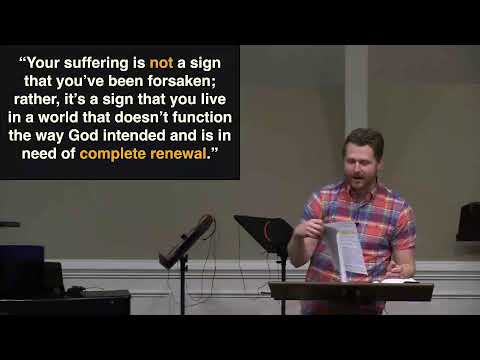 • 5/10/26
Sunday Service: 05/10/26
Good morning, friends! We’re in week 5 of our I AM series in the Gospel of John. This series is based on the most important question Jesus ever asked—and still asks us today which is “Who do you say I am?” As we look to answer that, we can find ourselves in the Gospel According to John. One unique feature of John’s Gospel is the seven ‘I AM’ statements—where Jesus reveals that he is Yahweh and shows us who he is. We’re going to focus on the fifth I AM statement today – I am the resurrection and the life.
A few months ago, we were having a really hard time with Lucas sleeping through the night. Depending on your parenting philosophy, you’ll either understand or judge me in this next sentence. But, we practice the cry-it-out method in our home which means that kids need to learn how to soothe themselves even if that means they cry for a LONG time. One night, when we were especially tired, I can remember Lucas wailing around midnight. I did the natural thing and prayed to God asking: “Lord, please help him to calm down so I can sleep, er I mean, so he can sleep.” Did Lucas calm down? No, he took that prayer as a challenge and ramped up his crying efforts. Eventually, Katlyn got up and fed him. Then, he slept.
So, the Lord didn’t respond to that simple, groggy prayer. I wasn’t too disappointed about it. But, what happens when we are disappointed in God with something more serious than a night time interruption? What happens when we start to question if God cares or why he’s letting something happen? Like a cancer diagnosis? Unexpected death? Job loss?
You’ve likely prayed for something and it’s felt like God has been silent which leads to doubts. In John 11, we’re going to move through a story that follows two sisters who loves Jesus but who were deeply disappointed in him. In this story, Jesus wants us to see something profound which is: Jesus meets your deepest doubts with his compassion and power. That means your pain isn’t ignored or brushed under the rug but it’ll be dealt with by Jesus.
Will you stand if you’re able as we read John 11:17-44?
Our Deepest Doubts – Tension
Now in this story, there is pain in Mary and Martha’s life. I want to pull some of these details out so you can grasp the situation with me here: Lazarus was sick up to the point of death. Their family was likely wealthy (Mary had the pure nard in chapter 12 and tons of people came to Lazarus’s funeral) so they could have afforded a great doctor. But, they realize the severity of their situation and know they need a miracle which is why they try to get Jesus to come but he’s far away, at least a day’s travel. Why is Jesus so far away?
Bethany is close to Jerusalem just two miles away. In chapter 10, when, Jesus was last in Jerusalem, the religious leaders attempted to murder him by stoning him. So, Jesus and his disciples away from Jerusalem into what’s known as Perea where John the Baptist was active in the early days. Mary and Martha would have known that the religious leaders tried to stone Jesus but they’re desperate. So, they ask Jesus to come – even if he may be seen by those who want to kill him. And Jesus comes.
But Jesus didn’t make it in-time. Lazarus died. As Jesus arrives at their home, Mary and Martha have different responses: Mary stays home at first but Martha goes. Martha and Mary both say something similar to Jesus: “If you had been here, Lazarus would not have died.” They both affirm that Jesus is powerful and he could have done something if he was there. Martha does go a step further and expresses the belief that Jesus is the Messiah, the Son of God. Martha illustrates this tension of being disappointed by God but also still believing in who he is.
In expressing those feelings, Mary and Martha reveal their heartbreak. Some of you are carrying pain and hurt like that right now. Like Mary and Martha, we’ve asked our own questions of Jesus: where are you? What are you doing? Why did you answer that prayer but not this one? Don’t you care? Are you really in control? Is all this evil in the world really going to be dealt with by you? We’ve been disappointed by the inaction or silence from God, at least from our perspective.
But underneath all their grief are two primary questions though:
1. Jesus, do you even care?
2. Why are you letting this happen?
And if you’re honest with yourself, you’ve thought these questions as well. Yes? Thankfully, Jesus shows us that he has more than capable of responding to these doubts we have.
Let’s take the first question: Jesus – do you even care?
Jesus, do you even care?
As I said at the start, the main truth of this story I want to convey today is: Jesus meets your deepest doubts with his compassion and power. So, what Compassion mean? Compassion literally means “to suffer with” and that’s exactly what Jesus does in this story, in two particular ways:
1. He came and listened: Jesus knows he’s close to Jerusalem and as I shared, there are people in Jerusalem who want him dead. With a funeral like Lazarus’s it’s not a small thing, it’s a big one – likely made up of some people who will go tell the Sanhedrin what happened (this then happens at the end of chapter 11). Despite the risk to his life, Jesus came. And when he gets there, he listens to Martha and Mary. As they express their sadness over what happened, Jesus doesn’t rebuke them or yell at them to say: you just need more faith, get over it. He patiently listened to their pleas even though he was going to raise their brother back to life. Friends, Jesus was not afraid of Mary and Martha’s questions, he welcomes your questions too and is not afraid of them. After Jesus listened though, his heart breaks and…
2. He wept. Do you see the humanity of Christ in this story? He was so deeply moved, he wept. There’s earthly chaos in this story: dozens of people wailing and crying, Jewish people wondering aloud why Jesus didn’t prevent Lazarus from dying, a lost friend and brother, and a grieving pair of sisters who Jesus deeply loves. But going deeper, there’s spiritual chaos in this story: Jesus has come face-to-to face with the result of sin, death. And he weeps over it. He weeps because this isn’t how his world is supposed to be. He grieves the sad things we go through because he himself has gone through them too and knows what it’s like.
If you’ve ever wondered what that compassion feels like, I’d recommend checking out The Magician’s Nephew: the first book in the Chronicles of Narnia series. The book primarily follows a boy named Digory who witnesses the creation of Narnia through Aslan’s power. Now, Digory’s mom is extremely sick and dying. While seeing the power of Aslan, Digory begins to make the connection that perhaps Aslan could save his mom’s life. Towards the end of the story, Aslan is sending Digory on a mission to pick an apple from a special garden that Aslan needs. As he’s being sent out, Digory and Aslan share a breathtaking moment…
“Are you ready?” said the Lion.
“Yes,” said Digory. He had for a second some wild idea of saying “I’’ll try to help you if you’ll promise to help my mother,” but he realized in time that the Lion was not at all the sort of person one could try to make bargains with. But when he had said “Yes,” he thought of his mother, and he though of the great hopes he had had, and how they were all dying away, and a lump came in his throat and tears in his eyes, and he blurted out:
“But please, please – won’t you – can’t you give me something that will cure Mother?” Up till then he had been looking at the Lion’s great feet and huge claws on them; now, in his despair, he looked up at its face. What he saw surprised him as much as anything in his whole life. For the tawny face was bent down near his own and (wonder of wonders) great shining tears stood in the Lion’s eyes. They were such big, bright tears compared with Digory’s own that for a moment he felt as if the Lion must really be sorrier about his mother than he was himself.
“My son, my son,” said Aslan. “I know. Grief is great. Only you and I in this land know that yet. Let us be good to one another.” – Pg. 153 and 154
As Diggory heads into the garden, the witch attempts to convince Digory that he should abandon Aslan and use the apple for himself to save his mother. Sound familiar? But, Digory does something that we can all learn from…
“Digory never spoke on the way back, and the others were shy of speaking to him. He was very sad and he wasn’t even sure all the time that he had done the right thing; but whenever he remembered the shining tears in Aslan’s eyes, he became sure.” – Pg. 179
My dear friends, that is the heart of Christ on full display in C.S. Lewis’s story. Digory’s story tells us something profound: knowing the heart of Christ doesn’t remove suffering – but it does help us endure it differently. It doesn’t mean we’re thriving or even happy but it becomes bearable because we know the heart of Christ. So when you feel tempted to doubt : “Is God for me?” “Why is this happening to me?” “Why isn’t God responding to my prayers in this way?” Look to John 11 and see the weeping Christ – who weeps with you today. I know of some very real and hard things going on right now and I can promise you that there are going to be very real and hard things in the future. But, what I can promise you from this passage is that Christ has compassion for you. Do not allow your doubts to overwhelm you – instead, head to John 11 and see his heart for you and the suffering you’re in.
So John 11 shows us clearly that Jesus cares — he came, he listened, he wept. But Mary and Martha — and if we're honest, we — still have a second, deeper question...And J.D. Greear once said: I don’t just need a compassionate friend, I need a conquering hero. So, what is that second, deeper question?
Why are you letting this happen?
Here’s what’s unsettling about this story. Jesus could have prevented this but he didn’t. John shows us that Jesus loved Mary, Martha, and Jesus so when he heard the news that Lazarus was sick (he was actually dead by the time they got the news), Jesus waited two more days before leaving to go help. Why in the world would Jesus do that?
Jesus tells us in verse 15 and 40 that he waited so that the full glory of God would be displayed and as a result, the disciples would have their faith strengthened. Why would waiting do that?
By day 4, there was no doubt that Lazarus was truly dead. And over the course of those 4 days, Mary, Martha, and everyone else who mourned Lazarus felt the enormous weight of death. Their grief would have been overwhelming, especially because they believed in the power of Jesus – the same Jesus who helped the paralytic walk, the blind see, and the lepers healed. They would have been asking: why are you letting this happen, Lord?
Since we already talked about how Jesus cares, let’s head to verse 38 afterwards where a mood shift happens in the story. It says Jesus is “deeply moved.” That means Jesus is is indignant – he’s righteously angry. In the original language John used, deeply moved suggests a holy fury towards the intrusion of death into God’s world.
Jesus is angry because he sees how death has robbed his friend Lazarus and he’s compelled to do something about it. He’s righteously angry because Jesus knows things shouldn’t be this way but they are. He’s righteously angry because at this present moment, death had its victory. He’s righteously angry because there is unbelief in the crowd. But, Jesus is the only one who has the authority and power to do something about it. Leslie Newbigin in his commentary on this passage explained it this way: “Jesus was facing that power which he had come to destroy, a power which is met by the wrath of him who is the author of life, but which could only be cast out when the author of life took the whole power of death upon himself.” So, what does Jesus do after arriving at the tomb?
He asks them to move the stone and Martha expresses dismay and doubt. “Lord, there will be a stench!” Jesus responds by saying if she believes, she will see the glory of God.” Jesus prays and then calls in a loud voice: “Lazarus, come out!” Early church tradition held that Jesus spoke with such authority in this moment that if Jesus didn’t specify by saying Lazarus’ name, every tomb in the whole world would have emptied.
And the craziest part of this story is that Lazarus did indeed come out, alive and well. So after Lazarus is alive, I want you to imagine the joy: do you hear the shouts of joy and exclamation at this moment? Do you hear the “I can’t believe this is real” moments? Do you hear the sorrow transforming to joy?
But, this miracle comes at a cost. You see by heading to Lazarus’s funeral, Jesus sealed his fate: chapter 11 goes on to detail how the resurrection of Lazarus was the final nail in the coffin for Jesus. The Sanhedrin used this moment to justify that Jesus was dangerous and deserved to die. The raising of Lazarus is the final ‘sign’ of John’s Gospels and signs point or direct us to something, right? What does this miracle point to? It points to Jesus’ own death and resurrection.
Scripture tells us that the wages of sin is death, meaning we are born in sin. We can’t help ourselves and we don’t want to submit to God’s lordship. Because of that, we choose a path that leads to death and separation from God. That’s what sin gives us, death – seems like a poor reward. You see, God hates sin and death – but we have sin and death in us. So, how can he destroy sin and death without destroying us? By pouring out sin and death on his very own son, dying for us. And just like Lazarus was laid in a tomb, so was Jesus. And just like Lazarus, Jesus didn’t stay dead but rather he came back to life – disarming the power and sting of death through his resurrection. It’s a powerful historical event and earth-shattering.
The effects of Jesus’ resurrection reminds me of the end of Return of the King (Book #3 of LOTR), the evil ring has been destroyed, and it nearly took Frodo and Samwise Gamgee’s life. They were injured and slept multiple days as they recovered. When Samwise finally awakes, he finds out that things are even better than he imagined they’d turn out:
“Gandalf! I thought you were dead! But then I thought I was dead myself. Is everything sad going to come untrue? What's happened to the world?"
A great Shadow has departed," said Gandalf, and then he laughed and the sound was like music, or like water in a parched land;”So, why did Jesus let Lazarus’s death happen? Why did he allow his own death to happen? To begin the process of making everything sad come untrue. That doesn’t mean everything gets resolved for you. But it does mean that as the great resurrection and life, Jesus is working to undo the effects of sin and death. Revelation 21:5 records Jesus saying: “Behold, I am making all things new.” Jesus’ resurrection of Lazarus and himself show that he has the power to bring life from death and the power to bring something good from the worst things that have happened to us. And as we look back at our lives in the presence of Jesus, our toughest moments will be eclipsed by the joy of our faith turning to sight.
There is still an inherent mystery of our faith. There are still going to be times where we’re unsure what God is up to.
But here’s the thing: without God, suffering has no ultimate meaning or redemption. But in light of Christ, our pain is never wasted and he’s promised to suffer alongside us. And when Christ returns, those momentary afflictions will pale in comparison to the eternal glories promised to those who are in Christ.
Paul David Tripp (Kidney Failure) – Inspiration
For Lent this past year, most of you read a devotional series written by Paul David Tripp and I hope they were a blessing to you. What you may not know about Paul David Tripp is he nearly died in 2014 from acute kidney failure. He talks about this in his book, “Suffering.” Over the course of a few years, Paul had multiple kidney surgeries and was in extreme amounts of pain for hours each day. He was doing dialysis, he couldn’t walk very well, and at the height of his career, he had to stop traveling and speaking. He still has the lingering effects of this and ongoing pain to this day.
Despite that, he wrote a little book called: “Suffering: Gospel Hope When Life Doesn’t Make Sense.” In it, he gives voice to the questions of “does God care about me?” and “Why are you letting this happen?” He had real pain, real reason to wonder about God, and instead he wrote the following quote that stuck with me:
“Your suffering is not a sign that you’ve been forsaken; rather, it’s a sign that you live in a world that doesn’t function the way God intended and is in need of complete renewal.”
To my knowledge, it’s one of Paul’s most well-known and sold books. So even in Paul’s pain, God is still able to use it for good by ministering to others who are suffering.
As the resurrection and the life, Jesus is the one who is ushering in that total renewal, my friends. For those of you in a season of suffering, you are not forsaken.
Now, how do you actually live this out? It’s great to know Jesus is compassionate and that he cares and he has purpose behind our pain.
Jesus asks Martha a question in verse 26 that cuts right to the heart of everything: "Do you believe this?"
Not — do you know why this is happening? Not — why aren’t you trusting me more? Just: do you believe this?
So let me ask you the same thing this morning. And I want to speak to two groups of people here.
If you're in a season of suffering right now —I want you to hear this: you don’t have to hide your questions from Jesus. Mary and Martha didn't. They walked straight up to him with their grief and their disappointment and said "where were you?" And Jesus didn't flinch or condemn them. He wept with them. He weeps with you.
So this week, I want to give you one simple, concrete practice: go home and read John 11 slowly. Not as a Bible study — as a conversation. Bring your name into it. Where Mary says "Lord, if you had been here" — let that be your voice. Let your specific hurt, your specific question, sit in that story. And as you do, look for the weeping Christ. Let his tears remind you, the way Aslan's tears reminded Digory, that he is not indifferent to what you're carrying. Then, if you're able, share what you're going through with a trusted friend this week. Suffering in isolation is one of the enemy's favorite tools. Don't let him have it.
And if life is relatively stable for you right now — things are okay, no major crisis — I want to gently say: this sermon was also for you. The Christian walk is not one of ease, it’s one of picking up your cross and following him. Suffering will come so are you ready for it? So do the same thing: read John 11 this week. Get familiar with this story now, while things are okay so you’re ready to face trials in the future.
For both groups — the hurting and the stable — here's the thing I want you to walk out of here with today:
Jesus meets your deepest doubts with his compassion and power. Your pain is not invisible to him. Your questions don't scare him. And because of his resurrection, not a single moment of your suffering is wasted. He is making all things new — and that includes whatever you walked in here carrying today.
So, like Jesus asked Martha: Do you believe this? Let me pray.
-

Sunday Service: 05/03/26
Good morning, friends! We’re in week 4 of our I AM series in the Gospel of John. This series is based on the most important question Jesus ever asked—and still asks us today which is “Who do you say I am?” As we look to answer that, we can find ourselves in the Gospel According to John. One unique feature of John’s Gospel is the seven ‘I AM’ statements—where Jesus reveals that he is Yahweh and shows us who he is. We’re going to focus on the fourth I AM statement today.
In the third Star Wars film, Anakin Skywalker is a loyal Jedi Knight. He fights for peace, the security of the galaxy, and the freedom of the republic. He’s a little annoying but mostly, he cares about protecting innocent lives. He has followers – troops under his commands and close Jedi friends. But throughout the film, we begin to see moments of darkness in Anakin. Soon after, Anakin turns to the dark side and transforms into Darth Vader – hurting the very people who he was called to lead. Anakin’s betrayal cuts deep if you’re a Star Wars fan.
But, it got me thinking how often we follow something or someone only for it to betray us. In a much deeper way in John 10, Jesus is talking to a group of people who have been betrayed by bad shepherds – shepherds who were supposed to care for them. They’ve been abandoned, used, and failed by their leaders – just like Anakin failed his fellow Jedi knights. So, Jesus arrives on the scene to say he’s the good shepherd – one who won’t abandon his sheep, one who won’t use them for his own benefit, and one who won’t fail.
Today, we’ll be meditating on Jesus as the Good Shepherd. By the end of today, you’ll see that should let Jesus lead your life instead of the things that will ultimately fail you. Why should we let Jesus lead our lives? In John 10, we’ll see three compelling reasons why.
Will you stand with me if you’re able as we read God’s word?
Jesus knows you completely and won’t reject you.
In verse 14, Jesus says something startling when you dwell on it: “I know my sheep and my sheep know me, just as the Father knows me and I know the Father.” Jesus uses the closest relationship imaginable – the father and the son – to show how he knows us. Jesus and the Father, two persons of the Triune God, have existed in perfect fellowship with each other since forever. They know each other’s character, attributes, desires, etc. Out of perfect love and unity, they’ve decided to redeem a fallen humanity. There isn’t a single thing that they don’t know about each other.
And that’s how Jesus says he knows you and me. Douglas MacMillan was a Scottish pastor in the late 20th century. Before he was called to serve as a pastor, he was actually a shepherd. He’d often share a story where he was riding a train through the Scottish countryside with a fellow shepherd. As they were riding and moving at a fast pace, they could see 4 sheep close to the tracks on the side of a fence. In a moment’s notice, Douglas could tell they were his sheep because the way their wool grew, the shapes of their bodies, and the tag in its ear – even though he kept hundreds of sheep. Good shepherds know their sheep and they are the experts on them.
That’s how Jesus knows us too. Do you ever just sit with that? Jesus knows you. Yes, you. The good things that make you feel good inside: perhaps your skills, gifts, family relationships, whatever. But, he also knows the bad things: perhaps the thing you’re too ashamed to talk about, that pattern of sin that you find yourself stuck in or that deep struggle and suffering you’re going through right now. On one hand, we should take great comfort in being fully known by Jesus. But on the other hand, if we’re honest, it freaks us out a little bit. Why?
In all of us, we share a common desire for safety and love. But, you can only experience safety and love if you dare to be vulnerable. Vulnerability can be hard for many of us – we live in a culture that only celebrates the wins in our lives, never our losses. Or perhaps we’ve shared vulnerability in the past and it’s been met with judgement. If that’s you, I’m so sorry that happened. So where we’ve been let down by others or by culture, Jesus knows us fully and yet still loves us.
Psalm 139 tells us: “You know when I sit and when I rise; you perceive my thoughts from afar. 3 You discern my going out and my lying down; you are familiar with all my ways.” But, it gets better than that: Jesus just doesn’t just know us and love us, we belong to him just like he says in verse 12. That can be hard for those of us who struggle with vulnerability or feelings like we’re not good enough because we think that the more someone knows about us, the less they’ll like.
If Jesus really knows everything about you… the natural question is: Why doesn’t he walk away?
2 years ago, I was on a daily quest to find a suitable used pop-up camper for my family. I had read dozens of articles, reddit posts, YouTube videos, and more to become an expert. Specifically, I wanted a Coleman pop-up camper. From my research, I knew the problems to avoid: avoid these particular years because they have a poor roof construction, floor sagging, avoid this, avoid that. If I saw one issue, I was done with it and moved on.
Unlike me in my search for a pop-up, Jesus doesn’t write us off when he knows our issues. Rather he says that he knows us and he is still our shepherd. He knows the flaws that we have and still chooses to lead us. I’ve heard it said that the only qualification for coming to Christ is to admit that you are unqualified.
But since Jesus knows us and we belong to him, he doesn’t abandon us like the hired hands. He doesn’t run away because is a good shepherd – he’s the better shepherd. Why is he so much better than the hired hands? He doesn’t just stay with the sheep – he does something that all normal shepherds don’t want to do.
Jesus proves his love by dying for you.
As Jesus is speaking about sheep and shepherds, there’s a chapter in the Old Testament that the Pharisees would have been thinking about.
In Ezekiel 34, God rebukes the religious leaders of God’s people in that day. The religious leaders would be considered shepherds, and the people would be considered the flock. So, why is God rebuking them? For a few reasons:
· The shepherds did not love or bother to know their sheep
· The shepherds did not care if a sheep was lost, hungry, hurt, or weak
· The shepherds bailed on the sheep in their time of need
But God makes a promise to the hurt flock: he promises that one day, he will come and be their shepherd himself. He will be a better shepherd that will take care of his sheep, he will find those who are lost, he will strengthen and comfort the hurt, and he will protect them from their adversaries. So Jesus comes into say that he is the good shepherd.
He is not like the hired hands (ie. The Pharisees) who flee from their flocks in moments of danger. Instead, Jesus will lay down his life for his sheep. Well, why would Jesus do that? In real life, if a shepherd dies, the sheep are in more danger—not less. So why would he allow himself to die? Jesus knew our greatest danger wasn’t a wolf or a wild animal. Our greatest danger is sin and death.
The bible tells us that we are slaves to sin – meaning, we are owned by it, without an external intervention, we are helpless to free ourselves from its power. Sin causes us to become lost or separated from our creator, brings fear and shame in us, and hurts ourselves, others, and our world. So when Jesus lays down his life, he absorbs the punishment and effects that our sin creates into himself. Or as Paul says in Romans 5:8: God demonstrates his love for us that while we were still sinners, Christ Jesus died for us.
So, Jesus is wanting these hearers to realize: he’s better than those hired hands because he’s going to die for us. I imagine many of the original hearers were worried about Jesus: will he abandon me? Will he promise me the world and then leave when things get hard? Jesus’ statements are to demonstrate his faithful love that he will never leave you.
In the Wingfeather Saga (PIC), Nia is the mother of three kids, one of those kids in Kalmar. Long story short, Nia and her family found refuge in her hometown from a horrific war and enemy. But the townspeople are very skeptical of Kalmar because he looks different than everyone else and has made some mistakes. Kalmar feels shame and regret over what he did. So the townspeople are about to throw Kalmar in the dungeon because they believe he’s dangerous. But Nia stops them by enacting something called: “Turalay.” Turalay meant that if Kalmar was found guilty of a crime, Kalmar would not be punished but rather Nia would be. Nia has to slice her hand and put a bloody handprint on a tree in the town’s center to fully enact it. Nia’s bloody handprint on that tree served as a reminder to Kalmar that he was loved and that his mom deeply cared for him. In the coming weeks, Kalmar faced trial after trial but that bloody handprint on the tree was still there – reminding him of his mom’s commitment to him.
And in the same way, that’s what Jesus did for us. That’s what Jesus wants us to see at the cross. There may be times where we really ask: Jesus, are you actually a good shepherd? And he wants us to remember the cross where he died for us so we can say: Yes, you are the good shepherd because you dealt with my biggest problem on the cross. You’ll lead me through these other problems as well.
Because he rose again, he’s not just a shepherd who rescues you from danger—he’s a shepherd who actively leads your life.
Jesus leads you through death to life.
The shepherds in Jesus’ time would be familiar with two environments: the wilderness and lush green pastures where their sheep could graze and lie down to rest. The wilderness is a harsh place: there’s no water, there’s sharp rocks, there’s wild animals that threaten you, and potentially some criminals. On the other hand, green pastures sound so nice – there’s plenty of food, soft grass to sleep on, and relative safety.
If a shepherd keeps his sheep in one spot for too long, the sheep will eventually eat every blade of grass in that area. So, a shepherd has to keep his sheep moving to prevent that from happening. There aren’t just endless green pastures in Israel so they’d have to go through some wilderness to get there. If I’m a sheep, that sounds a little annoying – I don’t want to walk on rocks or harsh dirt. I don’t want to sleep on rocky terrain. But we need to head through the wilderness to get to the green pastures.
It’s the same way in our lives – when Jesus died for us and we believe that, he becomes our new leader and shepherd. He’s the one who guides us from place to place. Jesus, as the good shepherd, knows where he’s taking us – we often don’t know, we’re just the sheep. As he’s leading us, he’s going to take us into the wilderness for some seasons. It may feel like things are getting worse for us, not better. Why would Jesus do this?
He says this in verse 17 – he lays downs his life but he has the authority to take it up again. So as he’s leading us into wilderness, his heart is to give us new life through it. Jesus has the authority to use all the difficult things in our lives to be transformed for our ultimate good. The reason why Jesus is the most qualified to lead you through the wilderness is because he’s gone through his own wilderness. He faced betrayal, abandonment, and death itself. But, he overcame death which gives us hope in the power of God but also in the presence of God.
The strong, capable, noble shepherd is with you. Jesus is leading you towards the green pastures but you need to head through some wilderness first. Because here’s the thing: if you only ever experience green pastures, you won’t really appreciate them. They’re just your new normal.
When I’ve traveled in my last role at Compassion, we’d be eating just what I’d consider a regular meal: a thin pork chop with rice, beans, and a coke. I was grateful to eat but it wasn’t a big deal for me. But then I’d see how the children’s faces would light up as the church volunteers would bring them a plate like mine. They’d devour it within a few minutes. Why? Because they know what it’s like to go hungry, so they deeply appreciate this hearty meal.
For us today, we share in the sufferings of Christ like 1 Peter talks about so we can also share in the glories of Christ as well. Our shepherd is with us in the wilderness and he’s leading towards green pastures – the pastures will not be a life of ease or comfort. But, the pastures are seasons where you experience a deep intimacy with Christ. The pastures are where you refresh yourself in the presence of the Lord and grow in holiness. Christ is after our whole hearts, untainted by sin.
So, my question for us after that is: what is leading your life? My encouragement to you is: let Jesus lead your life instead of the things that will ultimately fail you. As you think of that question: what is leading your life? What directs or shapes your actions? Who impacts your decisions on where to live, how to spend your money, or how to structure your time?
If Jesus isn’t the good shepherd of your life and leading you, you’re going to end up being led by something or someone that will fail you, abandon you, or exploit you. What do I mean?
If your spouse or your kids are what lead and shape your every action, what happens when they fail you? If your work, career, or salary level are what lead and shape your every action, what happens when you get let go? If people’s approval are what lead and shape your every action, what happens when you get criticized?
Jesus isn’t just a good shepherd, he’s a better shepherd than those other things. He’s the only who knows you completely and won’t reject you. He’s proved that totally by dying for you. He’s going to lead you through death to life. Your spouse or kids can’t be your savior, only Jesus can be. Your workplace will let you go if times get tough and job cuts need to happen. Your fight for approval from others won’t save you, it’ll imprison you. Family, work, and receiving praise are great things – don’t get me wrong. But, those things, when they become your main thing, become idols and they will crush you.
As we begin to sing one final song, I want you to reflect on and ask Jesus: what is leading my life? If it’s not Jesus, take some time to get right with him right here and right now. You’ve seen through today’s text who he is and what he’s done for you. He’s the only Good Shepherd you need and with him leading you, everything else will be kept in its proper place. If you need prayer, we have a prayer team in the back of the sanctuary ready to pray with you.
What is leading your life? My encouragement to you is: let Jesus lead your life instead of the things that will ultimately fail you.
Please stand, if you’re able, as we prepare to pray.
-
 • 4/26/26
Sunday Service: 04/26/26
Good morning, friends! We’re in week 3 of our I AM series in the Gospel of John. This series is based on the most important question Jesus ever asked—and still asks us today which is “Who do you say I am?” As we look to answer that, we can find ourselves in the Gospel According to John. One unique feature of John’s Gospel is the seven ‘I AM’ statements—where Jesus reveals that he is Yahweh and shows us who he is. We’re going to focus on the third I AM statement today.
First, I want to show you a picture of a door. But, not just any door. It’s the door to 10 Downing Street in London. This is the door to the Prime Minister’s residence in the U.K. It’s not open to the public and to get there, you’d have to sneak around secure fencing, 24/7 security, and more. But once you get to the door, there’s actually no keyhole and it’s made of steel. It’s blast proof meaning it should be able to withstand a direct explosion on it. Now, does this door scream “come on in?” No, of course not.
And it got me thinking that this is how people view God often. They view him as closed off, difficult to get to, and indifferent. But is that true? It’s not true.
Today, we’ll be reading John 10:1-10 to see that would be an incorrect view of God. And instead, we’ll see that God is not closed off – instead, he invites us in to his kingdom through the gate.
We will see that in Jesus alone, we find true freedom, unshakeable security, and a joyful life for today.
Would you please stand if you’re able as we read God’s Word?
Jesus Alone
In verse 7, Jesus makes the exclusive claim that he is the gate. He’s not just an option to getting right with God, he is the only option. That sounds harsh, I know. But, do you ever notice how when Jesus says something controversial or difficult, he doubles down? That’s what he does next in verse 9. Jesus expounds upon this idea that the only way to experience the gift of salvation is to enter through the gate of Jesus. It’s almost as if he is saying: in case I wasn’t clear, I AM the gate not just an option for you.
I want to briefly show you how important gates or doors are in the bible. Riveting stuff, I know? First, just what a gate does: a gate marks a boundary between those on the inside and those on the outside. Throughout the Old Testament, gates or doors were often used to separate the heavenly and earthly realms. For instance, the holy of holies in the temple was separated by a gate or veil. On one side, the very presence and fierce holiness of the Lord was there – bringing heaven down to earth. On the other side, the Levitical priests made sacrifices to atone for the sins of the people. All of this was separated by a veil, door, or gate. Without those sacrifices and following God’s instructions on one particular day, there was never a way to cross that veil or gate.
And now, Jesus says that he is the gate. He’s the one who controls that now, it’s not about the sacrifices by the priests anymore. It’s about the sacrifice of Christ, once and for all – that’s why the veil tore in two when Jesus died. In effect, that said the barrier is gone – the way to God is open! So, Jesus is the ultimate revelation of heaven coming down to earth. Leslie Newbiggin, in his commentary, put it this way: “Jesus is the ladder by which traffic between heaven and earth is carried.” So, when we enter his gate as his followers, we enter into the Kingdom of Heaven.
When you start to talk about Jesus being the only gate or entryway to God, people often call that idea closed-minded or arrogant. Ultimately, it’s neither of those things though – it’s not arrogant because Jesus is saying that this is true, it’s just reality. The bigger question folks should be asking is: is Jesus right?
Imagine with me this scenario. You have a life-threatening sickness, so you go to the doctor. Your doctor tells you: look, I can heal you with this brand-new treatment but it’s the only treatment that’s going to work. All the other treatments won’t give you what you need. You look at your doctor and say: Wow, you’re so arrogant saying there’s only one way to be healed. How do you know those other treatments don’t work? Your doctor looks at you, stunned. Your doctor is the expert, he knows what you truly need.
And it’s the same way with Jesus. Jesus knows exactly what we need. He has the authority to claim he is the only way because he is God in the flesh. To disagree with him on this claim is to disagree with his divinity. But because of that, how should we respond?
We must first understand this truth for ourselves – we must not look within ourselves to see if we are saved or to look at our good deeds. Instead, we must enter through Christ and rest in his free gift of salvation. But if he is truly the gate, our hearts must break for those who haven’t found Jesus. Our hearts must not stop at mere heartbreak for them but be spurred into action for them as well. It’s not on us to save, God does that but it’s our responsibility to spread the message – faith comes by hearing the Gospel, not just by the way you live your life. Yes, live your life as a message but you must also share that message too. I always loved how Charles Spurgeon expressed this thought: “If sinners be damned, at least let them leap to Hell over our dead bodies. And if they perish, let them perish with our arms wrapped about their knees, imploring them to stay. If Hell must be filled, let it be filled in the teeth of our exertions, and let not one go unwarned and unprayed for.”
So if Jesus alone is the gate, then what does life inside the gate actually look like?
True Freedom
In these verses, Jesus is helping us to see that there are real thieves and robbers who are out to deceive us. He is talking about the Pharisees and you can see that in verse 1. Why is he calling the Pharisees thieves and robbers? They’re leading people astray. Rather than encouraging faith in a God who interacts with humanity, they encouraged strict adherence to the rules or traditions that they established. They placed obedience through effort instead of obedience through reliance on the holy spirit. They placed God’s love as something they need to earn rather than a free gift to receive. They placed their good rituals or commands as a formula to follow instead of a way to serve their neighbor and experience God’s presence. Obedience to God is extremely necessary but it flows from God’s love.
But, here’s what happens to people in those situations: you feel like the weight of the world is on your shoulders. You feel the weight of your own sin and it’s only amplified by more and more law without grace. You begin to actually resent God because he has a standard that you’ll never measure up to. You end up becoming enslaved to the mantra of try harder, try harder, try harder. If you’ve been there, does that ever work? No, it doesn’t – you’re a slave to spiritual burdens.
There are also thieves and robbers who will try to convince you that true freedom is being able to do what you want when you want. Scripture tells us though that this too will fail: why? Because, you’re a slave to sin and we’ll start to choose things that are genuinely destructive to ourselves and others. Those are things that are thieves and robbers. But, Jesus is the one who gives you freedom.
How do you break out of spiritual prison? Jesus tells us in chapter 8: he says that if we know the truth, the truth will set you free. Jesus is the truth and we enter the gate. Then, we are free from being a slave to spiritual burdens and free from being a slave to sin. So, does that mean we can do what we want once we know Jesus? No, we don’t define freedom – Jesus does.
Some of you may be thinking or may know people who would think this way…Jesus doesn’t give true freedom, he just gives us more rules to follow like we need to pray, we need to love, we need to forgive, etc. He doesn’t bring true freedom. Let me show you a picture. G.K. Chesterton, the famous British author, wrote about this. He tells the story of a bunch of boys who would often play alongside these cliffs in the U.K. At that time, there were these sturdy fences on the edge of the cliffs to prevent anyone from tumbling down. Those fences were there for safety and gave the boys the opportunity to truly live and have fun. But, some enlightened people believed the fences weren’t allowing the boys to experience true freedom so they removed the fences. Now, the boys were too afraid to play because they could easily tumble down and hurt themselves. Which boys experienced more freedom? Well, the boys who could play within the safe boundaries of the fence.
In the same way, that’s how Jesus offers us true freedom. It’s better than legalism and doing whatever we feel is best. But true freedom is embracing our God-given limits, taking God at his word and obeying, and trusting in his free love then we will be filled with joy. When Jesus commands us to do something, it’s for our ultimate good – he is, after all, the author of life. He knows how life should work and his commands are for the best.
So, I would ask you: are you experiencing the freedom that Jesus offers us? What thieves and robbers have come into your life? Do they still have a residence in you or have you given them to Jesus? Have you experienced Jesus as the gate?
When you enter through the gate that is Jesus, you’re not entering something weak or temporary. You’re entering something strong and steadfast which is why Jesus also brings:
Unshakeable Security
Take a look at verse 9: Jesus says that we come in and come out. What’s that mean? It means that Jesus is with us in the comings and goings of life. Jesus is like a security guard as we go about our day. Because his presence is with us, there isn’t a time where we are ever truly alone – this gives us comfort on our sad days, strength in our moments of weakness or temptation, and peace when we’re feeling anxious.
When life does get hard, scary, or difficult, this text also should help us remember that we are secure in Jesus’ sheepfold. Let me show you another picture. In ancient Israel and still present day, shepherds are actually the gates for their sheep. Let me show you a picture of a sheepfold. In that tiny gap, that’s where the Shepherd would sleep. So, few things worth noting: there was no way a wolf or someone could crawl over a Shepherd without them noticing. Also, there was no a way a person could crawl in on the side, lift a sheep over the wall, and steal them without the shepherd noticing.
For us, Romans 8 tells us that: “38 For I am convinced that neither death nor life, neither angels nor demons, neither the present nor the future, nor any powers, 39 neither height nor depth, nor anything else in all creation, will be able to separate us from the love of God that is in Christ Jesus our Lord. “ We are secure in his fold, nothing can separate us from the love of God just like a sheep couldn’t be separated from his shepherd in the fold.
Imagine the enormity of Jesus as the gate: he tells his friends that the gates of hell will not prevail against him. He wasn’t held down by the powers of sin and darkness. He has the power to reach down into death itself and rescue people like Jairus’ daughter, Lazarus, others, and all of us here. He has the power to restore sight to the blind and walking to the lame. If that’s who is covering the gate, why should we have cause for worry in our lives? We are secure in the sheepfold of Jesus. Will there be tough times and times of suffering? Yes. But God uses the tough times in our lives to shape us and make us look more like his son. And when we feel overwhelmed like we can’t go on, we don’t have to go far for help – he’s right there.
But, what’s even more beautiful is how accessible Jesus is in this statement. It says “whoever enters through me.” Other translations say “if anyone enters.” That tells us Jesus is available to every single human being on the face of the planet.
There’s no condition on this. It doesn’t say: only the poor or only the wealthy can enter. It doesn’t say only those who know a lot of the bible. It says whoever enters through me. Jesus is available for every single one of us. I love the way that Dane Ortlund describes Jesus: “Jesus is the most accessible person in the universe. You don't have to go through security to get to him. He doesn't say, Take a ticket and get in line. He doesn't put you on hold. He is supremely accessible. There's no minimum bar you need to get over to get to him. All you have to do, actually, is collapse in order to get into the heart of Christ. You have to humble yourself enough—something that most of us have a very difficult time doing—to fall into his arms because he is lowly.”
But, do we look to Jesus for our security? Do we view him as accessible to us? Perhaps we settle for lesser things: Jesus seems too abstract so I’ll place my security in my job, savings account, or perfect relationship. Prayer seems too hard so I’ll watch Youtube shorts for a few hours instead.
My friends, let us seriously consider the breathtaking invitation of Jesus as the gate. Let yourself experience his grace anew!
If we are secure in his accessible arms, that means we can experience abundant life like he describes in verse 10 which is our final point for today.
Joyful Life Today
When you think of the phrase, life to the full: what do you think? It really means life that is over the top. That’s what Jesus promises us in this passage of Scripture. Now, let’s be clear: he’s not promising that you’re going to live this crazy life where you never run out of money, you never have any worries, or you never have troubles today.
But, he is saying that you will have him. And Jesus is enough. Those other thieves and robbers are going to leave you disappointed and alone. Jesus promises to give you life not built on happiness but one that is built on joy. Jesus brings you joy. Because of Jesus, death has been defeated. Because of Jesus, your worst moments in life can be redeemed. Because of Jesus, you have a God who is on your side and who is working for your good in your life right now even if you can’t see it. When you step through the gate and experience more and more of Jesus, I promise you’ll find joy in following him. But, you need to step through.
Worship team, please come on up.
So, you’ve heard what Jesus says about Himself today. He doesn’t say he’s a gate. He says he is the gate. That means this isn’t just information to consider—it’s a decision to make. Because every single one of us is already building our life around something. But Jesus is clear: If it’s not him… it won’t deliver.
What promises freedom becomes slavery. What feels secure can vanish. What claims to give life leaves us empty.
He said: “I am the gate.” Not just to keep people out… but to bring people in. To bring you in. Into salvation you can’t earn, freedom you don’t chase, and security you don’t maintain. Into a life that is full—not because it’s easy, but because He is with you in it.
So the question isn’t: Do you agree with Jesus? The question is: Have you entered through Him?
Or are you still standing outside the gate? Because the invitation is open—but it won’t always be.
Jesus stands as the gate, and He says: “Come in.” Come in…and find life. Not later. Not someday. But now.
And for those of you who have already entered through the gate— this is your reminder: Stop living like you’re still outside. Walk in the freedom He’s given you. Rest in the security He’s secured for you. And go out into the world with urgency and compassion—Because there are still people standing outside the gate.
They need an invitation to come through. Let’s be the kind of people who don’t just admire the gate…but who walk through it, live in it, and lovingly call others to come in too.
Because Jesus alone is the gate to life.
-
 • 4/19/26
Sunday Service: 04/19/26
Good morning, friends! We’re in week 2 of our I AM series in the Gospel of John. This series is based on the most important question Jesus ever asked—and still asks us today which is “Who do you say I am?” As we look to answer that, we can find ourselves in the Gospel According to John. One unique feature of John’s Gospel is the seven ‘I AM’ statements—where Jesus reveals that he is Yahweh and shows us who he is.We’re going to focus on the second I AM statement today.
Now, I’m about to say something controversial here: I am not a huge fan of National Lampoon’s Christmas Vacation. You know the one with Clark Griswald? I just don’t think Chevy Chase is very funny or a good actor…I’m sorry. But, in that film, Clark is obsessed with decorating his home with as many Christmas lights as possible. He finally lights in a glorious moment in the film but it only flickers for a little bit. But in those few moments when the house is lit up, it’s glorious. The rest of the neighborhood looks dark compared to the light.
When I was working on the sermon for this week, I was reminded of that film because the light served as a beacon of hope for Clark that his Christmas and life were okay. But, that hope flickered and faded. So, today, we’re going to be in John 8:12 where we see Jesus as the Light of the World. He’s a better light than the Griswold house at Christmas and you best believe he’s going to stay lit for more than a few seconds.
So today, we’ll see how Jesus is the light of the world who gives us life, guides us, exposes our sin, and transforms us to reflect him.
Will you join me in standing as we hear the words of Christ?
Light gives and sustains life.
If you’ve been reading the Gospel of John with us, I’m hoping you can remember how John 1 began. In him was life, and that life was the light of all mankind. The light shines in the darkness, and the darkness has not overcome it. It also tells us that the true light that gave light to everyone came in the world. He was in the world and though he made the world, the world did not recognize him. So, that’s who John says Jesus is. But, who does Jesus himself see him as? He sees himself as the light of the world. Why is that significant?
If you’re a gardener or a succulent fan, you know the importance of light. We’re going to take it back to high-school science class and I’m hoping Brett Powell will correct me if I get photosynthesis wrong. Plants absorb light from the sun, convert that to energy, and use the energy to grow. What happens if plants don’t get enough light? Well, they die – snuffing out what could have been a beautiful reflection of God’s glory. And we don’t even think about it—but without light, life collapses. Here’s what’s so surprising about Jesus’ claim: he is saying I am that light that brings life!
In the same way, before Christ came, it would have seemed like the darkness was winning. Human beings fell into deeper and deeper dysfunction but Jesus arrived as the Light of the World. He came to bring light to the dark deeds of Satan and the poisonous effects of sin in us. Jesus doesn’t just bring light—he is the light. His life, death, and resurrection reveal that light to us. In the light of Christ, he offers new life – the life that we were meant to have. Jesus knows that without him as our light source, we will find ourselves in trouble. Paul echoes this same truth in Romans—life by the Spirit, death apart from Christ.
Now, that’s a harder pill to swallow. It’s often at this point that many skeptics (myself included before I came to faith in Christ) will balk at God or make the claim that Jesus seemed like a kind of cool teacher but I don’t believe the idea that he is God. But if Jesus is a good teacher, that means you have to seriously reconcile with what he said. Jesus doesn’t say he’s a light or an option for your spirituality—he says he’s the light. If that’s true, he doesn’t just help us—he defines reality. And if he rose from the dead, we don’t get to ignore him.
So, dear friends, have you chosen to allow the light of the world to give you new life? Do you rely on the Spirit to sustain your new life? Plants don’t create the light—they simply receive it and grow. We can receive more of God’s light through our time in the Word, prayer, serving, giving, worshipping together, and enjoying God’s good creation. I want us all to be healthy believers basking in the glory of Christ’s light.
Thankfully, light doesn’t just give us life and leave us to fend for ourselves. Light is actually a helpful tool for us here…
Light guides us when we cannot see.
Jesus’ timing of his declaration that he is the light of the world couldn’t have better placed, he intentionally set this up. What do I mean? In John 7, we get a timeline from John that is critical to us understanding the audacity of Jesus’ claim. John 7 tells us that this discourse happened during the Festival of Tabernacles or Sukkot. For those of you unfamiliar with Jewish holidays, the Festival of Tabernacles is an annual holiday for the Jewish people that they still celebrate to this day. It’s a holiday to commemorate how Yahweh protected Israel in the desert after the Exodus from Egypt. How did he protect them? Exodus 13 tells us: the LORD went ahead of them in a pillar of cloud to guide them on their way and by night in a pillar of fire to give them light. Those pillars were the very presence of the LORD in all of his dazzling glory and splendor.
Now, the desert is extremely dark at night. For a large group of people roaming the desert, they are an easy target for enemies. So, how does God help them? He gives them a pillar of fire so they could see. So as Jesus says he is the “Light of the World”, the Festival of Tabernacles is going on full-swing – the temple is lit up with multiple torches, lights, and huge menorahs with massive candles. They would burn these torches and candles all night and it would shine across the city of Jerusalem to remind the people of how God lit up the desert with his presence. On the final night of the festival, the Levitical priests would extinguish the torches and the candles to signify that the glory of the Lord had departed Jerusalem in the days of Ezekiel so now they had to wait for the glory to return with the messiah. All this is going on and this is when Jesus says: “I AM the light of the world.”
Do you see how audacious that claim is now that you know the background? We didn’t read the rest of chapter 8 but this is where the religious leaders get really really upset with Jesus because they get it: they understand that Jesus is making the claim that he is God in the flesh, the glory has returned to Israel, and he is giving light to the world. Since he is the light of the world, that means those who follow him won’t walk in darkness just like Israel wouldn’t walk in darkness when God’s presence was with them in the pillar of fire.
When I was a kid, I was on a travel basketball team. And God bless my parents because each Saturday was filled with a tournament somewhere far away and we didn’t know how to get there. In those days, there was a website called MapQuest which you could use to print out directions. In those days, if you missed an exit, you were really stuck because there wasn’t an app telling you: “Recalculating.” There was one particular tournament that was somewhere in the Harrisburg area and keep in mind that my parents both grew up and worked in the Baltimore most of their lives so they never went to Harrisburg. We got so lost at that tournament but eventually, we saw a Bass Pro Shops which anchored our sense of direction and guided us back towards the right exit. It was a multi-day tournament and Bass Pro Shops served as an anchor for us to know our exit that was easy to miss was coming up. Bass Pro Shops helped us get to our destination.
And in the same way, that’s how Jesus being the Light of the World guides us today. In our life, we are going to walk through times where we feel like we’re lost, disoriented, or wondering where God is. Take heart knowing that the Light of the World is your King and he can be the one who brings you through your time in the wilderness just like he did for Israel.
Light guides us but in guiding us, it also does something that we don’t always appreciate. Light…
Light exposes what is in the dark.
Jesus gives us a shocking statement in John 3:19-21 (read this). People loved the darkness instead of light…why? Because the light exposes the evil deeds and sin for what they are. Verse 21 makes the case that if you live by the truth (ie. Follow Jesus), you step out from the dark and step into the light. So if Jesus is the Light of the World, that means he exposes the things that are kept in the dark. What do we keep in the dark then?
Sin. And sin thrives in darkness. When we try to cover it up or hide it, it spirals out of control. Think with me the story of King David – 2 Samuel tells us that David did everything right in the Lord’s sight except his situation with Uriah and Bathsheba. As he saw Bathsheba, he desired her and took advantage of her. So, there’s the sin of adultery and sex outside of marriage. But, what happens next? Turns out, Bathsheba is pregnant which is a problem for David because Bathsheba’s husband will find out. So, he calls Bathsheba’s husband, Uriah, back from the war and sends him home to Bathsheba hoping that they’ll be intimate so Uriah will believe the child is his. But Uriah is a principled man and doesn’t think it’s right to go home when his brothers are fighting. So, he sleeps at the palace. The next night, he gets Uriah drunk to try to send him home and still, Uriah stays at the palace. David switches up strategies and tells Joab to allow Uriah to be killed by Israel’s enemies by withdrawing the line of troops from Uriah. Joab does this and Uriah dies.
You see because sin is like black mold that it’s in a basement. Black mold thrives in humid and dark spaces which is why it often ends up spreading in basements. But if you look at a house with black mold in the basement, it won’t really be seen. You can even walk into the first floor and not notice it. Everything looks just okay. Here’s the thing though: just because it’s not noticeable right now, doesn’t mean it’s safe. If you don’t deal with black mold, it continues to spread and cause some serious issueswhy would you leave black mold in your basement? Why not deal with it?
And that’s my question for us all today: do you treat your sin like black mold in a basement? On the surface level, you look okay – you’re here today, that’s a good start. You pray sometimes. But deep down, there is sin in your life that you’re terrified of others finding out. You feel like God certaintly won’t forgive you this time. You’ve created your own prison and do you know how you get out? David’s saga will show us how.
The prophet Nathan confronts David of his sin. Nathan forces David to bring the sin into the light and out of darkness. David recognizes the errors of his ways and cries out to God for forgiveness. He eventually pens one of the most well known Psalms praising God for his forgiveness and pleas with God to make him white as snow. Why does God work that way?
John tells us that Jesus is full of grace and truth. Truth because if he is truly THE light of the world, that means he has the power to expose all the ugly things within us and within our world. Being the light, nothing is hidden from Christ’s eyes. But he’s also full of grace because if he is truly THE light, he sees the ugliness and died for those sins and rose to new life to display his power over death itself. The darkness of death couldn’t overcome Jesus. And in the same way, the darkness of our sin is no match for bright and powerful love of Christ. All it takes is crying out for forgiveness like King David. John says in one of his later letters that if we say we have no sin, we deceive ourselves and the truth isn’t in us. But if we walk in the light and confess our sin, we find forgiveness and cleansing from our unrighteousness.
So today, my brothers and sisters: what stuff do you need to bring into the light? I hope you don’t feel like I’m harping on sin too much but that’s the truth of Christ’s character. But as you step into the light, you won’t find condemnation – you’ll find the life and freedom that you desire but it’s only available if you’re willing to live without secrets or sin hiding in your heart. Allow the light of Christ to expose it and find the healing you need.
When you continue to walk in the light by allowing Jesus to work in the messy parts of your soul, the Spirit slowly changes you. Where you once felt condemnation, you begin to feel freedom and love found in Christ. As you’re changing, you can change those around you which is our last point:
Light reflects and shines beautifully.
Shortly after the temple conversation, Jesus leaves the temple and encounters a man who had been blind from birth. Jesus again uses the title of being the Light of the World. Jesus spits in the mud, puts it on the man’s eyes, and the man is healed. This man was living in darkness since he was born, imagine that with me. But all of a sudden, he meets Jesus, the light of the world, who brings him out of physical darkness.
Soon after, the man is being interrogated by the religious leaders. He is exuberant as he shares his testimony despite the leaders annoyance at him. He boldly declares that if Jesus isn’t sent from God, he couldn’t do anything. Later on, Jesus catches up with him and the man who was blind worships Jesus. Because his life was changed by the Light of the World, he was able to reflect that light and shine it in his encounters recorded in John and I’m sure in the rest of his life.
Worship team, come on up!
And it’s the same way for us today – if we follow the light of the world, that light is now in us. We were blind once when we were lost in the darkness of sin. But, Jesus Christ came to shine his light in our lives, to die for us while we were still sinners, and to rise again showing sin and death doesn’t have the final word anymore. Unlike Clark’s house in Christmas vacation, Jesus doesn’t flicker or go out. His light doesn’t fail and he won’t fail you.
I want you to ask yourself: Are you living in the light—or still hiding in the dark? While we worship God through this last son, ask yourself that question. If there’s something that is still hiding in the dark, I’m going to invite you to be vulnerable and share that struggle with a friend or member of the prayer team. So, I invite you to come out of the darkness, step into his light, and live a life where God’s glory shines brightly through you. Amen?
-
 • 4/12/26
Sunday Service: 04/12/26
Good morning, friends! Back in 1920, there was a nutritionist named Victor Lindlahr who coined the phrase “You are what you eat.” And what he meant by that statement if you eat junk food, your body would be like junk. But if you ate healthy food, your body would be healthier. When I was in high school, I ate frozen chicken nuggets, Capn Crunch, and baked beans for most of my meals. You know how I felt because of that? I felt like junk. So, that phrase can be true of our physical bodies. But, what about the phrase being true in the spiritual realm? For our faith walk with Christ, what are you eating? Because Jesus doesn’t say we need to just eat better, he actually says he is the food or source of life that we need.
Last week, as I was closing our Easter sermon, I posed a question that Jesus asked his disciples: who do you say I am? His disciples answered that some people said, Elijah, a prophet, etc. But, Jesus pressed them again: who do you say I am? Peter boldly declared: You are the Messiah, the Son of God. No matter who you are in this place today, Jesus asks that same question: who do you say I am? As we look to answer that, we can find ourselves in the Gospel According to John. One of the more unique parts is John’s highlight of Jesus’ 7 I AM statements which Jesus intended to display that he is Yahweh but also highlight specific things about who Jesus is. We’re going to focus on the first I AM statement today.
And so today, we’ll be in John 6:25-59 to look at the story of Jesus saying: I am the bread of life. So, some context here: Jesus just did a major miracle, the feeding of the five thousand. Jesus took five loaves and two fish and multiplied them to feed over 5,000 people. After, the giant crowd wanted Jesus as a military king to war against the Romans. If he could do that with the bread and fish, what else could he do? But, Jesus withdraws to a lonely place. His disciples leave too. After walking on the water and rescuing his disciples, Jesus ends up on the other side of the lake. Folks track him down again and start asking him some questions.
So as we open up God’s word today, we’ll see how as the Bread of Life, Jesus saves, secures, and sustains his people. Will you stand with me as we read God’s word together?
Jesus saves us into something better.
In this story, we see that a group of people have been seeking Jesus which we may think is great but they are actually seeking Jesus for some bad reasons. There are 3 bad reasons why this crowd is seeking Jesus and we’ll see how Jesus offers something better instead:
1. Looking for satisfaction in a change of life circumstances.
In Verse 26, Jesus shares that they aren’t looking for him because he performed a miracle. They’re looking for him because Jesus fed them a good meal. But, here’s the thing: they’re going to become hungry again. In first-century Israel, you couldn’t just go to the convenience store for food or store essentials in a fridge. There wasn’t public assistance or bi-weekly pay periods. To get a daily meal, you had to be in a relative position of wealth which is why Jesus taught us to pray for our daily bread.
So, they are satisfied because they think they found a way to solve a major problem in their life: going hungry. But, Jesus’ rebuke is insightful because he tells them that they are going to be hungry again. They want to use Jesus to fix their problems in their life, solely for their own benefit. But they misdiagnose and think if this one issue is fixed, the rest of their life will be fixed. Jesus knows it won’t be and he has something better for them.
2. Doing the right things to earn God’s favor.
In Verse 28, the crowd of people ask Jesus what God requires of them? They’re hoping it’s going to be a how-to-guide to ensure that God always gives them what they want. They want a God that they can control and dictate. They are like the older brother in the parable of the prodigal son who only sticks around because he wants his dad’s stuff, not a loving relationship with his dad. In other words, they’re looking for a formula to approach God – effectively saying: “God, if I do this then you need to keep your end of the bargain.” But if they go down this route, they’ll also go hungry again because the human story is one of consistent failure to do the things that God asks of us.
They’re hoping for a quick fix but God isn’t interested in quick fixes, he’s interested in changed hearts. How do those hearts get changed? We have one final issue in this crowd and then we’ll see how Jesus changes hearts.
3. Erasing our doubts or worries about the future.
In Verse 30, they ask Jesus for another sign when he literally fed 5,000 people a day ago. They saw a miraculous sign from this teacher, greater than what their ancestors saw with Moses. In asking for a sign, they’re asking for further evidence that Jesus can meet their needs. They likely have real worries about their future and they’re wanting certainty that this Jesus guy is going to come through when they need it.
So, they’re hoping Jesus can fix that so they can coast through life without anxiety or without having doubts that God will come through for them. But, my friends, I’d ask: what is the nature and definition of faith if not believing God will come through, even and especially when you are worried about the future.
And perhaps, some of you are like this crowd. Some of you don’t want Jesus—you want what Jesus can give you. You want his blessings without his cross. You want his love without repentance. My friends, don’t settle for that lesser thing.
So, what is the better thing that Jesus saves you into? He saves you into believing in the one that God the Father has sent: Jesus Christ, the bread from heaven.
Jesus invites you to experience him as the bread of life which can satisfy your deepest desire. Because without Jesus, you’re always going to be hungry. There’s always going to be a circumstance that you wish you could change. Jesus can bring you the contentment and satisfaction your heart is looking for.
If you’re feeling worn out by trying to obey God or practice the way of Jesus, Jesus gives you good news: belief in him that leads to God’s favor not your commitment to do all the right things. Obedience to God flows from his mercy and grace, not the other way around. When you stumble, experience Jesus as the bread of life not as a God who gives up on you.
If you’re feeling worried about the future, Jesus invites you to trust that he will take care of you. In calling himself the bread from heaven, he’s inviting you into a daily exercise of trust that Jesus will carry you through. And in that daily exercise of trust, you’ll find a richer and deeper intimacy with Christ than you would if you didn’t trust him in that way.
C.S. Lewis once said in his collection of essays “The Weight of Glory” - “It would seem that Our Lord finds our desires not too strong, but too weak. We are half-hearted creatures, fooling about with drink and sex and ambition when infinite joy is offered us, like an ignorant child who wants to go on making mud pies in a slum because he cannot imagine what is meant by the offer of a holiday at the sea. We are far too easily pleased.” Infinite joy is offered to us in viewing Jesus as the bread of life but we often want Jesus as just a side order or find pleasure in lesser things like our careers, hobbies, etc. My encouragement is to experience Jesus as the bread of life and see how he can fill you.
After Jesus calls them out for seeking him for the wrong reasons, they ask him a critical question that many of us may have asked God ourselves which is: What must we do to do the works that God requires? Frankly, if we ask that question, we get to a crushing place which is why this next point is especially good news:
Jesus secures us to himself by never letting us go.
Moving through the text, we see a glorious truth that Jesus communicates: he tells us in verse 37 “All those that the Father gives me will come to me and whoever comes to me I will never drive away.” Further on in verse 39, Jesus says that he will lose none of those that the Father has given him. A few beautiful observations can be made:
· “All those” – Christ will not fail in saving and redeeming every single person that God the Father gave him. It’s all, not some or most.
· “The Father gives me” – the Father isn’t some angry God that Jesus calms down. Rather, he is the loving initiator of salvation. The Father loves to see his Son rescue wayward sinners.
· “and whoever comes” – the heart of God is open to every single person who wants to come to him, he doesn’t close himself off to anyone. We have a responsibility to respond even though the Father initiates.
· “never drive away” or “lose none of those” – when Jesus has got you, he’s got you. You don’t have to worry.
In these passages of Scripture, I don’t really want us to focus on the more controversial areas of theology. Instead, I want us to focus in on what Jesus means when he says: “Whoever comes to me, I will never cast out or never drive away.” Do you see the beautiful truth of that today, my brothers and sisters? Do you feel the security and comfort of that today, brothers and sisters?
In Gentle and Lowly by Dane Ortlund, Dane dedicates a whole chapter to this theme. And he plays out a thought that some of you have likely had when you’re in a dark place doubting if God really has got you:
“No, wait” – we say, cautiously approaching Jesus – “you don’t understand. I’ve really messed up, in all kinds of ways.”
I know, he responds.
“You know most of it, sure. Certainly more than what others see. But there’s perversity down inside me that is hidden from everyone.”
I know it all.
“Well – the thing is, it isn’t just my past. It’s my present too.”
I understand.
“But I don’t know if I can break free of this any time soon.”
That’s the only kind of person I’m here to help.
“The burden is heavy – and heavier all the time.”
Then let me carry it.
“It’s too much to bear.”
Not for me.
“You don’t get it. My offenses aren’t directed towards others, they’re against you.”
Then I am the one most suited to forgive them.
“But the more of the ugliness in me you discover, the sooner you’ll get fed up with me.”
Whoever comes to me, I will never cast out.
It’s not the strength of our faith that keeps us secure to Jesus, it’s Christ himself.
Our kids love to swim at my in-laws pool. They are confident these days in their little arm floaties and enjoy swimming without help from Katlyn or I. But in their early days, they’d be playing on the first step. Soon, they wanted to go deeper but they needed help so they would hold our hands. They’d take another step and hold onto our hands even tighter but at this point, they’re not holding themselves up – it’s me or Katlyn who is holding them up. A 2 year old’s grip is not very strong and if it wasn’t for myself or Katlyn holding them up, they’d fall deep under the water. But, as a loving parent, we won’t let that happen.
And in the same way, Christ strongly holds us even when we weakly hold on to him. Psalm 63:8 tells us: I cling to you; your right hand upholds me. That word cling is critical because it means that we’re often holding with everything we’ve got but it’s the strong arm of God that ensures we won’t fall. We have a responsibility to hold out our hands like my kids would and admit we can’t do this on our own. Thankfully, Jesus loves to pick us up and hold us so that we do not fall away.
Since we are secure in the arms of Christ, we are also reminded that it’s not a temporary thing. His security is with us throughout our life which leads us to our last point from today’s text.
Jesus sustains us by being united with us.
Although this passage is a glorious depiction of the faithful love of God and how he offers us something better, it doesn’t mean that we won’t have trials or difficulties. So when we go through those hard times, what does Jesus have to offer us? He offers us himself as the bread of life. As he calls himself the bread of life, this is an incredible title for Jesus. And it’s incredible because we are united with Christ – in verse 56, Jesus tells us that when we eat his flesh and drink his blood (more to be said here but can’t for this message), we become one with him just as he is one with the Father. Why is that good news? Is it possible for God the Son and God the Father to separate from one another? No, they’re each a person of the Trinity that have been in an eternal relationship before the creation of the world. In the same way, when you’re united with Christ, he’s not going to separate from you. Take hope, Christian!
When you’ve made another mistake or have stumbled again, how does God view you? Does he view you with disdain or hatred? No, he views you as righteous on account of what Jesus has done for you. Jesus has transferred his righteousness into you when you first believed in him.
When you’re going through hard things, where is Jesus? He’s with you, united with you and in you. He knows what it’s like to suffer betrayal, rejection, pain, sickness, and more. But, he’s with you. Suffering feels a little easier when you know you’re not alone and because of Christ living in you, you’re never alone.
When you’re tempted to sin and live an unholy lifestyle, you can fight against that temptation because Christ is with you. The Spirit’s power is with you but also the accountability that he’s with you is there. That will help you fight sin.
Being united with Christ is like receiving a heart transplant. The new heart isn’t taped on from the outside. It’s not something you visit once a week or consult in an emergency. The new heart is placed inside you. It becomes the source of your life, strength, and survival. From that moment on, your life depends entirely on that heart continuing to beat. If it fails, you fail. But as long as it lives, you live.
In the same way, when Scripture says we are united with Christ, it doesn’t mean Jesus is merely someone we admire, follow, or try to imitate from a distance. It means Christ lives in us. His life becomes our life. His righteousness becomes our righteousness. His strength becomes our strength. We don’t keep ourselves alive spiritually—we live because Christ lives in us and we can experience that every single day since he is the bread of life.
Worship team, come on up.
At the beginning of today, I shared that phrase of: You are what you eat. So, I’ll ask: what is it that you’re eating? Ingesting daily? What’s shaping you? James Clear, author of Atomic Habits, said: Every action you take is a vote for the type of person you wish to become. So, who are you becoming? If you’re a follower of Jesus, are you becoming more like Christ or more like the world?
In Verse 27, Jesus tells us to not work for food that spoils but instead work for the food that endures to eternal life which the son gives. This isn’t earning God’s love but returning to your daily source of life. If you are what you eat, are you eating the flesh of Christ? Drinking his blood? Those are strange words but they are the words of eternal life.
To help all of us work for the food that endures to eternal life, I have a 5-day devotional plan printed out in the back. It’s a plan that will take you through the Gospel of John 2 times in the next 6 weeks. If you don’t have a bible, there are tons of them in the cabinet in the back. So, Jesus sustains us as we return to him daily—especially through his Word. The Bread of Life isn’t just something to study—it’s someone to receive.
So, if you are what you eat, what is it that you’re eating? Over the next 6 weeks, I invite you to join me in reading the Gospel of John two times. You can use those for family devotionals or on your own. While reading, you will see that it is Jesus who saves, secures, and sustains his people because he is the bread of life. Amen?
-

Sunday Service: 04/05/26
Introduction about the black/gold dress or blue/black dress. What about a very confusing movie that only makes sense in light of knowing the end?
In this story, we’re going to be answering three questions that arise:
1. What keeps us from recognizing Jesus?
2. What has Jesus done to help us see?
3. How should we then live our lives?
As we leave this place, you’ll see that the resurrection of Jesus demands a decision from us.
These three questions get answered as we move through one of the most detailed and beautifully weaved recordings of Jesus’ appearance.
What keeps you from recognizing Jesus?
Explanation: As we were reading this story together, did anyone think this was somewhat comical? As we read this story, some of you may have been wondering: goodness, these guys seem clueless. How could they not tell that it was Jesus was walking alongside them? Frankly, Luke, the author of this gospel, doesn’t give us a clear-cut answer. There could be a few reasons that most folks agree on:
1. The Holy Spirit prevented them from seeing Jesus as who he is. Why would the Holy Spirit do this? There’s a lot of opinions out there to answer this question and as much as I would live to delve deep, it’ll distract us from what God, through Luke’s writing, is trying to convey. So, we’ll put that one on a shelf for a future sermon.
2. Their deep sadness and regret – they are heading to Emmaus, which is away from Jerusalem. They can’t take it anymore and need to get out of the city. They’ve been crushed and in despair because of the events that have happened in the last 3 days. Perhaps they met Jesus 1-2 years ago, they sold all their goods to the poor and traveled with their Rabbi Jesus. They were there when they saw him bring Lazarus back to life. They were there when Jesus delivered the greatest teaching the world has ever and will ever know in the Sermon on the Mount. They were there when Jesus was joyfully welcomed in as a King to Jerusalem just a week ago. And they were there when Christ was crucified and died. Was it all a lie and a sham? Was Jesus some sort of sorcerer who somehow faked his miracles? Wasn’t Jesus supposed to be different? That’s why the text says they were downcast. Their whole world was falling apart. But they felt this way because of their…
3. Unmet expectations of what Jesus was going to do – as they begin to talk to Jesus, they reveal their hand at what they expected Jesus to do. In verse 21, they shared that they had hoped Jesus was going to redeem Israel. In their minds, most likely, they would have believed that to redeem Israel, Jesus would conquer the Roman Empire through a military victory similar to Judas Maccabeus in 160 BC. But that word ‘redeem’ is critical. In the bible, redeem is used to describe how God liberates or frees people who were slaves so that they can become free people. He redeemed his people when they were freed from the oppressive slavery in Egypt through the Passover feast.
God gave Pharoah multiple opportunities. The plague of the firstborn was the last option. Passover gave people a way to escape judgement through the blood of the lamb.
That’s what Jesus did though. He was the Passover lamb who was sacrificed to liberate his people who are slaves to sin and through the spirit, we can live life according to the Spirit not to the powers of the flesh. His followers thought redemption would come through Jesus
Illustration: You still may feel
Argumentation: There’s a lot of people in this room but we all have blinders up in our eyes. Holy Spirit, Lack of Faith, Post-Modern Lies, Life’s pains, Expectations of What He Was to Do,
The problem is us.
Transition: So, we’ve covered some ways that we may be blinded by seeing Jesus for who he truly is. But, how do we get the blinders off? How can we see him truly? We’ll keep walking through our story to find out.
What has Jesus done to help you see?
Jesus draws near in the questions, demonstrates his purposes through the Scriptures, confirms his resurrection with others, and offers you life.
Explanation: In this story, we don’t see a God who is aloof of life’s miseries or distant from his followers pain or the pains of this world. Instead, we see Jesus drawing near to his two followers in this story. As I’ve mentioned, these two followers are in a bad place. Their faces are downcast. Their dreams and entire life likely feels meaningless. If you have a caricature of God that says God is always angry at people and just ready to zap you with lightning from the sky, remember this story. He enters into these two people’s story and begins to walk alongside them. He starts to ask questions to better understand what is going through their minds. When they share their struggle with him, you may have been taken aback a bit by Jesus’ rebuke. He calls them foolish and slow of heart.
Why foolish? Jesus isn’t calling these guys stupid. When he calls them foolish, he’s calling them out on their faulty beliefs about Jesus. They’re foolish because they cannot see how Jesus death would accomplish God’s purposes. They’re foolish because despite Jesus’ attempts to tell his friends: hey guys, the messiah is going to have die and raise to fulfill God’s plan. They didn’t get it. So, what does Jesus do after calling them foolish? He writes them off and says you’ll never get it.
No, of course not. Jesus patiently walks them through the entire story of the bible. We don’t get the full details of how he walked them through but I imagine he would’ve likely shared that in the beginning, God created. In love, he desired to share his creation with image-bearing humans who would rule and reign on God’s behalf. But, those humans wanted to be in charge instead – they desired to define what was good, true, and beautiful after being swayed by the Satan. They hid from God in their error. Before they became exiles from the garden, God made a promise to them: one day, God would send someone who would crush the serpent’s head meaning this someone would undo the damage that the serpent had unleased. The Old Testament displays God’s commitment to save and to be with his people: despite massive failures, God demonstrates his faithfulness through saving a remnant
Enter Jesus
Illustration: “I could never myself believe in God, if it were not for the cross. The only God I believe in is the One Nietzsche ridiculed as 'God on the cross.' In the real world of pain, how could one worship a God who was immune to it? I have entered many Buddhist temples in different Asian countries and stood respectfully before the statue of the Buddha, his legs crossed, arms folded, eyes closed, the ghost of a smile playing round his mouth, a remote look on his face, detached from the agonies of the world. But each time after a while I have had to turn away. And in imagination I have turned instead to that lonely, twisted, tortured figure on the cross, nails through hands and feet, back lacerated, limbs wrenched, brow bleeding from thorn-pricks, mouth dry and intolerably thirsty, plunged in Godforsaken darkness. That is the God for me! He laid aside his immunity to pain. He entered our world of flesh and blood, tears and death. He suffered for us. Our sufferings become more manageable in the light of his. There is still a question mark against human suffering, but over it we boldly stamp another mark, the cross that symbolizes divine suffering. 'The cross of Christ ... is God’s only self-justification in such a world” as ours....'
Argumentation: Some of you may be thinking: why didn’t these two believe the previous testimony?
Application: ???
Transition: This story ends with Jesus offering new life through the breaking of the bread. After they break bread with Jesus, they realize
How should you then live your life?
You have a burning in your bones. You jump in to the dance. You break bread with Christ at the table. You share it with others.
Explanation: The late Dr. Tim Keller would often say: The most important question we all must answer is – did Jesus really rise from the dead? If he didn’t, why bother with anything that he said? He was just another spiritual teacher like so many others. But if he did rise from the dead, we must make a decision about him.
Jesus himself would press his followers with a question: who do you say I am?
-
Sunday Service: 03/29/26
We’re in the final week of our Costly Confrontations series as we prepare our hearts in this Lent season. We’re looking at encounters that Jesus had with various religious leaders of his day. These aren’t just normal, ordinary encounters. They are explosive encounters that lead to religious leaders plotting to kill Jesus. So far, we’ve read stories of Jesus forgiving sins, healing someone who is paralyzed, allowing a sinful woman to weep at his feet, healing someone who had a severe back disability, a tax-collectors and pharisee prayer, and the wee little man named Zaccheus. So, today, we’ll be using the kids story as our main teaching text. For your reference, it’s on your notes as well.
To start, I want to talk about expectations. If you’re a McDonald’s fan, you see their marketing photos like this photo of a big mac. If you’re hungry, while ordering, you think to yourself: this is going to be the greatest burger I’ve ever eaten. It takes you about 5 minutes to order these days because you have to use the screen. You grab a number, sit down, and wait. 10 minutes later, this arrives at your table. It looks drastically different than the previous photo, right? When you ordered it, you expected it to be juicy, meaty, full of fresh lettuce, and tasty. Instead, you wound up with this stale bread, strange burger patties that are thinner than a sheet of paper, browned lettuce, and lukewarm French fries. You leave feeling disappointed and vow to never return to McDonald’s and eat exclusively at Chick-Fil-A where you are never let down. Why do you feel that way? It’s because your expectations weren’t accurate or realistic, they were wrong.
Today, we’re going to be talking about a story where people had expectations about Jesus – expectations about who he was and what he was about to do. Today, we’ll see how Jesus defies all expectations by showing that God keeps his promises, that God’s character is backed up by his actions, and that if Jesus is our King, we gotta have him on his terms. So, let’s dig in!
Jesus’ entry shows that God will keep his promises.
There are a few things that Jesus is wanting the people in the crowd to see from Old Testament imagery and prophecies:
1. This is likely the most well-known imagery because Matthew quotes it directly. But, Zechariah 9 tells them:
Rejoice greatly, Daughter Zion!
Shout, Daughter Jerusalem!
See, your king comes to you,
righteous and victorious,
lowly and riding on a donkey,
on a colt, the foal of a donkey.
10 I will take away the chariots from Ephraim
and the warhorses from Jerusalem,
and the battle bow will be broken.
He will proclaim peace to the nations.
His rule will extend from sea to sea
and from the River to the ends of the earth.
So, why does Jesus choose to ride on a baby donkey? It’s to fulfill what Zechariah 9 written hundreds of years before Jesus, had said. This is a key verse for us to understand Jesus didn’t just think to himself: I guess it’d be kinda cool if I rode a donkey. This wasn’t an accident. He cleverly orchestrated this event to have his followers and the people connect the dots that Jesus is the long-awaiting King who will usher in a new Kingdom for Israel but it may not look like what they’re expecting. But, this is why some the crowd erupts in worship and why the Pharisees ask Jesus to rebuke his disciples for worshipping.
2. Isaiah Chapters 40-55 tell of God’s promise to bring about salvation, comfort, and victory to his people through the role of the suffering servant. Isaiah tells us that this suffering servant who is a King and like a good shepherd. It tells of a future where the people will be exiled no longer and that a messenger would come down from the mountains bringing good news, proclaiming peace, bringing good tidings, and proclaim salvation to Israel. Doesn’t that sound like what Jesus just did?
3. In Ezekiel, God reveals that the nation of Israel has reached such a state of disrepair and sin that God’s glory will not stay in the temple. This is a judgement on their city for their failure to live up to the covenant they established with God. Ezekiel tells us that God’s glory left the Temple and left the city. God promises that one day his glory will return to be with his people. He says that he’ll put a new Spirit in them, give them a heart of flesh not one of stone. God’s glory hovered east of Jerusalem. Wanna know where Jesus started riding the donkey? Bethpage which is east of Jerusalem. As Jesus journeys from Bethpage to Jerusalem, he’s in effect saying: the glory of the Lord is returning to his people. The temple isn’t going to be a building where I dwell anymore but rather, I am the new temple. I am going to give them the Holy Spirit that can transform their hearts of stone into hearts of flesh.
Across Zechariah, Isaiah, and Ezekiel, we see one thing clearly: God makes promises, and in Jesus’ entry into Jerusalem, He keeps them.
As I share that phrase of “God will keep his promises”, I imagine it can be hard for some of us to really believe it. It could be because you’re going through something difficult right now or it could be because you’ve been praying for a long time for a certain situation to change and it hasn’t.
This morning, I’d encourage you to reflect on the bigness of God’s plans. And what I mean by that is: humbly remembering who you are and who God is. As Job wondered aloud to God, why is all this happening to me? If I was in your shoes, I wouldn’t run things this way. God lovingly challenges Job and asks him: where were you when I measured the distance from the sun to the earth? How did I calculate the exact distance to create and maintain life? Where were you when I created the foundations of the world? God tells Job this so Job can see how wise, meticulous, and loving God is. That gives Job hope and a reason to believe that God knows what he’s doing. In the same way with Jesus’ entry, we see it. It took a few hundred years for God’s promises to come true to Israel but many of them didn’t even notice it.
Could that be you? God never promises us an easy life. As much as name and claim it people proclaim, God doesn’t guarantee physical miraculous healing or loads of wealth. God promises to never leave us nor will he forsake us. God promises that he can ultimately use everything that’s happened to us for our good and for his immense glory. But, you only start to believe and trust that when you appreciate how big God is and how small we are.
In Lord of the Rings, Return of the King, Theoden who is a King of a Kingdom called Rohan made an alliance with Denethor who is the Steward aka pretend king of the strongest Kingdom called Gondor. In their alliance, Theoden promised to come to Denethor in his hour of need and fight alongside Denethor. Theoden had proven extremely trustworthy in the past and Denethor trusted him to arrive in their time of need.
Fast forward a few years, there’s a massive war going on between men and orcs. A brave hobbit who is more or less imprisoned in Gondor lights some torches on mountains that acted as a signal to Rohan to say: “Denethor and Gondor need help, please come asap.” After the beacons have been lit, Denethor and his capital city get completely surrounded by the largest army of Orcs, Trolls, and mercenary men. Denethor looks out his window and despairs: he believes that Theoden had betrayed him and broken his promise. Denethor loses his mind as a result. But little did he know that Theoden was only a day’s ride away. I wonder what would have happened if he knew that instead?
And it’s the same way for us who need to remember that God will keep his promises. Don’t fall into despair and lose your mind like Lord Denethor. God is operating on his own time but you can take heart knowing he will keep his promises to you. He’s proven trustworthy in the past so he will demonstrate his faithfulness and trustworthiness in the present and future. It could be tomorrow or 40 years from now that you experience the promise being kept but it will happen. Take heart that Jesus kept this promise made to Israel by arriving in Jerusalem as the long-awaiting King.
So, we’ve seen that God keeps his promises so far. But, why does God do this? It’s because…
Jesus’ character is revealed by his actions, not by his words.
In this story, we three core components of Jesus’ character:
1. We see that he is gentle and lowly. In our culture, the most important people typically have a red-carpet treatment. They roll up to the movie premiere or awards show in a limousine. They can’t be bothered by anybody so they have a large security group around them. In Jesus’ days, the kings would often travel around with a large caravan and escort. The King would ride on a well-adorned horse with jewels. But, what does Jesus do? He rides a donkey which aren’t really used for riding to places in the ancient world, they’re used to carry cargo. So in some ways, Jesus is the King who arrives at his palace in a U-Haul truck when you’d likely expect a Limousine. Why?
Jesus does this because he is gentle and lowly. He’s a man of the people. He is accessible to people like no other king or president has ever been. There weren’t these hoops to jump through, security squad to get through, or even needing to clean yourself up. Jesus is accessible and wants to show that we don’t need to burden ourselves anymore, we can come to him because he is welcoming, approachable, and kind. That’s why he arrives on a donkey.
2. We see his defense of the vulnerable. When Jesus arrives in Jerusalem, people of all kinds and kids of all kinds were calling Jesus king. The Pharisees are quick to ask Jesus to rebuke his disciples and even ask Jesus to silence the children who are worshipping him. Jesus defends them and elevates their praise as special. Throughout the Gospels, Jesus consistently stands by the vulnerable and oppressed of society. He becomes friends with the outcasts and friends with those that society has deemed as unlovable and unwanted. In this critical moment of Jesus showing he is the long-awaited King, he demonstrates a special commitment and love for the poor in spirit while also rebuking the ones who think they know better and are better than others.
3. We see his sorrow over lost sinners. Jesus weeps over Jerusalem because they have failed to see that this is the moment when God will rescue them. It’s more likely that Jesus burst into tears over Jerusalem. The nation of Israel is so lost and blinded by what they expected this long-awaited King would do that they miss out that the promised day of victory and salvation was finally here. But, victory and salvation wasn’t going to come from the government or the military, it was going to come through the way of death on a cross. Jesus is filled with sorrow over this because his heart is to rescue all men but in his weeping, he also pronounces judgement. In their refusal to submit to the kingship of Jesus, he pronounces that Jerusalem will be sacked and the temple will be destroyed. This comes true in 70 AD when the temple is destroyed by the Romans and the city is burned.
For example, when people start bragging about how humble they are, you know they’re not actually humble. Right? On the flip side, Jesus’ actions demonstrate that he is accessible or approachable, he is a defender of the vulnerable, and his heart breaks for people who are lost. He doesn’t just say those things but his actions back them up.
For you today, if you call yourself a follower of Jesus, do your actions up your claim? Do you weep or feel sadness over people who aren’t followers of Jesus? Do you work to build relationships and plant seeds of faith within their hearts? Do you speak up for those who can’t speak up for themselves like Jesus does? Do you advocate and defend the orphan, the widow, and the vulnerable like Jesus? Are you a welcoming person, even to ‘sinners’? Or can people tell you’re judgmental from your stares? If we are to be like Christ, let’s be people whose actions speak louder than our words or belief systems.
And if that is challenging for you, I totally get it. But, our faith requires us to grow in Christ likeness even in areas that are hard for us because…
If Jesus is King, you must accept his terms.
Through this story, it’s clear that Jesus sees himself as the long-awaited King who is going to bring victory for the people of God. You’d expect this to be a day where all people gathered are rejoicing that this day has finally arrived but that’s not what we see. We see a mixed response: first, we see people breaking palm branches down and waving them. Why palm branches? Palm branches were a nationalistic symbol of Israel. In 166 BC, Judas Maccabeus was a Jewish priest who led a successful revolt against Sil-LEW-Sid empire which was a Greek Empire state, this empire had desecrated the Jewish temple with pig sacrifices. Judas led a group of rebels who cleansed the temple, killed their opponents, and continued a war. When Judas and his troops would arrive places, crowds of people would wave palm branches as they walked through. So folks who are grabbing palm branches are likely thinking Jesus will do the same: he’s going to bring triumph over the Romans, he’s going to start a war to free Israel. Jesus will bring triumph but it won’t involve war. It won’t involve hurting or killing his opponents. It will involve Jesus laying down his life for his opponents for he said: “If you live by the sword, you will die by the sword.” These are people who are excited about Jesus being a conquering, military ruler.
Second, we see Pharisees in the crowd following Jesus who have seen him perform miracles. But as the crowds start worshipping Jesus as king, they get uncomfortable and tell Jesus that he needs to rebuke his disciples. They like Jesus as a nice prophet who heals people but they don’t like him as Messiah who’s come to change things up.
Third, we see groups of people who are proclaiming Jesus as the king. But what does that mean to them? All the groups of people who are seeing this have some sort of idea about who Jesus must be…they have expectations on what a king looks like.
But here’s the thing: they don’t get to give Jesus their list of terms or expectations, Jesus is the one who sets those. But, is it possible for us to do the same thing to Jesus?
Here’s what I want to make clear: Jesus became your king when he laid down his life for you, when he did what you could not do, and when he freely offered you forgiveness and you believed in him. He’s not a King that requires you to obey perfectly or to never struggle with sin ever again after you’ve professed faith. But when we’ve received his free love, grace, and mercy, it’s not right for us to make demands of him.
Are we guilty of effectively telling God: I’ll follow you as king IF you bless me with good health? I’ll follow you as king IF you bless me in this way? I’ll follow you as king so long as you don’t require too much of me? I’ll follow you as king so long as I don’t really have to change my life? If I can be real with you guys, when we attach an If statement to our allegiance to Jesus, we are in a really dangerous place. Jesus saves and Jesus also changes lives – both of those statements are true. The bible teaches we are justified or made right in God’s eyes by our belief that Jesus Christ died for our sins and rose again. But it also teaches that when we profess faith, the Spirit of God begins the process of making us look more like Christ which is called sanctification.
So, are you giving Jesus your list of terms or expectations or conditions as you follow him? Or are you trusting that if he’s your King, he’s the one who sets the pace?
If you hear these questions and feel convicted or discouraged, hear this clearly: growth takes time. Jesus is patient. The very sorrow he felt over Jerusalem shows how deeply he longs to rescue people, not reject.
Worship team, come on up.
Today, we’ve seen that Jesus defies the expectations that those in the past and some of us in the present have about him. Throughout the next week of Jesus’ life, he would demonstrate this in some radical ways. As his closest friends and many of his followers were riding high after a triumphal entry, Jesus knew where this was going. While many were excited to say goodbye to the Romans, Jesus was preparing to say goodbye to his friends. Some people had expectations that Jesus was going to bring victory to the Jewish people and crush their enemies. They had expectations that their new Kingdom would be founded on power and strength.
They didn’t realize that their biggest enemy was their sin. They didn’t realize the Kingdom would be founded on weakness, on self-giving love, and on humility. As we enter Holy Week, I’d encourage you to reflect on Jesus’ journey: from the ecstatic joy of his entry into Jerusalem to the utter betrayal by his friends, from the anointing of his feet at Bethany to his crucifixion. Through the last week, you will see that God does keep his promises, you’ll see that his character is backed up his actions, and you’ll see that we have to have him as our king on his terms.
Because although Jesus defies all expectations, he exceeds them and he’s better than any of us ever expect. So if you need forgiveness, he’s going to give you all that you need. If you need his love, he’s going to give you his heart - freely. If you need to know that he can bring good out of the hard things of your life, he’s going to remind you that his death paved the way for his resurrection and new life. If you just need to know that he’s not giving on you, look no further than the agony he endured on the cross. Amen?
As a reminder, we have people available to pray over a need you may have or someone else may have in the corners. God responds to faith and he will grow you through your boldness and humility by asking for prayer. So if there’s something heavy on your heart, do something about it.
STAND and I’ll pray.
-
Sunday Service: 03/22/26
We’re in week 5 of our Costly Confrontations series as we prepare our hearts in this Lent season. We’re looking at encounters that Jesus had with various religious leaders of his day. These aren’t just normal, ordinary encounters. They are explosive encounters that lead to religious leaders plotting to kill Jesus. So far, we’ve read stories of Jesus forgiving sins, healing someone who is paralyzed, allowing a sinful woman to weep at his feet, healing someone who had a severe back disability, and a tax-collectors and pharisee prayer. So, today, we’ll be looking at a Luke 19:1-10 that would have led to a few powerful folks getting angry with Jesus again.
Luke 19 introduces a character whose notoriety needs no introduction, only a brief recital of a Sunday school song that goes like this: Zaccheus was a wee little man and a wee little man was he. He climbed up in a sycamore tree for the Lord he wanted to see. It’s catchy and great. But there is so much more going on in this story that a kids song can’t possibly include. So, today we’re going to be answering three questions from this story
1. Why was Zaccheus lost?
2. Who is God, really?
3. How does an encounter with Jesus change you?
Let’s read Luke 19:1-10.
The lost are blinded by their faith in a false god.
Zaccheus is given the high title of “Chief Tax Collector.” That phrase is only used one time in the Gospels and it’s used here. That means Zaccheus is the top dog. Jericho was a massive trade hub in Judea, it served as a crossroads for all kinds of products and was a wealthy place. Translation: there’s a lot of money to be made if you’re the chief tax collector.
Zaccheus was of Jewish descent as well. His name is of Hebrew origin and means “the pure, innocent, or righteous one” which is somewhat ironic. But because he was of Jewish descent, it’s a massive betrayal to his people to serve as a tax collector. He would have likely been disowned by his family, alienated from most of society due to his role and wealth, and he would have been verbally abused whenever he was in public. Why would Zaccheus go through with all this?
He lacked faith in the God of his ancestors and instead, embraced faith in a false god of worldly success or wealth. I imagine it felt pretty good to be called the chief tax collector and seen as an important person from the most powerful empire in the history of the world. Zaccheus thought he had it made. He had put his faith and trust that his possessions and his position could bring him deep satisfaction in his life. But before Jesus arrives, I think something happened that caused him to ask: is this what my heart needs? And the reason I think something happened is because Zaccheus was out there trying to see Jesus – even if everyone in the town hated him.
And we can all be like Zaccheus. It just depends on our own inclinations. As I’ve said before, we’re all worship machines. We’ll either worship the true God or we’ll worship of something else or someone else. Think to yourself right now: what are those things or those people who fill up most of your thinking time? How often do you think: “When I finally have that or am in this good situation then I’ll be happy”? Those are good indications of what you truly worship.
Scottie Scheffler is the greatest golf player in the world who’s won all the big tournaments. After his win at the British Open last summer, he was in the press conference afterwards. Often times, athletes will share about how good it felt to win or how all their hard work paid off to get them to this point. But, Scottie asked a deep question that went viral: he asked, what’s the point?
He went on to share: this isn’t a fulfilling life. It’s fulfilling when you accomplish something but it’s not fulfilling in the deepest parts of your heart. He pointed out how silly it would be for him to look for this win as the ultimate measure of his satisfaction. Even though he finds joy in the game and the process, he knows there’s always going to be another tournament that he wants to win. He comes back to the fact that he doesn’t get his identity from the accolades, the wins, or the sponsorship dollars, he gets his identity from being a follower of Jesus Christ and his identity as a husband and father.
For those of us who have other idols on the thrones of our heart like Zaccheus, I’d ask you to consider what Scottie Scheffler said: what’s the point? What’s the point of having lots of money if you have no friends or family? What’s the point of working so hard if it destroys your family or your marriage? What’s the point of spending 5 hours a day watching YouTube Shorts or Facebook Reels if your mental health is crumbling? If we worship the idols of our hearts, we will be destroyed.
To fight against idols, you need to replace them with better things. But it takes effort. For Zaccheus, he had wealth and social status as his false god. So, what did he do? He dedicated 50% of his wealth to go to the poor and wanted to pay back those he wronged by 4x the amounts. And these are just some examples as we all have various struggles:
· If you struggle with working too much, you need to practice sabbath.
· If you struggle with greed or desiring more money, you need to practice generosity.
· If you struggle with lust or self-control with food or technology, you need to practice fasting.
· If you struggle with receiving praise or being the center of attention, you need to practice doing things in secret so no one can give you praise.
It’ll take effort on your part and these aren’t quick fixes. But with the spirit’s help, you will begin to see transformation over time.
We’ve established that Zaccheus certainly has some heart issues just like us. We can become just as lost as Zaccheus but thankfully, we serve a God who doesn’t write off people like us. Instead, we find that the Bible shows us that…
Our God is a God who seeks and saves the lost.
The focus of this story isn’t Zaccheus. The focus is actually Jesus. Jesus is the hero of the story. In this passage, we see a real-life example of many of the themes of Jesus’ parables found in Luke’s Gospel. In chapter 15 of Luke, Jesus tells three well-known parables: The Parable of the Lost Sheep, the Parable of the Lost Coin, and the Parable of the Two Sons or Prodigal Son. All three parables are different but drive a main point home: God is a God who seeks and saves those who are lost or who are far away from him.
In Luke 19, we see Jesus living that out in a very real way. He’s on his way to Jerusalem, knowing he will be meeting his death there as he’s alluded to it multiple times. But he has to go through Jericho. Why? Well, it is the most direct route to Jerusalem, but it wasn’t just geographical convenience that led him there. He must pass through because he knows Zaccheus is there. Jesus has decided to seek and save someone who is far away from God so that this story would provide hope for those of us here who feel far away from God.
Jericho is full of people wanting to see Jesus. I’m sure there were many influential people or others vying for Jesus’ attention in Jericho but he was focused on one person: Zaccheus. If you’ve ever been to a parade, it’s hard to get through the sea of people but somehow Jesus does it and looks right up at Zaccheus to ask him to have dinner at his home.
By all standards, Zaccheus is the last person Jesus should be asking to have dinner with. And yet, that’s exactly who Jesus is meeting with. Why? Jesus is displaying that he didn’t come to save the righteous or the healthy, he’s come to save those who are sick. I imagine that there were teachers of the law around who were really hoping to have Jesus over for dinner. There may have been important government officials who were hoping to have Jesus over. That’s why in verse 7 it says: “ALL the people saw this and began to mutter.” Everyone knew this was scandalous and disapproved. But Jesus didn’t care – he came to redeem people who were viewed as irredeemable.
When we say the lost, we often mean non-believers and often times, that is what the bible means too. But isn’t it possible for Christians to adopt lost tendencies as well? We can become so lost that we forget that God still needs to seek and save us from our worst tendencies. If you’ve been a Christian for some time, you can fall a trap that the Pharisees and teachers of the law fell into which is: You confuse avoiding bad things or bad people as holiness and growing to be more like Christ. Meaning, if you stay away from bad things or bad people, you’re more like Jesus.
Frankly, I get it. It’s easy to put on a façade of holiness or a checklist to make sure you’re not doing anything bad. Am I cheating on my spouse? No. Am I abusing drugs? No. Am I hanging around with other people who do? No. Great! I’m growing in holiness. But, you’re not. You can become so afraid of lost people having a negative influence on you that you don’t even consider how much of a positive influence you could have on them. Jesus didn’t avoid sinful people, he ate dinner with them.
Thankfully, Paul provides us with a great example in Acts 13. There’s a roman Pro-Consul named Sergius. Sergius is a top dog, pro-consuls have immense power, command troops, collect taxes, etc. By all accounts though, Sergius is a lost person and not someone that you really want to associate with. He’s an enemy of God and God’s people. Does Paul allow that to stop him? No, Acts 13 tells how Sergius was about to be led astray by a sorcerer and false-prophet named Bar-Jesus. So, Paul rebukes Bar-Jesus and actually asks the Lord to blind him for some time which happens. After seeing the power of the God that Paul preached, Sergius believed. We don’t hear of Sergius ever again in Acts but his story is included in Acts so the early church could have asked Sergius about this encounter. I imagine Sergius made some serious life change and shared the Gospel with his fellow Romans. But that could only happen because Paul interacted with a sinner and believed Jesus had come to seek and save the lost.
As you reflect on how God is the God who seeks and saves the lost, ask yourself: who are the lost in your life? How are you joining God in seeing them come to faith in Christ? Are you praying for them? Are you building bridges with them and having them over for dinner? Are you telling them about Jesus? Are you inviting other people to our Easter service? Now, you’re not responsible for them coming to faith in Christ – that’s on God. Sometimes, you just help get them closer to the Lord. But, you are responsible for sharing the message with them just like Jesus did with Zaccheus and Paul did with Sergius.
But what happens next? What happens after you believe in Jesus and you find he’s been looking for you this whole time?
An encounter with Jesus leads to repentance and reconciliation.
What does Zaccheus do when he finally meets Jesus? He joyfully comes down from the tree and welcomes Jesus. Then Zaccheus does something crazy: he offers up half of his wealth to the poor in the present moment but also for the future. He then seeks to make amends from those he exploited by offering to pay back four times the amount. Why does he do this?
These actions are evidence of a heart changed by the love of Christ. Zaccheus could have just had dinner with Jesus and not changed anything about his life like so many others. But, Zaccheus makes some very radical life changes after his encounter with Jesus. Don’t think of repentance as this singular act, repentance is the act of consistently turning away from that which brings evil, death, and sin and instead turning to that which brings life, love, and fellowship with God. You didn’t just repent when you came to faith in Christ. You repent every day by your actions which is what Zaccheus did.
For reconciliation, I love how Zaccheus owns up to the fact he has likely cheated some people out of their funds. He doesn’t downplay it and say, maybe I wronged some people. I’ll seek their forgiveness maybe. He puts his money where his mouth is. For Zaccheus, reconciliation with those he had wronged was also a part of his new found faith. He wasn’t going to make light of his wrongs, he was going to make those right at least as much as he could control. I think of Paul’s command in Romans 12 where he says: “18 If it is possible, as far as it depends on you, live at peace with everyone.” Peace in that verse means absence of conflict. I imagine Zaccheus had plenty of conflict if he cheated people out of their hard-earned money. So, this act is deeply inspiring and bold.
Why is it necessary to pursue reconciliation then? Think of the power of the Gospel that’s displayed when Zaccheus approaches someone he’s wronged and shares: “I need to tell you that I’m sorry for cheating you out and humbly ask for your forgiveness. It was wrong. I am paying you back 4x the amount I cheated you of. I’m doing this because I met Jesus and his love has radically changed my life. I can’t go back in the past but I can work to make things right with you. After all, that’s what Jesus has done in my life – he’s come into my life, forgiven me, and made it possible for me to be made right with God again.” Do you sense the power of the gospel in that?
Zaccheus’s acts in this story are evidence of his heart change.
You may be thinking to yourself though: didn’t Anthony spend a lot of time last week talking about the idea that we are made right in God’s sight when we profess faith in Christ? Indeed, I did. And it’s true but what’s also true is from James which tells us that faith without works is dead. Faith and action are inseparably linked together. As Westerners, we think faith is just belief in our heads but it’s belief in every facet of our existence. It’s mental assent but it’s also met with behaviors, heart transformation, etc. That’s why Jesus tells us to love God with all our strength, all our mind, all our hearts, and all our soul.
I have faith and belief that there is such a thing as gravity. Because of that, I will not act like gravity doesn’t exist. I know that if I jump off this stage, my knees are going to hurt and I’m not going to float way. Likewise, I have faith and belief in Christ. Since I’ve been dearly loved by him and believe that deep in my bones, I know that he demands me to change my ways through the power of his spirit. You may have raised your hands to get saved but whether you know it or not, you also raised your hand to die to yourself and follow the crucified king. As Dietrich said, When Christ calls a man, he bids him to come and die. Faith demands action.
Later on in the New Testament, there’s another example of radical repentance and reconciliation displayed. Paul wrote a letter to Philemon who is a follower of Jesus but who also owns slaves (if you want to know more about slavery and the new testament, let’s talk after because this is a weedy topic). Onesimus is a former slave of Philemon. Onesimus fled from slavery and stole some of Philemon’s money as well.
Eventually, Onesimus becomes a Christian. He meets Paul and they begin serving the Lord together. At some point, Onesimus tells Paul that he had actually fled from a Christian slave owner named Philemon. Paul tells Onesimus that you made a mistake when you left Philemon. We need to make things right with him. So, Paul pens a letter to Philemon urging him to receive Onesimus, to forgive him for fleeing, and to welcome him as a brother not a slave because of the gospel. Paul says if Onesimus has stolen anything, Paul will pay Philemon back. The toughest part? Paul asks Onesimus, the former slave, to deliver the letter to Philemon, the slave master.
Why does Paul do this? Does Paul and the New Testament support slavery like so many folks try to convey? No, Paul had a desire to demonstrate the power of the Gospel through this moment of repentance and reconciliation. In Paul’s eyes, if Onesimus and Philemon could reconcile, it would serve as a powerful witness to the life-changing reconciliation that Jesus Christ made between us and God.
For us today, if you’ve encountered Jesus, it means your life should be marked by repentance and reconciliation like Zaccheus’s was. Does that mean you’re some perfect person? No, of course not. Here’s what I would ask you to do though: take a good, hard look at yourself and your flaws or sinful tendencies. First, praise and thank God for his forgiveness that is offered through Jesus Christ. But second, ask yourself: how do I turn away from these things every day? If you struggle with pride, how do you turn towards humility instead? If you struggle with anger, how do you turn towards peace instead? Sometimes, it is as simple as becoming aware of it and praying that God would transform that part of you every single day.
After you’ve repented, I’d invite you to see how your sin may have impacted others. Sin has a tendency to not just isolate us from God or to hurt ourselves, it also tends to hurt others. Sin multiplies. Have you sought reconciliation with them? Have you shared and acknowledged that you hurt them but you want to make things right? If you haven’t, you must do so in light of this story.
-

Sunday Service: 03/15/26
We’re in week 4 of our Costly Confrontations series as we prepare our hearts in this Lent season. We’re looking at encounters that Jesus had with various religious leaders of his day. These aren’t just normal, ordinary encounters. They are explosive encounters that lead to religious leaders plotting to kill Jesus. So far, we’ve read stories of Jesus forgiving sins, healing someone who is paralyzed, allowing a sinful woman to weep at his feet, and healing someone who had a severe back disability. So, today, we’ll be looking at a parable from Luke 18:9-14 that would have led to a few powerful folks getting angry with Jesus again.
A few months ago, our family watched the hit blockbuster, Air Bud. In case you don’t know, Air Bud was a film from the late 90’s involving a dog who could play basketball extremely well. Buddy, the dog, became a much-needed support for the main protagonist, Josh whose dad died. Through the story, Josh gets on the basketball team and meets his worst nightmare: a boy named Larry. Larry is prideful and arrogant, thinks he’s super talented at basketball. On the other hand, Josh knows he’s not the best player and is just thankful to play.
Eventually, Larry goes to a different school and they play against Josh’s team in a game. Larry thinks he’s all high and mighty. But, Josh, Buddy (the dog), and his team end up winning the game. Larry is embarrassed because he thought he was so much better than Josh.
And so today, we’re going to be looking at a similar story of two people:
1. The first person thought they had it all together but really didn’t just like Larry in Air Bud
2. The second person who was humble just like Josh in Air Bud.
Read Luke 18:9-14
Comparing yourself to others leads to pride and self-reliance.
In this parable, Jesus is asking us to consider deep things that go on inside of our hearts as his followers.
But in this parable, I want us to take a look at the Pharisee because his prayer is so interesting. First, did you catch the detail that Jesus includes “he stood by himself”? In my personal reading of this passage, I think Jesus includes that detail in there to pride and self-reliance. If you think with me to the story of the sinful woman weeping at Jesus’ feet and wiping his feet with her hair, I shared that falling at someone’s feet was a sign of heartfelt humility. It was a sign of total dependence and acknowledgement that you can’t save yourself. But, this Pharisee is standing by himself as if to say: I don’t need to throw myself at the mercy of God, I’ve done such great things for him. I can stand justified in your presence because I’ve done great things for you.
What does his prayer do next? He thanks God that he’s not like these other people, robbers, evildoers, adulterers, or tax collectors. He’s comparing himself and counting himself as a significantly better person. I do find something ironic about this comparison. Elsewhere in the Gospels, Jesus calls the Pharisees robbers, evildoers, and adulterers. In Mark 12:40, Jesus says they devour or rob widow’s homes to take the income for themselves. In Matthew 12:38-40, some of the Pharisees ask Jesus for a sign and Jesus replies by saying: Only a wicked and adulterous generation asks for a sign! Multiple times, Jesus calls some of the Pharisees a crooked and corrupt generation which is extremely similar to being called an evildoer.
Why does he believe all this and pray this way? The final part of his prayer gives us a hint: he focuses on the good things he’s done for God as a justification for his right standing with God. And truly, Jesus would likely say that this Pharisee has done good things for God. According to the law, Jewish folks only had to fast once a year for day of atonement and they had very specific instructions for tithes. This fella does more than the Law requires – by fasting twice a week and tithing more than is needed! He’s the real deal and he’s pointing to the evidence to tell God and to others: “Look, how great I am.” “I know I’m better off in your eyes because my works demonstrate that.” When he prays to God, there’s no plea for mercy or asking that God would provide his daily bread, he has everything he needs and God owes him that much since he does so much.
Surely, we are a group of people who have grown so much that we don’t compare ourselves to others? Surely, we don’t judge our brothers and sisters who may be less mature in the faith? Surely, we don’t look to our own works as evidence that God has justified us and saved us? Or do we? Unfortunately, we do and I find myself struggling with this very thing. It’s easy to act like the Pharisee and list out all the good things you do for the Lord then compare yourself to someone that seemingly doesn’t do as much. You start to think you’re more of a Christian than them. If we start to go down that road, our souls take a turn for the worst as we’ve forgotten the truth that Paul teaches in his Galatians letter in chapter 2:16: “We know that a person is not justified by the works of the law, but by faith in Jesus Christ. So we, too, have put our faith in Christ Jesus that we may be justified by faith in Christ and not by the works of the law, because by the works of the law no one will be justified.” If you don’t believe that deep in your bones, you don’t believe what the bible teachers about justification or being made right with God. Without believing that, you start to draw lines in the sand of describing who’s in and who’s out in the Kingdom.
Dietrich Bonhoeffer wrote: “Judging others makes us blind, whereas love is illuminating. By judging others we blind ourselves to our own evil and to the grace which others are just as entitled to as we are.” When you become blind, you can’t see your own flaws. You begin to think you’ve got it all made and figured out. Sure, you have some issues maybe but you’re not as bad as that person. Since you have it all figured out, who needs God’s help with anything? This pharisee has become blind by judging others and comparing himself to others. Will you follow his example?
How do you apply this to your life then? I’d recommend you take the heart posture of the tax collector in this story. What does his prayer look like instead? He stands in a posture of humility, complete surrender to God. He doesn’t go into the Temple really. He doesn’t look up to heaven. All he asks is: “have mercy on me, God, a sinner.” He realizes that his most essential need is God’s mercy and he realizes that it’s true for others too. In the Emotionally Healthy Leader, Pete Scazzerro actually shares that one of his spiritual disciplines is a daily repeated prayer of the tax collector. I’ve tried to adopt that discipline as my own as well.
And what I’ve found is that this prayer re-centers you to realize that apart from God’s mercy (remember: mercy means you do not get something that you deserve. Ie. Sin leads to death but through God’s mercy and Christ’s sacrifice, we do die), we are sinners without hope. But because of God’s mercy, we can find the forgiveness and redemption that we need. And since it is God’s mercy, we don’t get to brag about it. We realize we are totally reliant on God’s mercy for our right standing and can then extend that same mercy to others. If we’re further along in our faith journey than others, it’s all because of God’s mercy. So if you struggle like the Pharisee in the story, try saying the tax collector’s prayer on a daily basis. Or every time you begin to think prideful thoughts.
But, what happens when we pursue humility from an impure standpoint? If we deem humility as the better way as this parable wants us to, is it possible that we begin to view non-humble people in a similar way to how the Pharisee viewed evildoers, robbers, and adulterers?
Humility pursued for the wrong reasons can become pride
As we read, did you find yourself thinking: “Man, this Pharisee is a mess.” Be honest. Did you think: “I would never pray this way!” This parable is almost like a trap as we read it because Jesus makes it very clear that we should pursue humility. But in pursuing humility, it can start to deform your heart the opposite way.
Instead of thanking God that you’re not a robber, evildoer, adulterer, or tax collector, you start to thank God that you’re not a Pharisee. When we try to act with humility because we view it as superior to those who act with pride, we’re also exalting ourselves. If we pursue humility out of that context, we start to believe we’re better than others. This can show up when you begin to say things like: “I love serving but I wish more people would do as much as I do.” Or “If you use your gifts and continue to downplay them vs. giving praise to God.”
In this parable, Jesus is portraying the tax collector as the ideal person who is truly humble. But imagine if there was a second parable with these characters where we get an insight into the tax collector’s heart. We may find out that the tax collector wouldn’t look up because he wanted to look humble so that others would think to themselves: “Wow, he is such a humble guy.” He may have called out to God’s mercy only not out of humility but because he’s obsessed with being right and having proper theology. His humility was actually just for show or pretend.
Whether we admit to it or not, we have standards for our version of Christianity. There are specific things that we’ve come to value and treasure after humbly searching the Scriptures. And we seek to obey them but is our heart always pure? We may believe Jesus’ words that the first shall be last and the last shall be first meaning we should not seek importance but rather seek to serve. So, we do that ourselves in trying to be humble. Then, we look down on our brothers and sisters who maybe get in line first for the fellowship meal who didn’t even help like you helped. In pursuing humility or biblical truth for ourselves, we’ve begun to judge others who don’t adopt the same posture as us.
In this church’s history and the broader BIC, there was often some consensus on ways that Christians should dress. Rather than take cheap shots at our brothers and sisters, I believe that this started out with good and humble intentions to follow what the bible taught in their given context. But as a result, the humility to follow what they believed to be right soon started to become a division. Soon, it became a way to determine who was the real Christian and who was just pretend. The real Christians didn’t cut their hair if they’re a woman or wear ties if they’re a man. If you did cut your hair as a woman, you’re not a real Christian. Is that true humility? Of course not.
That humility begins to deform itself into pride. Our hearts do messed up things even though we’re being conformed into the likeness of Christ. Our best intentions can still have impure motives.
So, what do we do? Do we despair because our humility can actually also make us prideful? No, of course not. The answer to this can be found in the verses after this parable.
Folks are bringing children to Jesus. His disciples try to stop that from happening and Jesus corrects his disciples. Jesus wants the little children to come to them because the Kingdom of God belongs to them and that we need to become like children if we want to enter the Kingdom. A lot can be said on these passages. But for today, let’s focus on a child’s self-forgetfulness. What I mean by self-forgetfulness is that kids aren’t seeking to justify themselves in other people’s eyes. Kids aren’t yet thinking things that adults think of: what will this person think if I don’t do that or if I do that? Does this particular action or belief make me look good or bad? Kids forget about all of that. So when they serve or help, it’s often out of pure humility.
And to joyfully follow Jesus, we must receive God’s mercy like a child. You delight in that so much that you stop caring what others think of you. That means you can serve solely because of God’s mercy and not care how others are serving. You can serve from a place of true humility. It won’t come naturally at first, but over time the Spirit reshapes us. Remind yourself that you’re not that important.
To close our time, I want to answer a question that you may be thinking which is: how can we get to a place of true humility? We’ve spent time looking how we can be like the pharisee or adopt a fake humility. So, how do we get to the good stuff or true humility?
True humility rests in the daily reminder of your identity in Christ
For the Pharisee in this story, his identity was based on his good deeds. For the tax collector with his heart in the right place, his identity was based on God’s mercy and his need for it. If we fall into the trap of humility actually leading to pride, we also start to build an identity based on good deeds and right belief. What’s behind all this?
At the end of the day, we all want to matter. We all want to know that we have value. So, what do we do? We put ourselves on trial every single day to find out if we are valuable. As a result of that, we’re constantly trying to justify ourselves that we do matter and that we do have value. Here’s what begins to happen with that: we begin to think of ourselves way too much and look within ourselves to determine if we matter and have value. When you begin to think of yourself so much, you can go to two places:
1. Think too high thoughts of yourself which leads to pride. Wow I’m so much better than other people.
2. Think too low thoughts of yourself which leads to self-hatred. Wow, I’m just a piece of trash.
Either place has its issues. If you think too highly of yourself, you’re going to live with a fragility and in a glass house. Can you imagine how the Pharisee would feel if a life circumstance meant he couldn’t fast as much as he used to or if he couldn’t tithe as much as he once did? What if someone criticized him for not doing enough? He’d likely start doing more because his good deeds and high view of himself necessitates that he needs to. People’s opinions matter so much to him. What does he do when he finds someone who is doing even more than him for God? He falls backward and spews hatred or annoyance at the other person. C.S. Lewis said: “A proud man is always looking down on things and people; and, of course, as long as you are looking down, you cannot see something that is above you.”
If you think too lowly of yourself, you’re going to live a life of pessimism and cynicism. Nothing ever goes your way. You’re just the worst. I can’t do anything right. Why am I not gifted in that way? Why am I not like this other person? Why is my life so hard? You’re so fixated on yourself just in a different way. If the tax collector continues to rest in his identity as just a sinner, he would go to this place. We can’t just identify as sinners, we should identify as other terms like: stumbling saint or sinner saved by grace when you’ve placed faith in Christ. That’s what some of you were but now you’ve been washed and sanctified.
So where should you go to seek justification then? Jesus Christ is the one who gives us the ultimate verdict on the fact that we matter and have value. The verdict is yes: we can find justification by professing faith in Christ. That verdict comes before we do anything as well.
Jesus ends this parable by saying if we humble ourselves, we will be exalted. To humble ourselves means we stop thinking of ourselves (whether that’s too highly of ourselves or too lowly of ourselves). True freedom can be found when we stop thinking of ourselves. It’s not about anything we have done, what we have accomplished, or how that compares to others. It’s based on what Jesus done on our behalf.
<worship team, you can come on up.>
At the heart of the tax collectors prayer, is an admission of that. All you need to do is throw yourself at the mercy of God and because of Christ, he will accept you. Ultimately, Jesus’ opinion of us is the only one that matters. Stop looking at yourself if you want to find real humility, value, and satisfaction with life. Start looking at Jesus and rejoicing in how he has heard your cry for help and has made you valuable through his life, death, and resurrection. From there, you can live for his glory no matter what others say or do or even how we feel about ourselves.
When you stop looking within yourself, true humility arises because you’re serving out of heart that’s been loved and accepted by Christ. Tim Keller would often say: “Humility isn’t about thinking less of yourself, it’s about thinking of yourself less.” You don’t have do these special things to earn God’s favor nor do you have to do things to make yourself look good nor do you need to adopt a false sense of humility where you’re nothing special, Jesus makes you special. He’s given you gifts, skills, and experiences that he wants you to use for his glory. You don’t get the credit for those.
But, the choice is yours: will you continue to compare yourself to others like the Pharisee? If you do, beware – it’ll lead you to isolation from God, pride, and self-reliance. Will you fall victim of the trap that humility can lead to pride if you’re not careful? How do you stop that? You stop it by not looking within yourself but looking outward to Jesus. You look at him and see that he calls you his precious child whom he loves. Now, you can serve out of a humble and thankful heart to make your father in heaven happy. Amen?
Let me pray.
-

Sunday Service: 03/08/26
Good morning, friends! It’s great to be with you. To start, I want to share with you one of my biggest fears from high school. At Delone, we had your standard cafeteria. Towards the one end, there was the tray return place. You’d drop your silverware in a tub and set your tray down for it to be picked up by the cafeteria workers. If you were an unlucky person who dropped his or her plate, the entire cafeteria of students would begin to clap for you. I can remember feeling second hand embarrassment when I saw others drop their trays and plates. I made it my mission in high school to never drop my tray. By God’s grace, I never did…why was I so afraid of dropping my tray? It was because I was going to be so embarrassed and I knew everyone would be staring at me. It’s such a small thing but it reveals something profound in all of us I think: most of us do not like to be the center of attention, especially when the reason is something embarrassing has happened.
We’re in week 3 of our Costly Confrontations series as we prepare our hearts in this Lent season. We’re looking at encounters that Jesus had with various religious leaders of his day. These aren’t just normal, ordinary encounters. They are explosive encounters that lead to religious leaders plotting to kill Jesus. So far, we’ve read stories of Jesus forgiving sins, healing someone who is paralyzed, and allowing a sinful woman to weep at his feet. So, today, we’ll be looking at a story from Luke 13:10-17. A quick note: there are a lot of things that can be preached upon from this passage. Any good preacher makes hard choices to leave out things for another time and that’s what I did for this one as well.
Just like I was terrified of dropping my tray and being embarrassed, we’re going to read a story of a woman who was terrified of standing at the front of the synagogue with her physical disability. But through Christ’s compassion and how this woman embraced vulnerability and her weakness, she saw a great act of God’s power. Let’s read.
Christ’s compassion led to action, even when it cost him.
I want to highlight something that we likely just glance over. Jesus saw this woman. He saw her as a human being, not a nuisance or someone to avoid. Imagine you could have heard a pin drop as he did this. There were likely whispers of: “Why is Jesus calling this woman up?” “Why is a woman standing at the front of synagogue? She’s not a man.” Jesus saw this woman and called her forward. This woman had no idea what Jesus was going to do but he saw her. Whenever the gospels share that Jesus saw someone, his compassion urges him to action even if that means others will get angry with him. That’s exactly what happens.
Jesus heals this woman even when he knows what it’s going to cost him. Jesus has such compassion for this woman and others who have disabilities that he heals her on the Sabbath. This leads to an uproar amongst the religious leaders in the synagogue. They said their issue was that Jesus had healed on the Sabbath but their real issue was: their man-made rules had blinded them from seeing and sharing God’s love with this woman. Jesus endured their hatred and wisely replied them. He defended this woman when it seemed like things were getting out of hand.
So, Jesus moved out of compassion even though it cost him something. That woman was there as part of God’s plan for a specific reason. It was no accident she was there. She had been bound by Satan for 18 years – I imagine Jesus’ heart was just exploding with compassion for her.
When we get face to face with those who are hurting or those who need help, it’s easy to start to feel overwhelmed. I get it. At the same time though, I’ve heard too many Christians say things along the lines of: “I don’t feel called to do that” or “I want to help but it just felt like a lot.” Sometimes, there are valid reasons. In the story of the Good Samaritan, did the Samaritan stop, pray, and ask God: “God, am I called to help this person?” No, he just did it. Why? That person was directly in front of him. I worry that too many of us would be like the people who walked by the man in need. If God brings a particular need or a person in need in front of you, it’s likely a sign that God wants you to do something about it. Don’t talk yourself out of it. Jesus saw this woman in need and he acted, so should we.
William Wilberforce was a British politician in the 18th and 19th century. Of all the politicians, I’d probably trust him most. William came from big money and his family were nominally involved with the Church of England. William was known to be a powerful and persuasive speaker, he was a cheery guy. Quite simply, he was the type of guy that everyone liked. But at the age of 25, he came to a genuine faith in Christ while on holiday with his family. His faith soon began to influence every facet of his life. In particular, there was one issue that began to eat away at his conscience in light of his faith: the transatlantic slave trade. At the time, the British Empire was the biggest player in the slave trade. With their impressive navy, they’d transport ~40,000 men, women, and children from Africa, sell them as slaves in their colonies and other European countries, and pick up goods to sell back in Britain. The slave trade represented around ~80% of Britain’s income in the late 1700’s.
Despite that, William became aware of the horrors of the slave trade. For the next 40 years, he’d dedicate much of his time advocating for the total eradication of the slave trade in the British Empire. He used his family’s money, he used his giftings, while in politics he used his position, he used his connections and network, and more to outlaw the slave trade. In 1833, his dream finally became a reality: the British Empire outlawed slavery across their empire. William died a few days later. His most well known quote is: “You may choose to look the other way but you can never say again that you did not know.” I share his story because like Jesus, William saw a tragedy. He had compassion and he decided to do something about it, even though it cost him money, reputation, and more.
For you, what things has God brought to your attention? What specific needs are right in front of you? What areas of injustice get you excited and passionate? Or to take Jesus’ example: what things do you see that make you want to take action? Jesus saw that woman and knew he needed to help her. Imagine with me for a moment: what would it look for our church to see the needs that exist in our community and we do something about it? Last week, I met with the principal from Clearview Elementary and he said so many of their students are in single parent households and just need a role model in their life. What if some of us gave up 1 hour a week to mentor a child at Clearview? Since we know it’s a reality, we can’t look the other way.What could happen? There’s some groundwork myself and the board still need to lay…but imagine the impact with me!
Because Jesus saw this woman and had compassion on her, her life was never the same. That said, she also had a responsibility: she needed to trust Jesus and be vulnerable so he could work which leads us to our next point.
Vulnerability leads to powerful transformation.
I want you to imagine this situation with me. If you are this woman, you’re attending the weekly worship gathering in synagogue. Week after week, you hear readings from the Old Testament about the wondrous powers of God and yet, you have a physical disability. You hear of how the people of God should live with one another, but you feel alienated by your fellow believers because they blame you or your parent’s sin for your disability. You hear how God commands your people to care for those who are poor and lame but you do not experience that in your synagogue. You sit in the back, closest to the door so you can slip in and out. That way, you avoid the looks of pity or murmurs of others asking: what happened to her?
But one day, there’s a new teacher in the synagogue. He’s unlike any of the other teachers as he teaches with authority, almost as if he is the mastermind behind the Old Testament. Rather than avoiding eye contact with you, Jesus looks right at you. He sees you, he doesn’t look at your disability, he just sees you as a human being and that makes you feel loved. During his teaching, you find out his name is Jesus and he calls you up to the front. You’re terrified but you listen and come to the front. He then shares that you’ve been set free from your infirmities, and you feel your back loosen and you can stand up straight for the first time in 18 years. You cannot believe it and all you can do is praise God.
Now, I want you to think to yourself: is there a part of you that you hope others don’t notice? Is there a part of you or something you do or have done that you hope never gets discovered? Is there a struggle or patten of sin you’re going through that you’re afraid of sharing? Do you feel the weight of that in your chest?
If you’re this woman, she doesn’t want her disability to be noticed or called out. She doesn’t want to be up front in the synagogue with everyone looking at her hunched over posture. But, she’s there. She’s being vulnerable or being open about the thing she is most ashamed of. And what happens after she displays such vulnerability? She experiences a deep transformation.
Why is vulnerability needed? 1 John tells us that if we walk in the darkness, we don’t have true fellowship with Jesus or fellowship with one another as the church. But if we walk in the light, we do have fellowship with Jesus and his blood purifies us from all sin. How does that happen? Sin thrives in secrecy. Struggles are amplified when they are not shared. Things do not get better when you hide them. How many of you love it when your kids or spouse have tried to hide things from you? Why do you do the same for your sin and struggles?
That’s why Adam and Eve try hiding from God when they ate the apple, their sin led them to hide their wrongdoing and not bring it to the one who would make it right. The NT tells us to carry one another’s burdens so we can fulfill the law of Christ which is to love one another. But we can’t carry each other’s burdens if we’re all pretending that everything is okay. We can’t do that if we’re hiding things from one another.
As some of you know, I’m a pretty big hip-hop fan. There’s a song by a Christian rapper named Christopher Syncere where he raps:
If I really wanted to see any actin' I'd go to the theater
But I get it free in the church
We ain't even actin' like peoplе
Smile and wave boys, smile and wave
I get back and I'm cryin' in secret
Smile and wave all the way to the grave
'Cause we was playin' church instead of tryna be like Jesus.Is that what we do? We play church. We smile and say everything is going fine but in reality, it’s all falling apart. If believers aren’t marked by honesty and vulnerability, what’s the point? We don’t have fellowship with Jesus or with each other if we’re not honest with each other. We may as well close up shop.
Do I promise you that honesty and vulnerability will always be received well? No, I’m not so be wise in choosing who you share things with. But, I am saying you should share these things with others who have demonstrated compassion and trustworthiness. What it would look like for you to display vulnerability like this woman? When’s the last time you told someone about a sin that you struggle with? When’s the last time you confessed to a wrongdoing? When’s the last time you said you’re not doing well and asked for help? Imagine what God could do in you and through those around you if you’re vulnerable and honest.
But if we bring these hard things we’re struggling with, we should find healing and hope and love in a church community. There may be some of you who feel afraid to be vulnerable because it makes you feel weak or powerless. Can I tell you some good news about that in our final point for today?
God demonstrates his power in your weakness.
I’m going to hop out of this story and head back to a previous story in Luke. It’s somewhat similar to this one where Jesus heals a man who has a withered hand on the Sabbath. Jesus sees the man, calls him to the front, and asks him to stretch out his hand – since his hand is withered or severely damaged, he really can’t do that. His weakness is demonstrated in this moment and Jesus demonstrates his strength by healing him.
In the same way, in our teaching text for today, this woman had no ability to heal herself. No matter how hard she tried, she could not stand up straight. This went on for 18 years, can you imagine how she felt?
I’ve heard those really cheesy Christian sayings (and if you’ve said these and believe them, please, with all the love in my heart, stop. They’re just not true): “God gives his toughest battles to his strongest soldiers” or “God never gives you more than you can handle.” Can I tell you something? God most definitely gives you more than you can handle. Why? So, you learn to rest in God’s power and admit your powerlessness.
Paul wrote in 2 Corinthians how he begged God to remove this perpetual sin or temptation in his life but God responded to Paul’s prayer with a no. With a no but with a reminder that God’s power was made perfect in Paul’s weakness. Meaning, without God’s power, Paul really was hopeless. Paul goes on to say that when he is weak, he’s actually strong because of God’s power. It’s only when you’re at the end of your rope that you truly see God’s power. If you’re not at the end of your rope, you start to think you’re the powerful one. You start to rely on your own gifts and your own powers.
But for our woman with the hunched over back in this story, she’s weak. She’s totally helpless but she experiences the power of God in her weakness and her life radically transforms.
John Ortberg has a concept he calls: “The Fellowship of the Withered Hand.” He gets the title from the story found earlier in Luke’s gospel. The main idea is that a church should be a community of people with withered hands. We’ve been called to do what we cannot do on our own, we admit our need for Jesus. We don’t hide our pain or brokenness, we bring it to the light so that it can be transformed. We expose our withered hands so that we can see God’s power. It’s about humility, love, and grace. When we bring our pain and brokenness to the light, we can see God’s power as he transforms it.
A month or so ago, I shared how impactful George Mueller’s autobiography has been on me. He was a man who opened up multiple homes for children who were orphaned, 10,000+ kids stayed in those homes. He evangelized and discipled thousands of children and adults through his Sunday school efforts. And he did it all by never asking for any donations because George knew this. He knew that by relying on God fully, he would see the power of God as he provided for every single need they had.
For some of you today, you may be feeling like you’re trying so hard to hold it all together. Others of you may feel like you’re strong and doing okay but are you really? (repeat) What have you been trying to control? What have you been wanted to share with someone but have been afraid to do so? What has just been a really hard thing that you’ve been walking through lately? Have you considered bringing it to the light and sharing it with someone in our church family? Have you considered that it could be an opportunity for you to admit your weakness and lean into God in a new way? I’m not promising an easy fix here nor is Jesus. It may take 18 years or longer for you to see God’s power but his power will be made perfect in your weakness in God’s time. If we share in Christ’s sufferings and weaknesses, we will also share in his glories.
Worship team, you can come on up here awhile.
I invite you to take this seriously. I want you to see more of God’s power and mercy when you admit your weaknesses and vulnerabilities just like this woman saw God’s power in her weaknesses. If we’re a community of believers marked by that, we’ll also be compassionate in our responses to others just like Jesus.
I want you to imagine what could God do with a community of believers like that? Brothers and sisters who were unafraid of being real with one another. Brothers and sisters who knew the struggles or sins of the others but had compassion on them and walked alongside them. Can you imagine with me the freedom that people would be finding here? The healing? Can you imagine what things would look like as we all commit to walking in the light?
As we prepare our hearts to worship through song, I’m going to invite you to ponder some things: is there something you are struggling with? Is there sin you’re carrying in your heart? Is there someone in this body who you can trust to share that with? If so, why don’t do you do it as we sing? And if someone shares something with you and you feel totally ill-equipped to respond, remember God’s power is made perfect in your weakness. So, I would invite you to move around if you’re feeling something stirring. If you don’t or you need prayer for something else and feel something stirring, there’s a team of people available to pray with you in the corners and myself in the front. It’d be an honor and a joy to pray with you.
But, my dear friends, let us have compassion and see those who are hurting. Let us be vulnerable and see how God’s power is made perfect when we admit our weaknesses. Amen?
Let me pray for you guys.
-

Sunday Service: 03/01/26
Good morning, friends! We’re in week 2 of our Costly Confrontations series as we prepare our hearts in this Lent season. We’re looking at encounters that Jesus had with various religious leaders of his day. These aren’t just normal, ordinary encounters. They are explosive encounters that lead to religious leaders plotting to kill Jesus. So, today, we’ll be looking at a story from Luke 7:36-50.
In our family, we love the newer Grinch movie – the one with Benedict Cumberbatch and it’s animated. There’s such fun scenes and it’s entertaining for kids and adults alike. It’s also extremely heart-warming. To summarize the film for those of you who haven’t seen it, the Grinch is a buzzkill. He hates Christmas, wants it gone. He encounters a little girl named “Cindy Lou-Who” who annoys the Grinch first. But as he’s stealing all the toys, Cindy Lou Who wins the Grinch over with kindness and deep love because Cindy just wants Santa to help her mom. As the Grinch is about to destroy all the Christmas things, he has a change of heart because of Cindy Lou Who’s love and kindness. Cindy Lou Who invites The Grinch over for Christmas dinner that night too. Now if I’m the Grinch, I’d be terrified: I’m going to a party full of people who know what I’ve done. He debates on going, agonizes over his tie selection, and hesitates on ringing the doorbell. But, he does it anyways and his entire life changes.
Today, we’re going to talk about a somewhat similar story of a woman whose heart was changed because of Jesus’ love and kindness. And as a result, she went to a party feeling unsure how she’d be received.
As I mentioned, we’ll be reading Luke 7:36-50. Let’s read this together.
Since God’s word is active and alive, what can we gather from this today?
Your identity in Christ is more important than your past or what others say about you.
A woman is joining this dinner party who lived a sinful life – we don’t know what that is. Some bible scholars advocate it means she was a prostitute but it’s all speculation. There are similar accounts of this story in other gospels but the one in Luke is unique and is a different event. Whoever she was, she was not known as a godly woman that knit sweaters for the homeless. She was known in the community as a sinful woman. In these times, dinners would often be held in a courtyard with a door opened so anybody could walk in. So this woman hears that Jesus has come into her town, she knows she needs to go see him. She’s heard the stories of Jesus that are earlier in Luke’s Gospel.
She’s heard that Jesus said: he came to preach good news to the poor, to proclaim freedom for the prisoners, recovery of sight for the blind, to set the oppressed free, and to proclaim the year of the Lord’s favor where all debts were forgiven which is a prophecy from Isaiah about the Messiah or the Christ. She heard that Jesus then began healing those who were sick, driving out demons, and he eats with tax collectors and sinners which are people just like her. She heard that he even forgave someone’s sins which she desperately needs. She takes a leap of faith that this is indeed the Christ and he came to seek and save people just like her.
Because of that, she is more than willing to endure the looks or the murmurs as she enters the room. I imagine as she walked in, she heard people murmur: “isn’t this the woman who is a prostitute?” or “isn’t this the woman who owns the local bar?” or “isn’t this the woman who slept with Judah from the town’s market?” or “isn’t this the woman who abandoned her children?” She may have done any of those things but she likely encountered resistance as she approached Jesus. She may have had thoughts in her head of: “is this worth it?” When she falls at the feet of Jesus, that’s an act of faith – a throwing of herself at the only one who can give her what she needs, forgiveness and a fresh start. She’s throws herself totally at Jesus and he gives her a new identity. He tells her that her many sins are forgiven, that her faith has saved her, and to go in peace.
Through my time with Compassion, I got to work with a church called COE22 in Florida led by a funny but committed man named Joby Martin. They sponsor like 15,000 kids with Compassion. Before Joby served at COE22, he was a youth pastor in South Carolina and also worked at a local gym selling memberships. The local gym was located next to a strip club. Joby is one of the boldest pastors I know so he gave free gym memberships to the workers of the strip club to entice other men to sign up for gym memberships. I’m not saying that’s ideal but it’s what he did and it worked. But as he got to know the women from the strip club when they worked out, he began to hear their stories: they had real names. They had kids and were terrified of their kids finding out what they did for money. Many had gotten into that workplace by being forced into it by a partner or took it temporarily but were stuck due to struggles with addiction.
One Sunday, Joby brought one of the women with him to his church. When they entered the church, Joby shared that you could’ve heard a pin drop as folks were shocked to have a woman like that in their building. After the service, the senior pastor and deacon pulled Joby aside and told the woman to wait in Joby’s car. The church leadership asked Joby: what do you think you’re doing? Bringing a person like that to church? As the youth pastor, your job is to protect our families and kids from people like her. Joby left, hopped in the car, and tried to lie about the meeting. But, the woman knew the meeting was about her and how she wasn’t welcome there because of her past. Joby she wept for hours. Did that church model Jesus’ response or did that church model Simon the Pharisee’s response more? How would you respond if a woman like that arrived here?
In this story or stories like this, we really are supposed to be see ourselves in the characters. If you relate more to the woman, you may be thinking to yourself: I’ve messed up so much in the past that there’s no way God wants anything to do with me. You may be thinking that those voices in your head or voices from others in your past are right about you: that you are unloved, that you can’t be forgiven, or that you are hopeless. My dear friend, if that’s you today, hear the good news in this story: Jesus Christ sees you as you are. Fall at his feet and find yourself totally known and loved by him. Pour your heart out to him. Ask him for his forgiveness because sin is a serious thing and mercy to come into your life. And he will show up – God is the God who loves compassion and mercy, who delights in forgiveness, and is thrilled to redeem our biggest mistakes.
If you felt yourself acting like Simon the Pharisee or Joby’s previous church in South Carolina, Jesus warns you to check your heart in Luke 11. The outside of your cup may be squeaky clean but what about the inside of your heart? Are you full of greed and wickedness? Are you full of pride and arrogance that you have the knowledge of God to know who’s in and who’s out in his Kingdom? Do you look down upon others who struggle with sins that you don’t struggle with? And the real kicker: do you display as much devotion and worship as this woman to Jesus? Pharisee type folks can only dwell on a person’s past record, Jesus is always looking at the potential of love and forgiveness deeply changing someone. My dear friends, if this is you today, Jesus’ invitation to fall at his feet is for you too.
If you find yourself believing the lies from the enemy or others that you are worthless, you must fight back with truth. You must familiarize yourself with the word to know what the Bible does say about you. C.S. Lewis wrote: “I think that if God forgives us we must forgive ourselves. Otherwise, it is almost like setting up ourselves as a higher tribunal than Him.”
A few weeks ago, I gave you a list of what God does say about you. I’m not going to go through the whole list but two stick out to me:
1. He tells me I am holy and beloved-still a sinner, but a sinner who is forgiven, loved, and made holy by the gospel (Colossians 3:12; Ephesians 1:1).
2. He tells me I am his child, one who has been adopted into his family and loved by the Father (1 John 3:1).
If you find yourself acting like Simon the Pharisee, find ways to talk to and share life with others who are different than you. Ask more questions, don’t give lectures. Humble yourself by realizing that you may look clean from the outside but there are things that go in your heart that are just as sinful as more ‘noticeable sins.’ If you take these things seriously, something begins to change in your walk with the Lord which leads us to our second point for today.
Devotion to God flows from a heart of faith changed by God’s love and forgiveness.
In reading this story, it’s easy to miss a few details or just take a glance at them. I want to show how this woman let it all out. In group settings, we often get uncomfortable if folks start weeping. We get uncomfortable when folks break cultural norms. This woman is weeping loudly, she’s kissing Jesus’ feet, and her hair is down which would have been seen as extremely inappropriate. Why does she do this? She does this because she is so devoted to God, she is wanting to give God everything. Her tears, her expensive perfume, and her life.
Why is she so devoted to God? Because she has received God’s love and forgiveness in faith. It’s not her devotion that earned her God’s love and forgiveness. It’s all by grace or God’s kindness, favor, and mercy. Ephesians 2:8-9 tells us that it is by grace that you have been saved through faith. Not by works so that you may not boast.
Unfortunately, we can misread stories like this one and start to get things mixed up. Jesus says: “Therefore, I tell you, her many sins have been forgiven – as her great love has shown.” Jesus is saying as you realize and accept that your sins have been forgiven, you can’t help but to become more and more devoted to God and to love him and to serve him. Devotion to Jesus was evidence of her love for him because she is so thankful to have found forgiveness in him. Receiving God’s forgiveness was the motivator for her love and devotion to Jesus.
I’ve sometimes heard people say the Gospel is the beginning of Christianity – it’s too elementary. Once you accept the Gospel and experience God’s forgiveness, you don’t really need it anymore. It’s considered milk and you need something meatier. You move onto more important spiritual things like serving, praying, giving, etc. But, my friends, if we move on from the Gospel, our hearts are so prone to wander. We start to try staying devoted to God without abiding in him, without making ourselves at home with him. If we move on from the good news and stay devoted to God, you won’t have enough fuel. You’re lying to yourself. it’s like trying to drive to New York City on a quarter tank of gas. It’s not going to work. You never graduate from the Gospel, your life must be saturated in it. If it’s not, you’ll start to measure your devotion in all the wrong ways: am I praying enough? Am I kind enough? Do I read my bible enough? Devotion is fueled by faith and abiding in Christ.
So, today, I’d invite you to ponder: am I devoted to God like this woman? I’m not asking you to ponder that in the sense of comparing yourself to her and I’m not asking you to do exactly what she did. But, is your heart like this woman’s heart? Is your heart willing to give Jesus everything? Is your heart willing to endure the looks and murmurs of others just so you can be with Jesus and make him proud? Can your heart truly rest in the good news that Jesus Christ came to save sinners and offers you mercy and forgiveness?
As Augustine said: “You have made us for yourself, O Lord, and our heart is restless until it rests in you.” Is your heart restless? Find the rest you need in Christ just like this woman had finally found. We’ve spent a lot of time talking about this woman, shall we talk about Simon the Pharisee? We shall with our last point.
The closer you are to Jesus, the more you see your sin – and the more you see his mercy.
There are three characters in this story: Jesus, the woman, and Simon the Pharisee. When you hear the phrase “he who has been forgiven little, loves little” – does that make you think that if you’ve done the right things (go to church, got baptized, etc.) that you love little? Does it make you think that somehow people who have made a train wreck of their lives, find Christ, and then automatically love others more? No, that’s not what Jesus is getting at.
In much of Jesus’s stories and interactions, he is getting us to compare two different types of people – religious leaders and people who struggle with public sins or disabilities. They each have problems, but he invites them all into repentance. This story is another encounter – you have the woman who worships Jesus. She was far away from God in some publicly known sin. She draws near to him. She kisses him. She cleans his feet with her tears. She freshens them up with her perfume.
On the flip side, Jesus rebukes Simon for failing to display common courtesy. In this culture, it was hospitable to offer your guests a kiss, offer your guests oil to be anointed with, and more. For us today, it’d be akin to failing to take our guests coats when they visit or offering someone a drink or a snack. Why does Simon neglect these things? It’s because he’s far away from Jesus. We’re unsure the real reason why Simon invited Jesus over for dinner but we get a hint when he thinks to himself: he makes the conclusion that Jesus is not likely a prophet. It could be that he had Jesus over for dinner because he wanted to be in the know or to brag to his friends that he had Jesus over before it was cool. He wanted the social recognition of doing so. Are those pure motives? Are those motives of someone who is devoted to Jesus?
Simon is far away from Jesus because he doesn’t really think he needs any of God’s forgiveness. He’s a Pharisee. He’s done the right things: he’s studied the Old Testament, he goes to Synagogue, he stays away from sinful people, and he is faithful to his spouse. He looks clean on the outside and doesn’t recognize his own pride is in the way of seeing the long-awaited Messiah. When Jesus says: “whoever has been forgiven little, loves little” – he’s pointing a finger at Simon to say: your love is not great because you have not appreciated the depth of forgiveness that I have made available to you.
If Simon’s love was great, he would’ve been at Jesus’ feet with the woman. For Simon, he felt like he didn’t need saving. But undernearth his clean exterior, there was dirty interior filled with: impure motives, pride, and arrogance. It’s like kids who try to hide their mess in a closet.
Whenever I’m at the beach and close to the ocean, I look out and am struck by how enormous it is and how tiny I am. In the same way, the closer we get to God, reality also sets in that God is so holy and so righteous while noticing that I am the opposite – I have flaws, I sin, etc. But when you’re also up close with God, you also see more of his mercy and experience more of his forgiveness. This is why the woman was weeping – tears of sorrow over her sin but tears of joy because of the forgiveness Christ gave her.
If you’ve been reading our Easter devotional, Paul David Tripp hits at this as well: the cross is where God’s holiness, our sin, and God’s mercy all connect and ultimately, Jesus reconciles all those things. But we only experience God’s mercy by coming up close to his holiness.
The closer you get to Jesus, you start to see his immense patience with people and you realize you’re not that patient. The closer you get to Jesus, you start to see how serious he took sin and how we think it’s a bit too extreme. The closer you get to Jesus, you start to see how he cares more about what’s going on inside of someone’s heart than the ‘right’ actions outside of the heart. But if you’re not getting close to Jesus, you probably think you’re doing just fine. You probably would hesitate to fall at his feet like the woman did. Ask yourself: what would be going through your head when you saw this woman walk into the party and begin to weep? Would it be: Thank you, Jesus! Or would it be: this is so embarrassing, she’s so gross.
In our church, we can be both people: we can be the woman or we can be Simon the Pharisee. Jesus invites all of us into a life of faith and forgiveness which is how this story ends.
Worship and prayer team, you can start making your way up.
As Jesus finishes up his dialogue with Simon, he tells the woman: “Your faith has saved you. Go in peace.” Go in peace. When we think of peace, I often think of giving folks a peace sign. But, Jesus is saying so much more: peace. It’s a Greek word called εἰρήνην (Eye-RAY-NAY) which in the Old Testament is used to convey the idea of Shalom. Shalom is peace, harmony, or full human flourishing without the effects of sin or the fall. When God created, Eden was a place of Shalom or peace. Shalom is really the peace of heaven.
So when Jesus is forgiving sins, he is bringing us back to the garden. He is fixing what went wrong all those years ago with Adam and Eve and setting things right through the life, death, and resurrection of Christ. He is bringing Shalom back to earth in his people and ultimately Jesus returns to usher in the New Heavens and the New Earth. That’s going to be a big moment when it happens but it’s not here yet. So in this now and not yet season, we see smaller moments of Shalom like Jesus telling this woman to go in peace. She can now have peace. She has peace with God because she has been forgiven by him and no longer worries about God’s mercy not being enough. She has peace because Jesus has given her a new identity and that matters more to her than what people say about her. She has peace because she can now walk in the light and not walk in the dark or shame like she once did. She has peace because she has faith that God loves to forgive sins and display mercy.
Jesus is the one who can forgive sins. No one else can. So if you’re the feeling the weight of this whether as the sinful woman or Simon the Pharisee, turn to Christ in this time. Sit at his feet, give him your all, and allow his mercy to wash over you. Amen?
So at this time, we’re going to transition to our time of communion. If you are a follower of Jesus and have professed faith in him, we invite you to share in this time with us. If you’re not, be at peace but I humbly ask that you just pass the plate to the next person after you. As the elements are being passed out, there are going to be folks available in the corners of the sanctuary to pray with you like usual. If you are struggling with a sin or have a heavy prayer need, it would be an honor for any of us to pray for you. Let me pray for you all and we’ll begin our time of communion.
-

Sunday Service: 02/22/26
Good morning, friends! As I said last week, we’re going to be starting a Lent series entitled: “Costly Confrontations.” In this series, we’ll be sending the next few Sundays looking at some encounters Jesus had with the Pharisees and experts of the Law. These are the tough encounters that ultimately lead to Jesus’ death. After all, that’s what Lent is really about: Lent is a season that Christians have observed for the last ~2,000 ish years. It’s a 40 day prep season where we commit to things like additional scripture reading, fasting, prayer, and meditation on Christ’s crucifixion and resurrection.
To help us prepare our hearts, I wanted us to look at some encounters that Jesus has with the religious leaders of this day. Because here’s the thing: Jesus’ death was not a spur of the moment decision. There are decisive events that happen in his ministry that led to religious leaders plotting to kill Jesus because he’s either rocking the boat, claiming to be God, or upsetting their interpretation of the Law.
So with that in mind, our first costly confrontation will be looking at Luke 5:17-26. I actually put that on the back of your notes sheet for easy access. No bible apps allowed ;) This is a well-known bible story but I’m really excited about it because it is just so beautiful. Let’s read God’s word together.
This is the word of the Lord. Since God’s word is active and alive, what can we learn from these passages of Scripture?
Faith will lead you to obstacles but they can be overcome.
At the heart of this story, you’ll find bold faith displayed by the man who was paralyzed and his friends. They encountered numerous obstacles that needed to be overcome. You can see this in a few ways:
1. They carry their friend an unknown amount of distance to be healed but really, they have no idea if he will be healed. If you have ever carried another human being, you know how exhausting that is even if there are others helping you.
2. When the crowd is too big for them to pass through, they decide to climb up to the roof. Destroy some tiles in the process (tiles were only available to rich people so this is a rich person’s house and they’re likely very particular about their roof), pull out the mud and straw that was underneath, and lower the man down to Jesus.
3. Jesus is in an extremely crowded house that is extremely tiny by our standards. Rather than putting their friend anywhere, they lowered him down right in front of Jesus – almost as if to say, now you can’t ignore him Jesus. You need to do something.
4. In most ancient cultures, people who had a physical disability were often second-tier citizens and treated extremely poorly. It’s why most of the healings that Jesus and the early church did featured people who had physical disabilities and were also homeless. That’s why one of the questions folks asked Jesus before he healed someone else was: Jesus, since this man has a disability, who sinned – the man or his parents? And Jesus says, you guys are totally missing the point. So, this man who needed healing and his friends are willing to endure the looks from the crowd or the ridicule that they may have encountered.
5. When Jesus tells the man that he should get up and walk, the man believes him and does it. I don’t think we grasp how scary that would be. The man could have thought that Jesus was some scam artist and he could have believed the lies that God had punished him with this. But he doesn’t believe those lies, he believes and trusts Jesus and he walks.
Despite these obstacles facing them, the man and his friends worked to overcome them. Why? They had faith that perhaps the stories about this teacher from Nazareth were true. Maybe they had heard about Jesus’ powerful statements in Luke 4 where he says he came to help the lame or paralyzed walk. Or that Jesus came to save and heal those who are marginalized by society. The point is: they had faith even when they encountered valid obstacles. They trusted that the challenges weren’t going to matter in the end once a healing took place. And they were right – Jesus saw their faith and responded to it.
For us, I think we sometimes think that obstacles mean God’s not in favor of something we’re pursuing. Or we think obstacles are just a plot of the enemy. Those things can be true sometimes. But how many examples in Scripture do we see obstacles but the person has faith and the obstacles are taken care of by God? Moses leads his people out of Egypt only to find the Red Sea and their enemies breathing down their neck – that’s a valid obstacle. Moses has faith. God parts the Red Sea. As Paul continues his missionary journeys, he gets imprisoned with his pal, Silas – prison is a massive obstacle. But they have faith and they sing and pray all night long only to cause an earthquake. Paul ends up sharing the Gospel with the jailer who professes faith in Christ and gets his whole family baptized in the same night. What would have happened if Moses or Paul saw those obstacles and just given up?
Obstacles can be opportunities for us to exercise our faith. Or as the Figs sing in Lemonade by Forrest Frank “if life is always, you’re probably doing something wrong.”
Additionally, what are you willing to do to get people to Jesus? Are you willing to encounter obstacles in hopes that they will be changed? Are you compelled by Jesus enough to bring people to him or at least share him with them?
If you fix your eyes on Jesus, you’re willing to endure those challenges because you trust he’s got your best interest at heart. When God sees your faith, he is going to show up for you – just not always in the way you may have been hoping for. With that in mind, we can learn something else from this story:
Jesus gives us what we need, not what we may have expected.
Now, we pick up in the middle of this story. The man has just been lowered in front of Jesus. The friends and the man are likely on the edge of their seat waiting to see what Jesus is going to do. They can’t wait to see what he’s going to do but then Jesus does something unexpected. Instead of jumping in to healing this man, he says: “Friend, your sins are forgiven.” I imagine the man and his friends being like: dude, that’s not why I’m here. I’m here because of my legs, I can’t walk.
Why does Jesus do this? Jesus often has deeper and bigger purposes than we can fully comprehend. When Jesus tells the man his sins are forgiven, he’s acknowledging a few things:
1. This man’s biggest problem was not something physical. His biggest problem was in the spiritual realm. Like all of us, he was still in need of forgiveness for the wrongs he has done.
2. Because of the forgiveness Jesus offered the man, he calls him: “Friend.”Son in the ESV. For those of who have professed faith in Christ, Jesus calls us friends too.
3. Jesus can forgive sins because sin is an offense against him as he reveals that he is the long-awaited Son of Man that Daniel saw in a vision from Daniel 7. You can’t offer forgiveness for something that’s not done to you. If one of you told me that you are cheating on your spouse and I said: “I forgive you.” That would make zero sense. Only your spouse can forgive you. The only person who can offer forgiveness is the one who was sinned against. So when Jesus offers forgiveness, he is saying he is God because sin is an act of rebellion against God.
4. To demonstrate that he is indeed the Son of Man, Jesus doesn’t just address the heart issue. He goes a step further and physically heals the man. Throughout Jesus’ ministry, healings served a two-fold purpose: one they demonstrated what life looks like in the situation where Jesus is reigning in the situation and where life isn’t marked by sin or death and two they confirmed his authority as the son of God. Moses authority was confirmed by the miracles he could do. Elijah same deal. Early church same.
So, Jesus is taking this opportunity to accomplish a lot. He’s reversing the effects of sin and hell by offering forgiveness + healing someone who was paralyzed as sicknesses are an effect of the fall. But, he’s not stopping there – he wants to make a point that he is doing this because he is the long-awaited Messiah. So, Jesus gives us what we need but not what we may have been expecting. The man came to be healed but he found out that he had just met the Messiah and needed forgiveness.
As we prepare our hearts for Jesus’ death and resurrection, this is ultimately at the heart of our faith.
When Jesus died, his closest friends were in mourning. They were expecting Jesus to usher in a new kingdom for Israel by living not by dying. But Jesus knew better – he knew that is in his death, he would absorb the punishment for his people’s sin and break the chains of hell’s power over us. And then in his resurrection, he would create a new Kingdom – not one founded on war, political power, or worldly strength but a kingdom founded on humility, self-giving and sacrificial love, and peace between God, man, and one another.
Some of you may be thinking that you’re pretty good at knowing what you need. Let me tell you something: you’re not. When we get the things, we think we ‘need’, we’re often left wanting more. If we get a raise at work, we often wishing we had just a little bit more. If we get a good dessert, we’re often wishing we had just a little bit more or that we ordered something else. When we get what we say we need, we’re often dissatisfied with the outcome eventually and then we have new needs. Jesus knew this with the man he healed which is why: he offered him forgiveness first and insight into who Jesus second and then physical healing third.
Likewise, this truth that Jesus gives us what we need but not what we may have expected applies to our lives. There may be times where we are laboring in prayer for God to respond one way but he ends up responding in a different way. God never withholds good things from us but sometimes a valid response to our prayers is no, there’s something better or not yet. In prayer, God will either gives us what we ask for OR he will give us what we would have asked for if we knew everything he knows. How many of us can say we were dealt a bad hand in something and felt almost abandoned by God in the moment? But now, we can see how God gave us exactly what we needed even if we couldn’t see it at the time.
When we look back and see what God has done, that leaves us with only one option: to praise him!
When God receives the glory, our lives receive a joy that multiplies.
How does this story end then? The experts of the Law seem extremely ticked off by Jesus’ claim that he can forgive sins. The Law experts rightfully assert that no one can forgive sins but God alone. They rightfully accuse Jesus of blasphemy, if Jesus is not God.
Jesus asks them: which is easier to say sins are forgiven or to heal someone? In theory, it is easy for me to say sins are forgiven than to totally heal someone who is paralyzed. Right? Just to prove that Jesus is indeed God, he does both. I wish I could say with confidence that the experts in the Law saw that and joined the crowd in praising God. But in further reading of Luke 5, it tells us that they continued to criticize Jesus for eating with tax collectors and sinners. They didn’t want to give God the glory for this healing; they deceived themselves into thinking it was something else. They seemed apathetic towards his power and perhaps you yourself have grown apathetic towards Christ.
On the other hand, when the man was healed, he stood up and went home praising God. Can you imagine the joy that this man felt? He was paralyzed for who knows how long. And he has an encounter with Jesus Christ that radically heals him in a variety of ways: spiritual healing because his sins are forgiven, physical healing because he can walk, social healing because he is no longer an outcast, and economic healing because he will now be able to work. And the coolest thing? He walks out praising God and that joy spreads to others.
Luke says everyone was amazed! Everyone was praising and glorifying God when this took place. This happens elsewhere when Jesus talks to the Samaritan woman at the well. She is so full of joy that Jesus knows her, the joy spreads to the village. And the people of that village come to faith in Jesus. This is how the Jesus movements started.
Worship and prayer team, you can start making your way up here.
Now, my dear friends: you may not have a testimony that this man had. You may not be able to say: I couldn’t walk and Jesus healed me. But, you have a story that is worth sharing. If you are a Christian here today, you have a story of God intervening in your life – not on account of anything that you have done but solely on account of what Christ has done for you. That way, God gets the glory and praise for that. As you share that and remember that, it leads you to joy as you remember that you’re not what you once were or what you could have been. The old is gone, the new has come.
When’s the last time you shared that story with someone? If we want to see an act of God like the one we just read about, perhaps it’s time for us to start sharing testimonies with each other and with non-believers. I wonder what God could do.
Like I’ve been mentioning, we are holding a Good Friday and Easter Sunday service. This is a perfect avenue for you to take a step of faith and invite someone who is not a Christian to those services. You can share your story with them and you’ll give glory to God. You can express real joy at what Jesus has done in your life. Who knows what could happen? In the story we read today, it led to everyone present to praise God. Let’s pray that the same could be said for us with those we invite to Easter.
Let’s show that our faith isn’t just a set of beliefs but rather something that we take action on to get people to Jesus. Let’s believe that Jesus will show up for us and give us what we need. And let’s believe that this is all for God’s glory and our deep joy.
Amen? As we prepare our hearts to sing once again, if something is stirring in your heart or you need prayer, there are folks who are ready to pray with you. If you don’t have a prayer need, sing your heart out. Joyful makes God happy, you know that right?
Let me pray as we prepare our hearts to sing once again.
-

Sunday Service: 02/15/26
For those of you have read The Hobbit, kudos and welcome to the cool kids club. For those of you who haven’t, get on it man. But as we start today, I want to share a brief story from it as it ties into our sermon for today.
In the Hobbit, Bilbo Baggins joins a crew of 12 dwarves and Gandalf to reclaim the treasure and homeland from a terrifying dragon named Smaug. As Bilbo is deciding if he should go on the journey, the dwarves and Gandalf make it clear that is not going to be a walk in the park. It’s going to be a grueling journey from the Shire where Bilbo lives to the Lonely mountain.
For the dwarves, they’re motivated to endure this difficult journey for the chance to reclaim their homeland, reclaim their treasure, and reclaim their kingdom. For Gandalf, he’s motivated to endure the difficult journey because he’s a wise wizard who knows the Lonely Mountain will serve as a strategic location in a war to come. For Bilbo, he’s motivated to endure the difficult journey because he realizes his life is rather quite dull and he desires a bit of an adventure thanks to the influence of his Took family ancestors.
So, they go out on this journey – it’s brutal. There are nasty trolls who almost eat the group, there’s a fire-breathing dragon, there’s elves who imprison the group, and there’s this massively chaotic battle at the end between five armies. But, Gandalf, Bilbo, and the dwarves did not give up on their journey. They were motivated or compelled by something strong enough to push them in their journey. To help them take one more step when it seemed like they couldn’t go on.
In the same way, what is compelling you? What is motivating you in your faith? As we start this new season of ministry at HBIC and pursue growth and changes, what is motivating us to do that? Like the dwarves, Bilbo, and Gandalf, we will face difficulties on the journey ahead of us. If we’re compelled by the right things, we will endure and even thrive with abundant life that Jesus promises us in John 10:10. But if we’re compelled by the wrong things, we don’t stand a chance. If we’re compelled to pursue missions, outreach, discipleship, etc., from the wrong place, we will cause immense harm to the body of Christ. To help us avoid that, we’re going to be heading to 2 Corinthians 5:14-15.
As we get ready to read this passage of Scripture, you need to understand a few things:
1. The church at Corinth was started by Paul but recently, they’ve fallen victim to false teaching as well as tolerating an unrepentant leader who is involved in sexual immorality.
2. When Paul last visited the church at Corinth, some folks there treated him poorly – especially this group of people that Paul sarcastically calls: “Super Apostles.” The super apostles make fun of Paul by saying he’s not eloquent in speech, not really an apostle, and isn’t even that smart.
3. 2 Corinthians is Paul’s re-affirmation to his ministry calling, a correction of the Corinthian church, and Paul explaining why he endures such suffering in planting churches and preaching the Gospel to the gentiles.
That final point is most important for us: people in the Corinthian church were accusing Paul of being out of his mind for doing what he does. So, why does Paul do what he does?
Let’s read 2 Corinthians 5:14-15 to find out.
During today’s sermon, I want us to better understand how Paul was compelled by Christ’s love so that we can better understand how we are compelled by Christ’s love. Because if we are deeply changed people by the love of Christ, we have no other option than to go out and share that news with others. We cannot help ourselves.
To be compelled by Christ’s love, check your own heart.
Later on in 2 Corinthians, Paul rebukes the Super-Apostles by reluctantly (he doesn’t want to boast but has to to deal with them) listing out how he suffered for the sake of the Gospel: he says he’s worked much harder, been in prison multiple times, flogged by his persecutors, beaten, shipwrecked, has gone without food for weeks, and more. His point is this: he’s no sissy. He’s compelled to undergo his struggles because is deeply loved by Christ.
If Paul was compelled by being well-known or being popular, he would not have endured this suffering. He would’ve called it quits long ago. But Christ’s love for Paul is the fuel of his ministry. If it wasn’t for that, he would have given up long ago. Because Christ did not give up on him, Paul isn’t giving up on Christ. That’s why he says with confidence in 1 Timothy: “Christ Jesus came to save sinners. Of whom, I am the worst. But, God chose me to display his immense patience and mercy.” Elsewhere, Paul talks up about how he doesn’t live for himself but rather he lives for the son of man who loved him and gave up his life for Paul.
He was so compelled by Christ’s love that he was willing to go to such great lengths. But, is this the case for you? What are you compelled or motivated by?
In Paul’s letters, there’s a man who is mentioned that always breaks my heart. In Philemon and Colossians, Paul shouts out a specific man as being a co-worker with him in the Gospel. His name is Demas. In 2 Timothy which is Paul’s farewell letter as he’s about to die, he mentions that Demas has deserted him because Demas loved the world. We don’t know much else about Demas but I often think about him: here was a man that labored alongside someone like Paul, who likely saw countless miracles performed, who started churches, and more. But, he loved the world. Could it have been that he found something else more compelling than Christ’s love for him? What compelled others like Timothy, Luke, and John Mark to stay by Paul’s side to the very end?
And my question for all of us here is: what are you compelled by? What do you find extremely motivating? Why do you do certain things or pursue things even in the church? A few weeks ago, I talked about the extreme importance of staying connected to the vine of Jesus. Or as Eugene Peterson put it: “making yourself at home in Jesus.” It’s from that place where we can serve God correctly. But if we’re not careful, we can find ourselves compelled by things that compete with God and actually go against his plans and desires for our lives.
We may not bow down to a golden calf like the Israelities but we bow down to something. We are worship and meaning machines – if Christ’s love isn’t your motivator, you have an idol somewhere else.
On your notes sheet, I included an idolatry chart for you to look at. It may not cover every single idol that exists but it covers 4 main ones:
· Comfort
· Approval
· Control
· Power
To get an idea if you have one of these things as an idol, you should look at that worst nightmare column. For example, if you have approval as an idol, your worst nightmare is rejection. So what do you do? Your heart is motivated by winning the approval of someone or something. So, you start to do things from a place of wanting to please others. If someone asks you to do something, you’ll be terrified of disappointing them so you do it anyways which is why your biggest problem emotion is cowardice or fear. If I start to announce serving opportunities, you’re the person who is always going to say yes even when your plate is totally full. A textbook phrase of people with approval as a core idol is saying: happy to help, it was no big deal (when in fact it was a massive deal). What’s the Gospel solution for you? A reminder that God loves you even when the world rejects you or you disappoint others. When you start to understand that, God’s love is on the throne of your heart not man’s approval and it’s his love that compels you.
For another example, if you have control as an idol, your worst nightmare is uncertainty. You go to extremes to plan (even though planning is really good). You despise surprise birthday parties. If things feel shaky, your anxiety sky rockets. You know you need to take more risks or steps of faith but you hold onto control with an iron fist. You like to say things like: “Let’s be realistic.” What’s the Gospel solution for you? A reminder that God’s blessings include his faithful provision and presence with you, even in the face of uncertainty. When you start to understand that, God’s love is what compels you to step out in faith even though it’s scary.
You can go through the whole chart. But, it’s my goal to show you these core idols as ways they compete with Christ’s love in our heart. You’re either compelled by Christ’s love or something on this list most likely.
Ask yourself the hard question: what motivates me in my life? Is it Christ’s love that’s compelling me? Or is it something else?
To be compelled by Christ’s love, reflect often on the beauty of Christ.
Look with me at verse 14: it says we are convinced that one died for all and therefore all died. In this passage, convinced really means that Paul has meant a lot of time and effort meditating on Jesus and what he did. He hasn’t just thought: “Oh, cool, Jesus died for my sins. Nice.” Then, he went on with is life. It implies he’s stared deeply at the riches of Christ and found Christ beautiful. As he hears the story of Jesus over and over again, he is strengthened. As he sees the ways Christ is caring for his church, he is emboldened. As Paul comes to a deeper understanding of Christ’s love for him, he feels strongly compelled to pursue his ministry and to continue pushing ahead when it’s hard. As Paul sees that Jesus is the total fulfillment of everything that God promised in the Old Testament, he is joyful.
Because of that, Paul decides to continue to serve him, even when things don’t make sense or when he feels like God may have abandoned him. In the Screwtape Letters, Screwtape (the senior demon) says to the Junior Demon (Wormwood) that there is nothing more dangerous than a Christian whose situation seems to indicate that God has abandoned him or allowed him to suffer a great deal but this same Christian obeys God anyways even though he can’t see or experience him. Where does that sort of obedience come from? It comes from a greater understanding of what Jesus has done for us and trusting that he’ll come through. But, you only get to that place when you’ve reflected on Jesus often.
For instance, take a look at this painting and I’m going to channel all my art critique skills from college for this part: it’s by a really well-known painter Rembrandt and it is called “The Return of the Prodigal Son.” At first glance, you get the general idea. It’s the loving father embracing the son who has run away. You see some other characters like the older brother who stayed behind, a household servant. But as you start to stare at this painting more, you start to see other things:
· The younger son who ran away has shoes that are falling apart
· The younger son still possesses a small sword on his hip which is the only thing he still possesses from his former life
· Notice the deep warm light that covers the father and younger son while the rest of the painting is dark
· The father has both hands on his son’s shoulders – one flexed to represent strength, the other relaxed to represent tenderness
· The older son stands off indifferently to the side, unwilling to enter the center of the frame
There’s more in this piece of artwork but I think you get the point. You can’t grasp the full beauty, meaning, or story behind this piece of art by just taking a quick glance. It requires careful observation and, in my case, it took reading a great little book called: “The Return of the Prodigal Son” by Henri Nouwen where he mentions all these things.
Likewise, a brief glance at the person of Jesus won’t give you the full picture of him. If you’re feeling overwhelmed, unsure of the future in the world, wondering what God’s doing, can I ask you something: when’s the last time you read the Gospels? When’s the last time you turned off the TV and read a Christian book? When’s the last time you turned on worship music? When’s the last time you prayed for more of his presence in your life or for him to show you more of his beauty? When’s the last time you simply prayed the way Jesus taught us to pray?
Next week, it’s going to be the first Sunday of Lent. To help you reflect on the beauty of Christ, I ordered Lent Devotionals from one of my favorite authors: Paul David Tripp. He has a gift of applying the gospel to everyday life.
It’s a 30-day devotional (Lent is 40 days so you have grace if you miss some days) that covers topics from Genesis to Revelation highlighting Jesus death and resurrection as we prepare our hearts for the easter season. I want each household to have a copy of this – fathers and husbands, lead your family well by picking this up. Those of you who are single, unmarried, or don’t have a believing husband, pick one up too. I promise it’ll bless you.
To be compelled by Christ’s love, consider what he did to redeem you.
As we wrap up today, take a look at verse 15 if you still have your bible open. It says: “And he died for all, that those who live should no longer live for themselves but for him who died for them and was raised again.”
Put a different way, if you profess faith in Christ, you are no longer your own. That’s why the New Testament authors often use the language of Lord or Master in describing Jesus – he dictates our actions. God is a good, loving, kind, and trustworthy father and we are his children. And like any good father, he lovingly requires something of us. Fathers don’t do their kids any favors by failing to challenge them or calling them to a bigger purpose than themselves.
I’m a person who 125% affirms that it is by grace through faith in Christ that we have been saved. It is a free gift offered to every single person to join Jesus in the renewal of all things and to live life in the Kingdom of God. I worry that in the spirit of evangelism crusades: we have offered generations of Christians the promise of an easy forgiveness. We’ve offered people a sinner’s prayer and a formula to ‘get right’ with God. There’s a lot of causes for the decline of the church in the USA but I think one of the biggest causes that’s not talked about is we’ve simply lowered the bar for what it means to be a Christian.
Dietrich Bonhoeffer famously said: “Cheap grace is the preaching of forgiveness without requiring repentance... grace without discipleship, grace without the cross, grace without Jesus Christ, living and incarnate.”
But, why is that true? Why does Jesus expect so much of us? Jesus tells us to count the cost of following him because we must die to self to follow him. It’s a harder message to swallow than a message that preaches forgiveness without repentance or grace without discipleship or grace without the cross. But, here’s the thing: Jesus doesn’t ask us to go someplace he himself didn’t go.
Jesus lived out exactly what 2 Corinthians 2:14-15 is asking us to do. Jesus did not live for himself; he lived to do the Father’s will – what does he say the night of his betrayal? Not my will, but your will. Hebrews 12 tells us to fix our eyes on Jesus who is the author and perfector of faith. For the joy that was set before him, he endured the cross, scorning its shame, and sits down at the right hand of the father. That joy that was set before him? It was the joy of knowing that through his suffering, he would usher in his new creation and begun the work of redeeming all things – his people, his world, and his church.
He scorned its shame for you because he knew it would lead to joy. He went through a humiliating death on a cross because he knew it would lead to joy. He absorbed our sin, defeated hell and death because he knew it would lead to joy.
Worship and prayer team, you guys can come on up awhile.
And in case I’m unclear: this is never about earning God’s love. Rather, this is a natural reaction when we’ve understood what Christ has done for us. It’s a reasonable response when you grasp the death and resurrection of Christ. Don’t allow shame to be what you’re compelled by. Since Paul grasped Christ’s love for him, he was was able to stay strong during extremely difficult trials: because he knew God fiercely loved him and had redeemed him. He knew God didn’t love him anymore because of his missionary journeys. Paul just knew how much God loved him that he couldn’t help himself: Paul wanted more to people to experience that love.
This year and in the years to come, there are going to be opportunities to serve in new and likely difficult ways. There are going to be ways to serve that are going to cost you something. There are going to be ways to grow through deeper discipleship but it’s going to cost you something. There are going to be ways to serve the least of these in our community but it’s going to cost you something. But, I’ll tell you what: it’s going to be worth it.
Like I mentioned at the start, we are going to do a big push for easter this year. Be praying about who you will invite. There may be people who think it’s weird that you’re inviting them to it or they may make fun of you behind your back. But because Christ’s love compels you, you’re going to do it anyways.
To close, I want to share a quote from Tim Keller. He said: “Jesus may ask of you far more than you planned to give but he can give to you infinitely more than you dared ask or think.” What do we do when Jesus is asking more of us than we planned to give? We remember that we are deeply loved by him and that compels us to trust him. As we trust him, we can begin to see how he will give us more than we ever dared to ask or think.
Let me pray.
-

Sunday Service: 02/08/26
Back in the 1700s, there lived a British man named Robert Robinson. Robert was born to two Christian parents in England. Sadly, Robert’s father died when he was just eight years old. Like many kids who lose a parent at a young age, Robert’s life was hard and he unfortunately fell into trouble and got involved with a gang in London when he was a teenager.
One day, the gang thought it would be funny to go hear some crazy preacher named George Whitefield. If you’ve ever been an edgy teenager, you get this – it’s cool to make fun of people who have funny (in your opinion) beliefs. But the joke was on Robert Robinson because during George Whitefield’s sermon, the Holy Spirit convicted Robert of his sin and he professed faith in Christ as his savior.
At the young age of 22, he penned one of my favorite hymns giving us a glimpse into his own testimony. That hymn is Come Thou Fount and some of the lyrics go like this:
2 Here I raise my Ebenezer;
hither by thy help I’m come;and I hope, by thy good pleasure,
safely to arrive at home.
Jesus sought me when a stranger,
wandering from the fold of God;
he, to rescue me from danger,
interposed his precious blood.”In my early days as a Christ follower, I heard the word “Ebenezer” and was confused. Why is the song talking about a Christmas Carol character? But, I then realized Ebenezer was something found in the bible that carries a significant meaning in the Old Testament but I also think it holds significant meaning to us as a church right now.
As we start a new season here at HBIC, I know we are really excited about the future. But in our excitement, I want us to also look to the past to see the hand of God in our lives and through this church so that we can move forward expecting to see God’s hand even more. During our time together, we are going to see three reminders from Scripture today:
1. Seek the Lord and he will show up for you.
2. Stay strong by remembering God’s faithfulness in the past.
3. God’s faithfulness emboldens us to serve him in the future.
To that end, we’re going to be opening our bibles up to 1 Samuel 7. While we get ready to read, some important context is needed as the Old Testament is often a bit harder for us to jump right into:
1. Currently, Israel is in a time of being ruled by Judges – think of them as governors who were responsible for Israel’s safety and allegiance to Yahweh. Israel continues to fall into dark seasons of deep idolatry and destructive sin. As a result of their rebellion, God allows the Philistines to defeat the Israelites in battle (Knowing that the defeat would humble the Israelites to repentance).
2. We’re going to read about Samuel – who was the final Judge of Israel before Saul became king. Since Samuel was a baby, he was set apart to serve the Lord after his mother, Hannah, in a touching prayer begged the Lord for a son.
3. At this time, Israel still possessed the Ark of the Covenant – which housed the Ten Commandments. God’s presence dwelled there. The Philistines stole away the Ark but are giving it back to Israel after Yahweh began to inflict the Philistines with tumors and disease for their sin. So, we are going to pick up the story with the Israelites getting the Ark back.
So, let’s read God’s Word together.
Read 1 Samuel 7:1-12
Since God’s Word is active and alive today, this story from three thousand years ago still applies to us today. So, let’s dig in. Our first lesson we can learn from Scripture is this:
Seek the Lord and he will show up for you.
Earlier in 1 Samuel, the Israelites go against the Philistines – they bring the Ark of the Covenant to the battle, not out of a desire to be with the presence of God. Rather, they bring the Ark to act like a trump card against the Philistines – kind of like a cheat code. It doesn’t work and the Israelites lose the battle, lose the Ark, and it’s one of the darkest days in the Old Testament. After the Philistines give the Ark back, 1 Samuel says the Israelites lamented or mourned their sin and sought the Lord for 20 years. After the 20 years, Samuel gave them the instructions to forsake their idols, purify their hearts, and return to Yahweh.
They need to tear down the things that are keeping your hearts captive and enslaved.
In this passage, you start to see how their hearts were deeply transformed by God. A few chapters ago, the Israelites only cared about God because they thought the Ark would help them win a battle. But in chapter 7, you begin to see the marks of a deeply changed people: people who admit they sinned against the Lord. They are people who heard of their enemy coming to attack them and knew their only hope was to ask God for help. They are people who seek God with all their hearts and God shows up for the Israelites in this way: he causes a mass confusion in the Philistine ranks and gives the Israelites the victory.
What else can God do when we truly seek him? When we throw off our idols, purify our hearts, and turn to God? We see a powerful act of God happen in the book of Acts. Peter, one of Jesus’ closest friends, filled with Holy Spirit, gives a convicting sermon and three thousand people were baptized and came to faith in Christ that day. The Spirit of God moved. This early group of people then began meeting together, discipling each other, keeping one another accountable from idolatry, and celebrated the Lord’s supper often. You even realize how astounding it is that Christianity started with Jesus commissioning 11 disciples to go into the world and now there are over 2 billion Christians in the world.
For you, I’d invite you to join with me in seeking the Lord in this new season. What new ways do you feel like God is asking you to grow in? What people are you afraid of talking about Jesus to? What things scare you? Intimidate you? What things or idols do you need to cast out or turn away from? What ways can you seek God and what is he trying to tell you right now? With all these things, I know God would love to show up for you and help just like he did in 1 Samuel.
In our journey of this new season and beyond, we are going to face hard things no question which leads me to the next lesson we can learn from this story:
Stay strong in the Lord by remembering God’s faithfulness in the past.
After the Israelites beat the Philistines in battle, what did Samuel do? He built an Ebenezer or a stone of help to remind the Israelites how God delivered them from the Philistines. It was a literal stone monument to remind them and all future generations that God’s loyal and faithful love saved the people once again. The language of “thus far the Lord has helped us” also implies that God will continue to demonstrate his loyalty in the future as well.
Samuel knew it would be easy to forget how God rushed to bring victory for the Israelites. Samuel knew it would be easy for the Israelites to begin taking credit for their victory. Samuel knew that in the past, the Israelites tried to use God as a cheat code or a trophy to further their own agenda. But, the stone monument reminded them: God is not a trophy to be used. Rather, God is a God who is faithful and will carry out his promises when we seek him and when our hearts are centered on him and his will.
Earlier in 1 Samuel, the Israelites suffered a crushing defeat at the hands of the Philistines, and they lost the Ark of the Covenant. The Lord allowed the Israelites to face that to bring them to a low point where they’d repent. Where did the defeat take place? It took place at a place called: “Ebenezer.” So as Samuel is building this stone monument, it’s almost as if he is saying: “Hey, I know a few of you were wondering after we lost that battle, where are you God? What were you thinking?” And that stone monument is a reminder that God’s faithful love is able to redeem our perceived losses. God can bring good out of things we perceive as bad.
A few of you know that I finished up an autobiography of a man named George Muller recently. A few things you should know about George:
· He was a pastor and evangelist in the U.K. during the 1800’s
· He came to faith during an at-home bible study as a young man who used to lie, cheat, and steal.
· He cared for over 10,000 orphaned children in the U.K. during the time of Oliver Twist where it was common to all street children to just die on the street
· He built multiple homes for these children
· He never took any sort of salary; he instead simply asked God to bring the funds that he needed for his family and his ministry. He never sent out fundraising appeals asking for funds for the children.
His autobiography follows a simple format: it’s his journal. Throughout, you’ll find entries from the morning saying: “I don’t know how we are going to get more food for the hundreds of children in our care. I must pray about this at once.” The evening journal entry will then read: “By God’s grace, we had a baker friend who provided us with more than enough bread to feed everyone and a dairy farmer who gifted us 15 liters of milk. God is so gracious to us!”
And in his journal entries, he penned this quote: “God delights to increase the faith of His children. We ought, instead of wanting no trials before victory, no exercise for patience, to be willing to take them from God’s hands as a means. Trials, obstacles, difficulties and sometimes defeats, are the very food of faith.”
In his autobiography, there are moments of real questioning for George. Moments where he asks: “How long, Lord?” But, God was extremely faithful to George, and his eternal impact cannot be measured. George’s journal entries functioned like an Ebenezer as they were reminders to him of God’s faithfulness in the past. And as he reflected on that, he was able to stay strong in his present moment.
You may be thinking: That’s great, Anthony. But, I’m not George. You’re right but in his autobiography, George wrote an entire chapter reminding his readers that he’s not special. He merely asks for things out of faith and God responds to his prayers, in God’s time. What does Jesus tell us? Seek and you will find, ask and it will be given to you, and knock and the door will be opened to you.
It’s a plot of the enemy to get us to pray safe prayers and then wonder why we don’t see the faithfulness of God. It’s also a plot of the enemy to believe God isn’t answering your prayers or taking too long. Be bold, pray big prayers, earnestly wait, and God will delight in displaying his faithful love to you.
How can you create your own Ebenezer? I’d encourage you to journal, collect photos, write out on a sheet of paper how you are blessed, etc. As you reflect on your own ebenezer, George Muller, or this story from 1 Samuel, you will stay strong amidst your challenges. You can’t see the faithfulness of God if you’re not even bothering to look for it. I journal for friends, clarity on pastoral calling, etc.
And when you look at your Ebenezer, your heart begins to change and you find new confidence that God’s faithfulness still applies which leads us to our last point:
God’s faithfulness emboldens us to serve him.
In 1 Samuel 7:10, it says that the Lord caused a mighty thunder that threw the enemies into confusion. From there, the Israelites (not their army, just ordinary farmers, vineyard owners, etc.) defeated a superior military force. This would be the equivalent of a tiny country like Luxembourg defeated the United States of America’s military. Why did Israel march out with such confidence? They were emboldened to be brave because they were reminded of God’s faithfulness when they heard the thunder. They knew God was truly on their side and felt courage to do something that was extremely scary and led to a crushing defeat last time. But with their hearts in the right place, God led them to victory.
As I’ve been getting settled into the office this past week, I found a history of HBIC bin that Brian had. In it, I found some amazing things:
· A brochure promoting our bus ministry with none other than Bob Malehorn as the bus captain
· Board meeting minutes containing the names of people like Mike Henze and Rick Free
· Sunday school records with people like Elaine Stern or Pat Palmer listed as teachers
· Old photos of Jim Emenheiser serving as a trustee during our kitchen and fellowship hall additions
· Youth group brochures with Jeff Stern as the leader
· A church calendar with our old address of 214 High Street before this building was even built
· List of baptism records from the early 1900’s
And when I was finding this, I was so deeply moved because it reminded me of God’s faithfulness to his big, global church but also to our local church here in Hanover. We are standing on the shoulders of giants, of people who have come before us and served this church. Through their efforts, we can see how faithful God has been to all of us here. Without folks who came before us, I wouldn’t be standing here as a follower of Christ. I would be spiritually dead. The same could be said for many of you or that you wouldn’t be as strong of a believer as you are.
Because of that, I know God will continue to be faithful to us in the future. This year, there are going to be changes. Some big changes, some smaller changes. With any sort of change, there can be excitement but there can also be grief as things you once knew and cherished must change. But just like this church has changed from meeting on 214 High Street, Hanover, PA, these changes are a part of God’s plan to continue to amaze us with his faithful love.
I want to see more people who are spiritually lost and dead in their sin to come find abundant life in Jesus Christ through this church. I want us to get extremely serious about discipling one another and confessing sin to one another. I want us to ruthlessly pursue local missions and outreach to demonstrate that our church takes Jesus’ commands seriously.
Worship and prayer team, you can make your way up to the front as well.
Will everything work perfectly? Of course not. But as we head into this new season of ministry at HBIC, I want you to remember something.
This passage of Scripture points to a day where there would be another raising of a monument except this monument would be lifted up not by a holy man like Samuel, but rebels who said a man who did no wrong deserved to die. 1,000 years after the Ebenezer moment, Jesus Christ was also lifted up to display the ultimate faithful love of God. The cross is the nucleus of history, it is the apex of our world because it demonstrates God’s serious commitment to redeeming his people and his creation.
Just like we learned in 1 Samuel today: When we seek God, he will respond with mercy and grace. When we are weak, the cross points us to what is strong. When we are afraid of the future, the cross points to a God who cares and will walk with us in our fears.
Christianity offers something real and vulnerable that no other religion does: a God who became human. A God who understands what it’s like to feel betrayed, abandoned, or misused. A God who suffers, weeps, and dies. But, a God whose faithful love to his people compels him to deal with our core problem which is our sin. He deals with that himself on the cross. A God who doesn’t stay dead but rises back to life. A God who now invites all to believe in him and to have the powers of sin, Satan, and death be broken off from them. And man, if you haven’t said yes to Jesus’ invitation, now is a really good time to say yes and begin the adventure of following him.
Jesus’ life, death, and resurrection is the ultimate faithfulness of our God. In this new season, let that faithfulness compels you to pursue him, to stay strong, and embolden you to serve him well.
Let me pray.
-

-

-

-

-
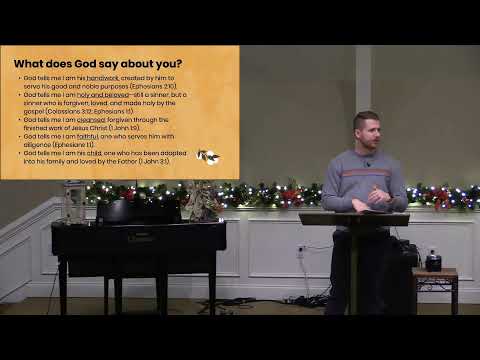
-

-

-

-

-

-

-

-

-

-

-

-

-

-

-

-

-

-

-

-
-

-

-

-

-

-

-
-

-
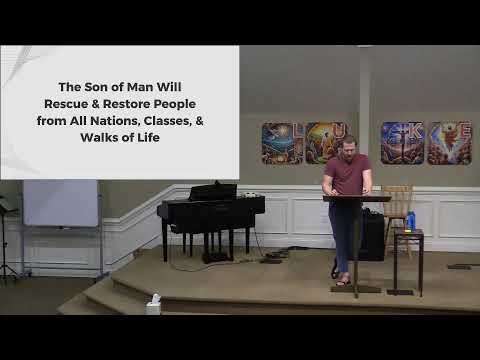
-

-

-
-

-

-

-

-

-

-
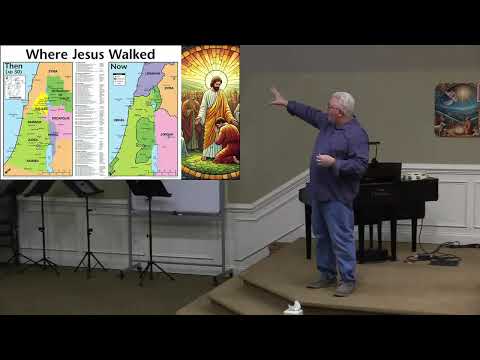
-

-

-

-

-

-
-

-

-

-

-

-

-

-

-

-

-

-

-

-
-

-

-

-

-

-

-

-

-

-
-

-

-

-

-

-

-

-
-

-

-

-

-
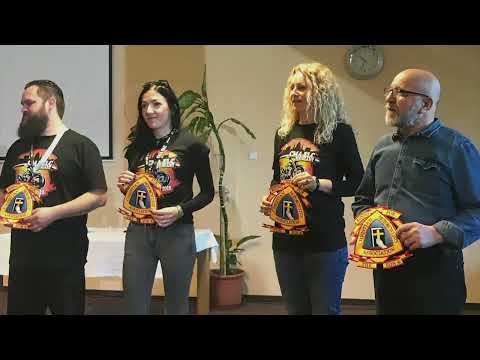
-

-

-

-

-

-

-

-

-

-

-

-

-

-

-

-

-

-

-

-

-

-

-

-

-
-

-
-

-

-

-

-

-

-

-

-

-

-

-
-

-

-

-

-

-

-

-

-
-

-

-

-

-

-

-

-

-

-

-

-

-

-

-

-

-

-

-
-
-

-

-

-

-
-

-
-
-

-
-

-

-
-

-

-

-

-

